
Flowers
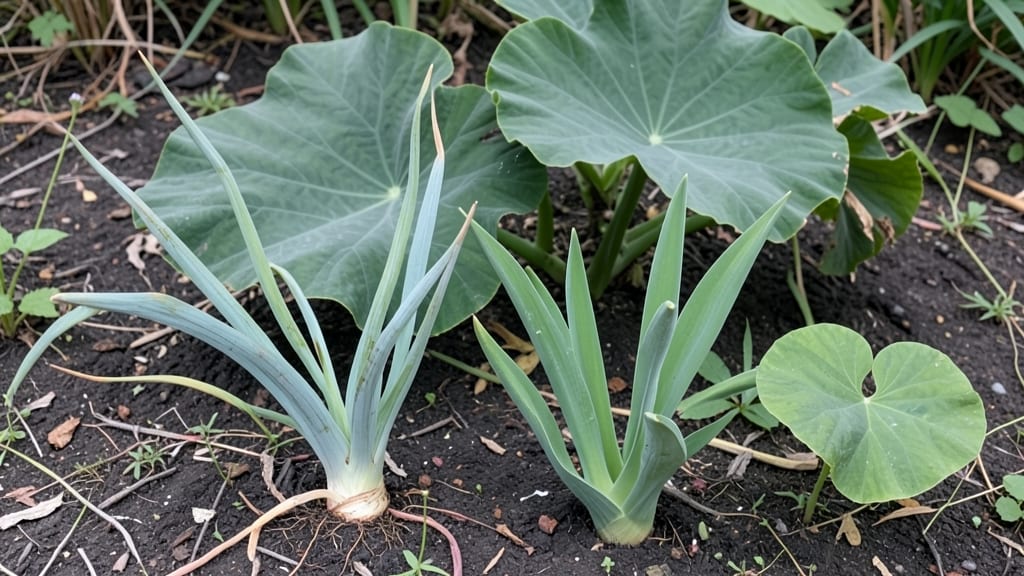
Understanding these leaf distinctions helps gardeners quickly narrow down bulb types without waiting for flowers. For example, lilies often have broad, lance-shaped leaves with parallel veins, while alliums feature narrow, grass-like foliage that tapers to a point.
I’ve found that leaf width alone can tell you whether a bulb thrives in moist soil (like broad-leaved fritillaries) or prefers well-drained conditions (like strappy hyacinths).
Don’t overlook margins—serrated edges might indicate a wild garlic lookalike, while smooth, waxy leaves often belong to tulips. Pro tip: Check the base where leaves meet the bulb stem; some varieties have visible sheathing that’s a dead giveaway. 🔥
💡 In This Article
- 10 Key Traits for Bulb Leaf Shape Identification
- How to Use Leaf Shape for Bulb Plant Care
10 Key traits for bulb leaf shape identification
Leaf shape acts like a fingerprint for bulb plants, revealing critical clues about species, growth habits, and even care needs.
The first trait to examine is leaf length-to-width ratio: strappy leaves (like those of hyacinths) typically measure 10:1 or wider, while broad leaves (common in lilies) may only be 3:1 to 5:1.
This ratio directly correlates with water storage capacity—thinner leaves indicate drought-tolerant species, while broader leaves suggest moisture-loving varieties. 🌱
Next, focus on the tip shape, which varies dramatically: daffodils feature pointed, almost lance-shaped tips, whereas tulips often have rounded or slightly notched ends. The vein structure also matters—parallel veins running lengthwise (like in onions) signal monocots, while netted veins (as in some alliums) indicate dicot relatives.
Even the margin type provides clues: smooth edges suggest tulips, while serrated margins often appear in wild garlic lookalikes.
Don’t overlook leaf texture, which can be waxy (tulips), fuzzy (some alliums), or leathery (lilies). This trait affects water absorption and disease resistance. For instance, lily leaves have a thick, waxy coating that repels fungal spores, while hyacinth leaves remain softer and more delicate.
The growth habit matters too—some bulbs produce basal leaves (emerging from the bulb base), while others develop cauline leaves (attached to the flower stalk).
Here’s a quick visual comparison using common bulbs:
- Lilies: Broad, lance-shaped leaves (2-4 inches wide) with parallel veins and smooth margins
- Tulips: Sword-shaped leaves (1-2 inches wide) with a slight channel along the center vein
- Hyacinths: Fleshy, strap-like leaves (0.5-1 inch wide) that taper to a point
- Alliums: Narrow, grass-like leaves (0.2-0.5 inch wide) with a hollow stem base
The base attachment is another game-changer: some leaves wrap around the bulb stem (sheathing), while others emerge directly from the bulb. This difference affects how the plant stores nutrients and responds to pruning.
For example, fritillary leaves often have a distinctive twisted base, while daffodil leaves grow in a flat, fan-like arrangement. 💡
Finally, consider the seasonal leaf cycle: some bulbs (like tulips) produce leaves only in spring, while others (like lilies) keep foliage year-round. This trait helps predict when to expect flowers and when to avoid disturbing the plant.
For instance, if you see broad leaves in winter, it’s likely a Christmas rose—not a spring bulb. Paying attention to these details transforms leaf identification from guesswork into an exact science.