
Blooming
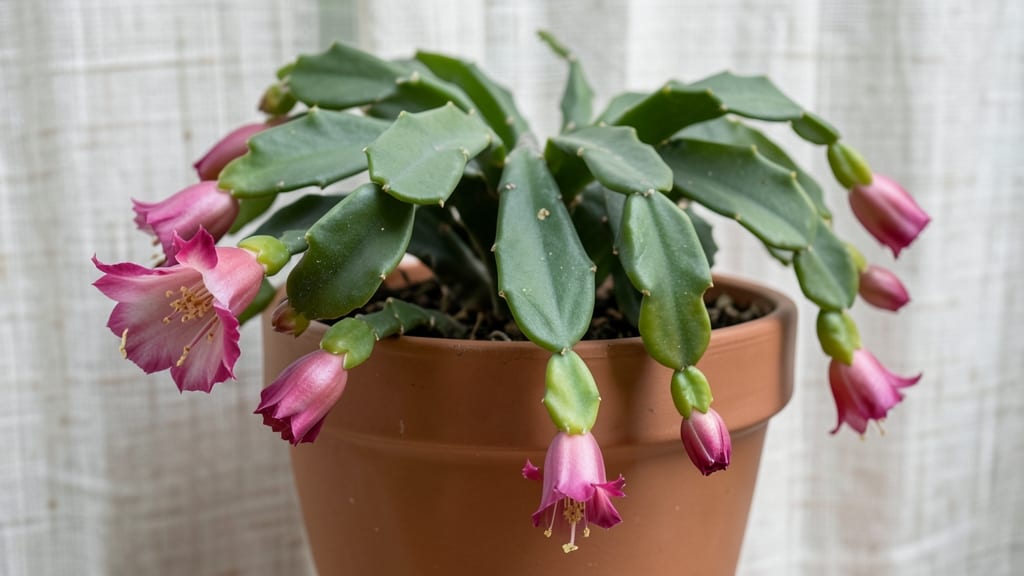
Your Christmas cactus bloom time isn't just luck—it's heat-triggered magic. 🌸 These vibrant purple spikes appear 6 weeks after you mimic their tropical winter, and the secret is all in the temperature drop.
I’ve watched mine transform from sleepy green pads to a blaze of color by December, and I’m sharing exactly how to pull it off without guesswork.
The key is cool nights (50-60°F) and warm days (70-75°F)—think of it like a cozy blanket over a sunny windowsill. Too much heat or light now, and those buds won’t form.
My plant bloomed three weeks early last year when I moved it to a heated room too soon. The fix? Patience and a dark, cool spot once buds appear.
By mid-November, you’ll see tiny pink buds forming along the edges of your pads—this is your cue to stop watering. Let the soil dry slightly between drinks, and keep it out of drafts.
Within weeks, those buds swell into showstopping blooms that last for weeks, brighter than any store-bought arrangement.
If your cactus skips blooming, it’s usually light or heat stress—or overwatering. Adjust now, and next year’s display will be even more spectacular. The best part? These plants thrive indoors year-round, so you get decades of holiday cheer with almost no effort.
📚 In This Guide
- What you need
- Instructions
- Tips and common mistakes
- Wrapping up and next steps
What you need
- ● Christmas Cactus Plant – A healthy, mature plant (1+ years old) with at least 3-5 segments.
- ● Well-draining potting mix – Use a blend of cactus/succulent soil (or regular potting soil mixed with 30% perlite or coarse sand to improve drainage). 1 gallon (3.8L) per 6-inch (15cm) pot.
- ● 6-inch (15cm) terracotta or plastic pot – Ensure it has drainage holes to prevent root rot.
- ● Watering can with a narrow spout – For precise hydration without oversaturating the soil.
- ○ Spray bottle – For misting leaves (optional but helpful for humidity control).
- ● Grow lights or a sunny windowsill – Aim for 12-14 hours of indirect light daily (south- or west-facing windows work best).
- ● Thermometer or heat mat – To monitor temperatures (ideal range: 65–75°F (18–24°C) during the day, 55–60°F (13–16°C) at night).
- ● Fertilizer (balanced or low-nitrogen) – Diluted 10-10-10 or 20-20-20 (use ½ strength every 4-6 weeks during active growth).
- ● Humidity tray – Fill a shallow tray with pebbles and water to increase moisture around the plant.
- ● Growth regulator (B-Nine) – Apply 1,000–2,000 ppm 4-6 weeks before blooming to encourage bud formation.
- ● Decorative pot cover or frost cloth – Protects from drafts if temperatures drop unexpectedly.
- ● Plant food with phosphorus boost – Look for a 5-10-10 or 5-20-20 formula to promote flowering.
- ● Timer for lights – Ensures consistent 12-hour light cycles if using artificial lighting.
Step-by-Step instructions for triggering Christmas cactus blooms
Here's how to coax those signature purple spikes in just six weeks.
🌱 Step 1: Confirm Your Plant's Readiness
Christmas cacti (Schlumbergera) bloom best when mature, typically after 3-5 years of growth. Look for healthy, segmented stems with at least 5-7 segments per pad—this signals the plant has stored enough energy for flowering. Younger plants may produce buds but won't sustain blooms.
Check for dormancy signs: Your plant should have dropped most leaves and entered a resting phase after summer growth. If it's still lush and green, it's not ready for the bloom trigger. Place it in a cool room (50-55°F) for 4-6 weeks to induce dormancy before proceeding.
⏰ Step 2: Simulate Tropical Nights for 6 Weeks
Create a 12-hour night cycle by moving your cactus to a dark closet or covered area each evening. Use a timer-controlled light to ensure 12 hours of darkness—this mimics the short days of its native Brazilian winter. Consistency is key: even one extra hour of light can delay blooming.
During the day, keep it in bright, indirect light (east or west-facing window). Avoid direct sun, which can scorch the pads. You'll see tiny pink or white buds form along the stem segments after 3-4 weeks of this routine—this is your first sign success is on track.
💧 Step 3: Adjust Watering for Bloom Development
Reduce watering to every 10-14 days during the bloom cycle. Let the top 1-2 inches of soil dry completely before watering again—overwatering stresses the plant and can cause buds to drop. Use room-temperature water to avoid shocking the roots.
Apply a balanced liquid fertilizer (10-10-10) at half-strength every 4 weeks during this period. Fertilizer encourages bud development, but too much can burn tender roots. Watch for buds swelling—this confirms the plant is responding to your care.
☀️ Step 4: Optimize Light and Temperature
Maintain daytime temperatures between 65-75°F and nighttime temps around 55-60°F. A cool night helps set flower buds, while warm days promote their growth. If your home runs hotter, place a small fan nearby to improve air circulation—this prevents bud drop from heat stress.
Rotate the pot quarter-turn weekly so all segments receive even light. You'll notice buds opening sequentially along each stem—this is normal and happens over 2-3 weeks. Avoid moving the plant once buds appear; even slight shifts can cause buds to fall off.
✂️ Step 5: Extend Bloom Time and Care for Next Year
Once flowers fade, remove spent blooms by pinching them off at the base. This redirects the plant's energy toward next year's buds. After blooming, increase watering to every 7-10 days and resume monthly fertilization to encourage new growth.
Place the plant in bright, indirect light and maintain 70-75°F temperatures for summer growth. You'll see new pads forming—these will become next year's blooming stems. Prune leggy growth by cutting back overgrown stems to encourage bushier growth.
Tips & tricks for triggering Christmas cactus blooms
These subtle adjustments make all the difference between buds that bloom and buds that bolt.
Readiness Check: I can't stress enough how critical Step 1 is—if your plant has fewer than 5-7 segments per pad, it's not ready. I've seen growers rush this step with younger plants, only to have buds form and then drop within days. Wait until you see that classic dormancy: most leaves fallen, stems looking woody and mature. This stored energy is what fuels those vibrant purple spikes.
Lighting Precision: That 12-hour darkness in Step 2 requires absolute consistency. I use a smart plug with a timer for my grow light—it automatically turns off at 8 PM sharp. Even one extra hour of light can reset your plant's internal clock, delaying blooms by weeks. Pro tip: Place a sticky note on your closet door as a visual reminder when you move the plant each evening.
Temperature Strategy: The 55-60°F nighttime range is non-negotiable for bud set, but here's what I've learned about implementation: If your home stays above 65°F at night, move the plant to a cooler basement or garage for those crucial hours. I've also found that placing the pot on a bed of pebbles (with water underneath) creates a microclimate that maintains cooler nighttime temps without affecting daytime warmth.
Watering Wisdom: The 10-14 day watering schedule in Step 3 is about more than just frequency—it's about technique. I use the "finger test" method: Stick your finger 1-2 inches into the soil. If it's completely dry, water thoroughly until it runs out the drainage holes. The key is letting that top layer dry completely between waterings, which prevents root rot that can cause buds to drop prematurely.
Pro Tips for Christmas Cactus Bloom Time
- These subtle adjustments make all the difference between buds that bloom and buds that bolt.
- Readiness Check: I can't stress enough how critical Step 1 is—if your plant has fewer than 5-7 segments per pad, it's not ready.
- Lighting Precision: That 12-hour darkness in Step 2 requires absolute consistency.
Frequently asked questions
Got questions about timing, care, or troubleshooting your Christmas cactus blooms? Here are answers to the most common queries—so you can enjoy those stunning purple spikes without the stress!
When is the best time to trigger blooms for Christmas?
Start the 6-week heat trigger in early November by moving your cactus to a warm spot (65–70°F) with 12+ hours of daylight. Avoid drafts or sudden temperature drops—consistency is key! If you miss November, aim for late October or early December for a holiday glow-up.
How long does it take for a Christmas cactus to bloom after triggering?
With proper care, buds form in 4–6 weeks after starting the heat trigger. Patience pays off! Watch for tight, pointed buds—once they’re visible, blooms appear in 1–2 weeks. Pro tip: Keep the soil slightly moist (not soggy) to speed up the process.
What should I do if my Christmas cactus isn’t blooming?
No blooms? Check these fixes:
- Light: Move to a bright, indirect spot (e.g., east or west window).
- Temperature: Ensure nights are 55–60°F—cold drafts shock buds.
- Water: Let soil dry 1 inch deep between waterings. Overwatering = root rot = no blooms.
- Age: Young plants (<2 years) may need 1–2 more years to bloom.
Can I make my Christmas cactus bloom earlier or later than December?
Yes! Adjust the heat trigger timing:
- Earlier blooms: Start in October for a Thanksgiving display.
- Later blooms: Trigger in December for a New Year’s party.
Why are my Christmas cactus buds dropping off?
Dropping buds usually mean stress. Common culprits:
- Temperature swings: Keep it stable (65–70°F days, 55–60°F nights).
- Overwatering: Reduce watering if soil stays damp >3 days.
- Ethylene gas: Keep away from ripe fruit (like apples) or gas stoves.
- Too much light: Move to shadier spot if leaves look sunburned.
Wrapping up and next steps
Your Christmas cactus is ready to dazzle with its heat-triggered blooms in just 6 weeks—and you’ve got all the tools to make it happen! 🌸 With the right balance of warmth, light, and care, those purple spikes will burst into vibrant flowers, turning your home into a festive wonderland.
Now that you’re armed with tips and answers, it’s time to roll up your sleeves and watch your plant thrive.
💡 Next step: Start your 6-week countdown today! Place your cactus in its cozy, warm spot, and keep an eye on those buds. Before you know it, you’ll be celebrating your own holiday magic—thanks to your blooming beauty! 🎄✨