
Blooming
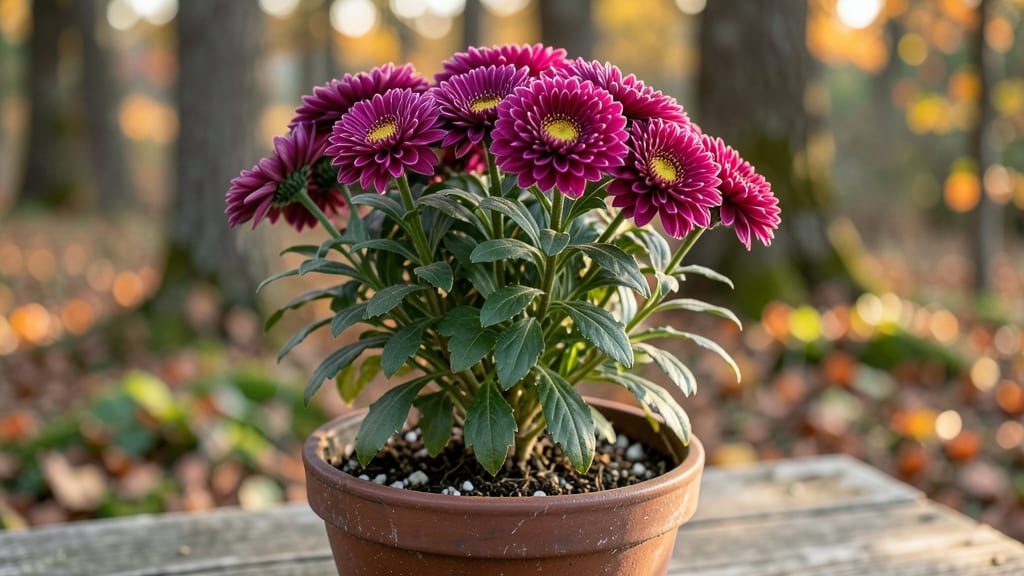
Mums (chrysanthemums) do not bloom in summer; they typically flower in late summer through fall, with peak blooms occurring between September and October in most climates. Their growth cycle is triggered by shorter daylight hours and cooler temperatures.
Mums are famously patient, waiting for the right conditions to burst into color. 🌼 The key lies in their sensitivity to daylight—when days grow shorter and temperatures dip, they receive the signal to bloom.
This natural timing explains why garden centers often sell potted mums in late summer, as they've already been coaxed into flowering through controlled growing techniques. If you're eager for summer color, you can try light deprivation methods or choose early-blooming varieties, though results may vary depending on your climate.
Interestingly, commercial growers use tricks like artificial light deprivation to force summer blooms, but this requires precise timing and equipment. For home gardeners, the best strategy is to plant mums in early spring for a late-season show, or select varieties bred for earlier flowering.
Just remember—pushing their natural cycle too hard can stress the plants and reduce their vigor.
💡 In This Article
- Understanding Chrysanthemum Flowering Triggers
- How to Encourage Mums to Bloom Earlier or Later
Understanding chrysanthemum flowering triggers
Chrysanthemums (mums) are what botanists call short-day plants, meaning their blooming cycle is triggered by decreasing daylight hours rather than temperature alone. When daylight drops below 12-14 hours per day, these plants receive a hormonal signal to begin flowering.
This typically happens in late summer when days grow shorter—around September-October in most temperate climates. The process involves a complex interaction between phytochrome pigments (light-sensitive proteins) and the plant's internal clock, which detects the lengthening nights as the cue to flower.
The temperature threshold plays a supporting role, with ideal blooming occurring when daytime highs are between 60-75°F and nighttime lows stay above 50°F. Below 50°F, growth slows dramatically, while above 80°F, the plants may produce fewer blooms or become stressed.
This explains why mums often bloom later in cooler northern climates than in warmer southern regions—where summer heat can delay their natural cycle until October-November rather than September. 🌸
Commercial growers exploit this biology using light deprivation techniques, where plants are exposed to 8-10 hours of darkness per day (often achieved with blackout curtains) to simulate shorter days.
This forces blooming 6-8 weeks earlier than natural conditions would allow, which is why you see potted mums in stores as early as July-August. The trade-off? These commercially forced blooms often have shorter vase life and may not rebloom the following year without proper care.
What most gardeners don't realize is that mum varieties differ in their sensitivity to daylight. Some early-blooming cultivars (like 'Bonanza' or 'Bright Golden Anne') may produce limited flowers in late summer if given ideal conditions, but these are exceptions rather than the rule.
The 90% of garden mums you'll find in nurseries are bred for late-season performance, with their genetic programming aligned to the natural photoperiod shift toward autumn.
Here's how the process works at a cellular level: When daylight shortens, the plant's flowering locus (FL) gene activates, triggering a cascade that converts leaf cells into floral buds.
This is why you'll often see mums developing buds in late August—the plant is responding to the first significant drop in daylight hours, even if temperatures remain warm.
The buds then require 2-3 weeks of cooler weather (below 75°F) to fully open, which is why September is typically the peak month for blooming.
For those curious about pushing blooms earlier, remember that artificial light deprivation works best when started 8-10 weeks before desired bloom time.
Without this intervention, nature's timing is remarkably consistent—mums have been blooming in autumn for centuries because their evolutionary advantage lies in producing flowers when competing plants have already finished their cycles, reducing pollen competition. 🌿