
Blooming
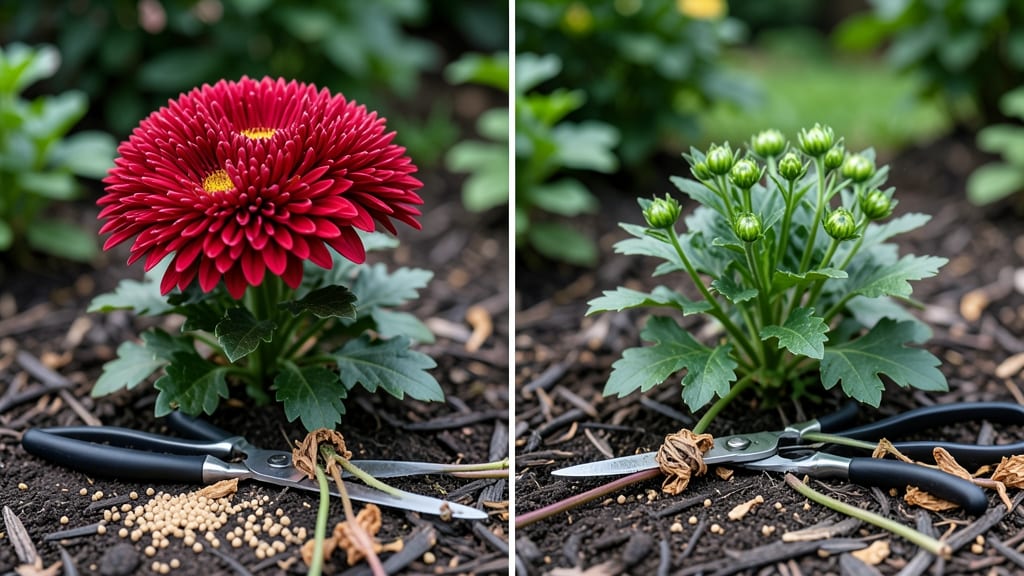
Some mum varieties do bloom more than once per season when you choose reblooming types and provide the right care, including regular deadheading, consistent moisture, and balanced fertilization.
Most chrysanthemums follow a single bloom cycle triggered by shorter daylight hours in fall, but reblooming varieties are bred to produce multiple flower flushes. 🌸 The key difference lies in their genetic response to light—these plants can reset their flowering cycle with proper care.
I've seen 'Jolinda' and 'Marmalade' varieties deliver stunning fall-to-winter displays when given the right conditions, though they typically need more attention than their one-time bloomers.
What truly makes reblooming possible is a combination of three critical factors: removing spent blooms to redirect energy, maintaining 6-8 hours of sunlight daily, and feeding with a low-nitrogen fertilizer (like 5-10-5) every 4-6 weeks.
The trade-off? Reblooming mums often produce smaller flowers than their single-bloom cousins, but the extended display more than makes up for it.
💡 In This Article
- Why Some Chrysanthemum Varieties Rebloom
- Proven Techniques to Encourage Mum Reblooming
Why some Chrysanthemum varieties rebloom
The secret behind reblooming chrysanthemums lies in their genetic response to light exposure. Unlike single-bloom varieties that trigger flowering in response to shorter daylight hours (typically 12 hours or less), rebloomers have been selectively bred to reset their flowering cycle multiple times.
This ability stems from a trait called day-neutral photoperiodism, where the plant can produce flowers regardless of daylight length when given the right conditions. 🌿
Scientifically, this involves manipulating the plant's hormonal balance. Chrysanthemums produce florigen, a flowering hormone, in response to specific light cues. Reblooming varieties can generate new florigen signals after deadheading, allowing them to produce secondary and even tertiary flower flushes.
For instance, 'Bonanza' series mums can produce 3-4 flower cycles per season when cared for properly, while standard varieties might only bloom once in fall.
The flowering process begins when the plant perceives 10-12 hours of darkness, which triggers the production of florigen. In rebloomers, removing spent blooms (deadheading) signals the plant to redirect energy toward new growth rather than seed production.
This process requires consistent 6-8 hours of sunlight daily to maintain the energy balance needed for repeated blooming. Without adequate light, the plant's energy reserves deplete, preventing new flower formation.
Temperature also plays a crucial role. Reblooming varieties thrive in 60-75°F temperatures during their active growth phase. Cooler nights (50-60°F) help stimulate flowering, while extreme heat (>85°F) can stress the plant and halt flower production.
This is why many gardeners report better results with reblooming mums in USDA Zones 5-9, where temperature fluctuations naturally support multiple bloom cycles.
Another key factor is the plant's root system. Rebloomers develop a more extensive root network than single-bloom varieties, allowing them to store more nutrients and water. This storage capacity enables the plant to sustain multiple flowering cycles without becoming exhausted.
For example, a well-established reblooming mum can produce 20-30 flowers per stem across several flushes, compared to a single flush of 10-15 flowers in standard varieties.
Genetic diversity also explains why some rebloomers perform better than others. Hybrid varieties like 'Dynasity' or 'Bright Lights' have been crossbred to enhance their ability to rebloom.
These hybrids often combine traits from different chrysanthemum species, such as Chrysanthemum × grandiflorum and Chrysanthemum × morifolium, which naturally have different flowering triggers. The result is a plant that can adapt to a wider range of growing conditions while still producing multiple flower cycles.
Understanding these botanical differences helps gardeners choose the right variety for their climate and care level. Reblooming mums require more attention but offer a longer and more vibrant display, making them ideal for gardeners who want to extend their fall and winter interest. 🌸