
Blooming
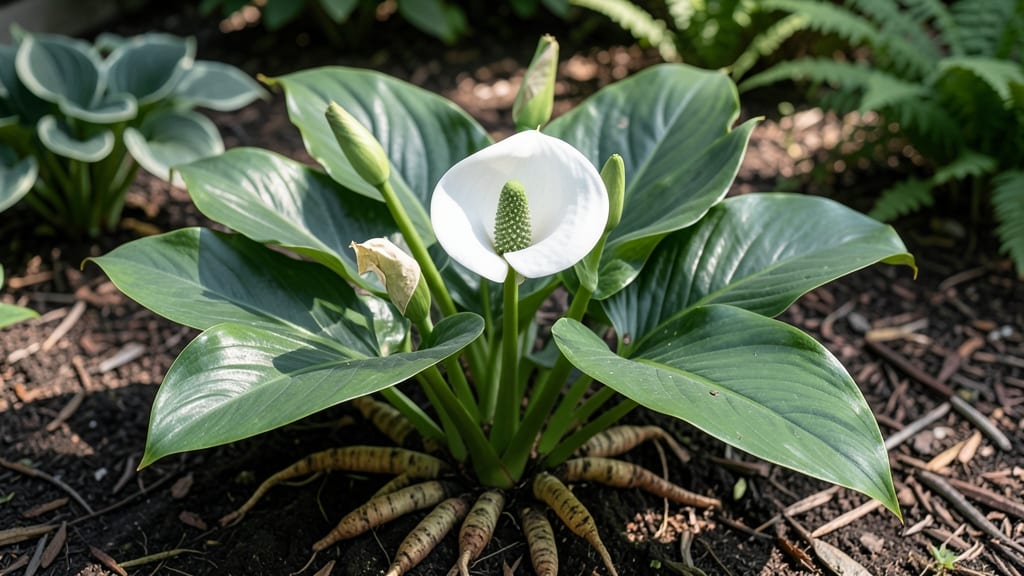
Calla lilies don't bloom every year unless given ideal conditions—proper sunlight, well-draining soil, and consistent care. Most varieties only flower once per year, though some may skip blooming for 1-2 years during dormancy or stress.
Do calla lilies bloom every year? Not always—they follow a natural blooming cycle tied to their environment.
Unlike some perennials that flower reliably each year, these plants often need perfect conditions to produce their signature blooms. 🌸 The most common variety, Zantedeschia aethiopica, typically flowers in late spring or summer, while others like Zantedeschia rehmannii may bloom later in the season.
Temperature fluctuations, improper soil drainage, or insufficient light can trigger dormancy periods that delay flowering for extended periods.
What's interesting is how climate zones play a role—northern growers often see more consistent annual blooming than those in hotter regions where summer heat can stress the plants.
I've found that providing winter protection (like mulch or frost blankets) and fertilizing with a balanced NPK ratio (like 10-10-10) right before spring helps encourage reliable blooming cycles.
💡 In This Article
- Calla Lily Blooming Cycles: Variety-Specific Patterns
- How to Encourage Yearly Calla Lily Blooms
Calla lily blooming cycles: variety-specific patterns
The blooming habits of calla lilies vary dramatically between species and hybrids, primarily due to their natural growing cycles and evolutionary adaptations. Zantedeschia aethiopica (the classic white calla lily) typically blooms in late spring to early summer, producing flowers that last 4-6 weeks before entering dormancy.
This variety thrives in USDA zones 8-11, where it naturally experiences cooler winters that trigger its flowering response. In contrast, Zantedeschia rehmannii (often called the "remnant hybrid") blooms later in summer or early fall, with flowers lasting 3-5 weeks, and prefers zones 9-11 where heat tolerance is higher.
What's fascinating is how these plants use temperature as a biological clock. Calla lilies rely on a process called vernalization—where exposure to cooler temperatures (around 50-60°F) for 4-6 weeks signals the plant to initiate flowering.
In warmer climates, this natural trigger gets disrupted, often causing plants to skip blooming entirely or produce only 1-2 flowers instead of full spathes.
The spathe (the showy "flower" part) actually develops from a modified leaf, and its formation requires precise hormonal balance—too much heat or drought can throw this off completely.
Another key factor is the plant's underground rhizome system, which stores energy for future growth. When calla lilies experience stress—like poor drainage, overwatering, or nutrient deficiencies—they prioritize rhizome expansion over flowering.
This is why you might see lush foliage but no blooms: the plant is conserving energy for survival rather than reproduction. In my experience, Zantedeschia elliottiana (the pink calla) is particularly sensitive to this, often requiring 2-3 years of ideal conditions before producing its first reliable bloom.
Seasonal light exposure also plays a crucial role. Calla lilies are short-day plants, meaning they flower in response to decreasing daylight hours. In northern climates, this aligns perfectly with spring/summer transitions, but in tropical regions, the consistent 12-hour daylight can prevent flowering entirely.
This explains why indoor calla lilies (like the popular Zantedeschia aethiopica) often struggle to rebloom—they don't get the natural light cycle variations that trigger their flowering mechanisms.
Climate zone differences create another layer of complexity. In zone 7 or colder, calla lilies often need winter protection (like mulch or containers) to survive freezing temperatures, which can delay blooming by 1-2 years as the plant recovers.
Meanwhile, in zone 10+, the lack of winter dormancy can lead to continuous foliage growth but minimal flowering, as the plant never gets the rest it needs to reset its biological clock.
The remnant hybrid varieties handle heat better but still require at least 6 hours of direct sunlight daily to produce flowers.
Here's what most gardeners overlook: the soil pH affects nutrient availability, which directly impacts blooming. Calla lilies prefer slightly acidic to neutral soil (pH 6.0-7.0). In alkaline soils (pH 7.5+), they struggle to absorb key nutrients like magnesium and phosphorus—both critical for flower development.
I've seen cases where adjusting soil pH with sulfur or peat moss led to blooms appearing just 3 months later than expected.
For those growing calla lilies in containers, the root-to-pot ratio matters too. Plants in too-large pots focus energy on filling space rather than flowering, while root-bound plants in small containers may bloom earlier but produce fewer flowers.
The sweet spot is a pot that's only 2-3 inches larger in diameter than the rhizome cluster—this encourages the plant to prioritize flowering over vegetative growth. 🌿