
Blooming
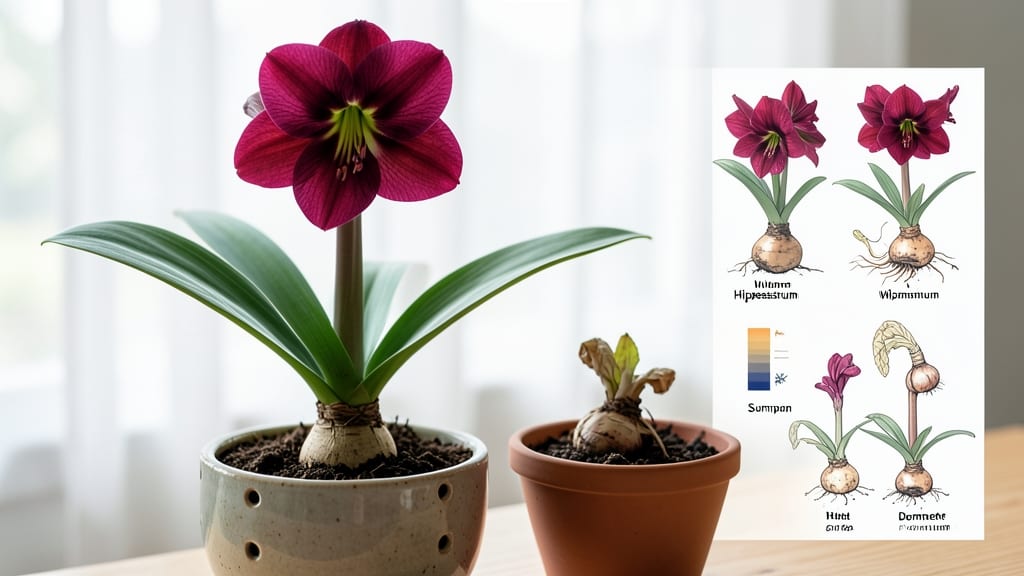
Amaryllis do bloom every year when given the right conditions—bright, indirect light, consistent moisture, and a crucial 6-8 week dormancy period. First-time blooms may appear after 6-8 weeks of proper care, while established plants typically flower annually with this routine.
Amaryllis follow a natural cycle where their bulbs store energy during dormancy to fuel spectacular blooms. 🌸 The key is replicating their native conditions: 6-8 weeks of cooler temperatures (around 55-60°F) and reduced watering trigger the bulb to reset.
Once you reintroduce warmth and light, the plant focuses that stored energy into producing those iconic flowers. I've found that skipping dormancy often leads to fewer blooms or none at all—it's like skipping a recharge cycle on your phone!
What many gardeners miss is that even after blooming, the leaves continue working to rebuild the bulb's energy reserves.
Those green leaves are powerhouses—don't trim them until they naturally yellow, as this is when the bulb is storing the most nutrients for next year's show. 💛 The first bloom cycle might take longer to establish, but once you've helped your amaryllis through its first full cycle, it typically becomes more reliable each subsequent year.
💡 In This Article
- How Light and Dormancy Control Amaryllis Blooming
- Tips to Encourage Year-Round Amaryllis Blooms
How light and dormancy control amaryllis blooming
Amaryllis bulbs rely on a biological process called photoperiodism—their internal clock responds to daylight length and temperature shifts. During summer's long days, the plant focuses on leaf growth to build energy reserves in the bulb.
But when daylight shortens in fall and temperatures drop, the bulb receives a chemical signal to shift gears. This transition triggers the production of florigen, a flowering hormone that initiates bud formation.
Without this dormancy period, the bulb lacks the stored energy needed for blooming, much like how a car won't run without a charged battery.
The dormancy phase requires 6-8 weeks at cooler temperatures (55-60°F) with minimal watering—only enough to prevent the bulb from shriveling. This mimics their natural cycle in South African savannas where dry seasons force bulbs into dormancy.
What's fascinating is how the bulb's starch reserves convert into sugars during dormancy, fueling the dramatic flower spike that emerges later. 🌱 Too much warmth or water during this period can confuse the plant's signals, leading to weak or no blooms.
I've seen amaryllis owners skip dormancy and end up with just leaves—no flowers at all!
Light intensity plays a crucial role too. Amaryllis need bright, indirect light (think east or west-facing windows) for 12-14 hours daily6-inch blooms we all love.
Here's what happens when you get the conditions right: After 6-8 weeks of dormancy, you reintroduce warmth (70°F) and water. Within 4-6 weeks, you'll see that dramatic flower spike emerge—often 12-18 inches tall—carrying 2-6 buds that open sequentially over 7-10 days.
The first bloom cycle might take longer to establish, but once you've helped your amaryllis through this process, it typically becomes more reliable each year.
What most people don't realize is that even after the flowers fade, the leaves continue working for 4-6 months to rebuild the bulb's energy stores.
Those green leaves are absolutely essential—they're the plant's way of recharging for next year's performance. 💫 If you cut them too soon, you're essentially telling the bulb, "Don't bother storing energy—we're done for the year."
This is why many amaryllis fail to rebloom: gardeners get impatient and remove the leaves before the bulb has fully recharged.
Consider this comparison: A well-cared-for amaryllis can produce 2-4 flower spikes annually with proper dormancy, while one that skips this cycle might produce just 1 weak spike or none at all.
The difference comes down to that careful balance of light, temperature, and rest—nature's way of ensuring the plant has enough energy to put on its spectacular show each season.