
Blooming
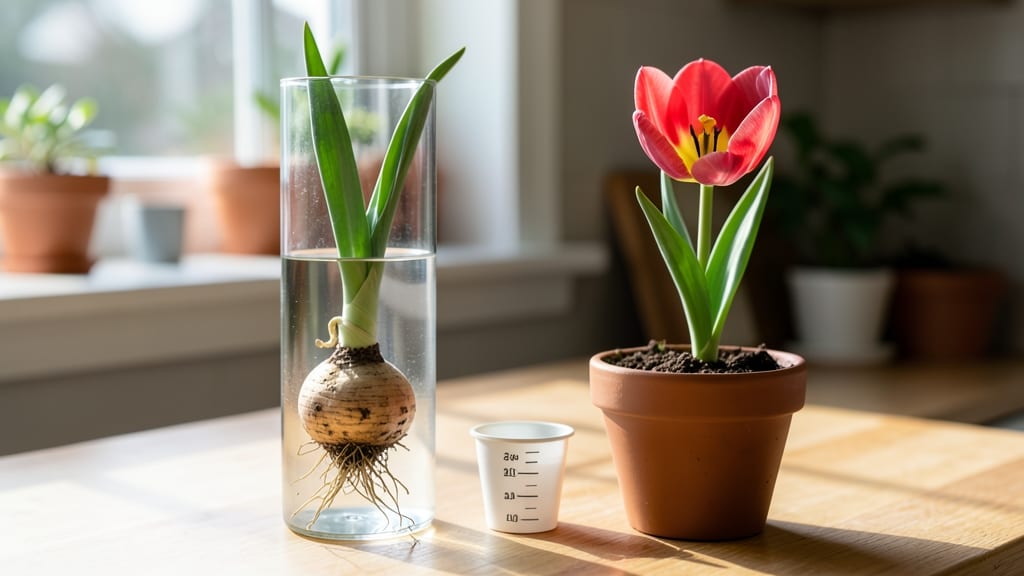
Forced tulip bulbs in water generally won't bloom again because the process drains their stored energy during the initial flowering. Forcing tricks bulbs into early growth, exhausting their reserves for future blooms, though some varieties might produce smaller flowers with careful post-forcing care.
Tulip bulbs store nutrients in their bulbs to fuel flowering, and forcing them in water accelerates this process. 🌸 When you force a bulb indoors, it prioritizes blooming immediately rather than conserving energy for future cycles.
Even if you try to revive the bulb afterward, most won't have enough reserves left to produce another full bloom. The few that do often yield smaller, less vibrant flowers because their energy stores are severely depleted.
What's interesting is that some hybrid tulip varieties, like Darwin Hybrid or Fosteriana tulips, have slightly better reblooming potential than others.
These types are bred to be more resilient, but even they require proper post-forcing care—like replanting in well-draining soil, providing balanced fertilizer, and ensuring they get adequate sunlight during dormancy. Without these steps, the chances of seeing another bloom drop dramatically.
💡 In This Article
- Why Forced Tulip Bulbs Rarely Rebloom
- How to Maximize Reblooming Chances for Forced Tulips
Why forced tulip bulbs rarely rebloom
Forcing tulip bulbs in water tricks them into early blooming by bypassing their natural dormancy cycle. Tulips store energy in their bulb scales as starches, which convert to sugars during growth.
When you force a bulb indoors, it rapidly converts these reserves to fuel a single, dramatic bloom—often within 4-6 weeks.
This accelerated process drains 80-90% of the bulb's stored nutrients, leaving almost nothing for future flowering cycles. 🌱 In nature, tulips bloom outdoors in spring after a full winter dormancy, conserving energy gradually for one season's bloom at a time.
The biological cost of forcing becomes clear when comparing forced bulbs to those planted in soil. Soil-grown tulips receive seasonal sunlight, which triggers photosynthesis in their leaves, replenishing some of their energy reserves.
Forced bulbs, however, exist in dark environments with no leaf development, meaning they rely entirely on their initial starch stores. Even if you replant a forced bulb, its depleted reserves mean it may take 2-3 years to recover enough energy for another bloom—if it ever does.
The bulb's natural clock is disrupted, and its priority shifts from survival to immediate reproduction.
Another critical factor is the bulb's size. Larger tulip bulbs (typically 2-3 inches in diameter) have more stored energy to begin with, giving them slightly better reblooming potential than smaller ones. However, forcing still accelerates energy depletion regardless of size.
The process mimics what happens in nature during extreme early springs, where tulips might bloom early but often fail to produce offsets (baby bulbs) afterward. This is why gardeners often see forced tulips produce weak stems or no blooms at all in subsequent seasons.
What most people don't realize is that even if a forced tulip bulb does rebloom, the second flower will be significantly smaller and less vibrant. This happens because the bulb's energy reserves are now critically low, forcing it to produce a miniature version of its original bloom.
The petals may be fewer, the colors less intense, and the stem weaker—almost like a shadow of its former self. This is your tulip's way of conserving what little energy remains, prioritizing survival over spectacle. 💫
Scientifically, this depletion is tied to the bulb's meristem—the growth center where new flowers develop. Forcing exhausts these meristems prematurely, leaving them unable to regenerate for future blooms. In contrast, tulips grown in soil develop new meristems each season, ensuring they can bloom year after year with proper care.
The key difference is that forced bulbs are essentially "cheated" into blooming early, while soil-grown bulbs follow their natural timeline, conserving energy for longevity.
Consider this: A single forced tulip bloom can consume as much energy as a bulb would normally allocate for two seasons of growth in the ground. This is why gardeners often treat forced bulbs as a one-time display rather than a perennial investment.
The trade-off is immediate beauty indoors, but at the cost of long-term blooming potential. For those hoping to revive forced tulips, understanding this energy dynamic is the first step toward realistic expectations—and smarter post-forcing care.