
Blooming
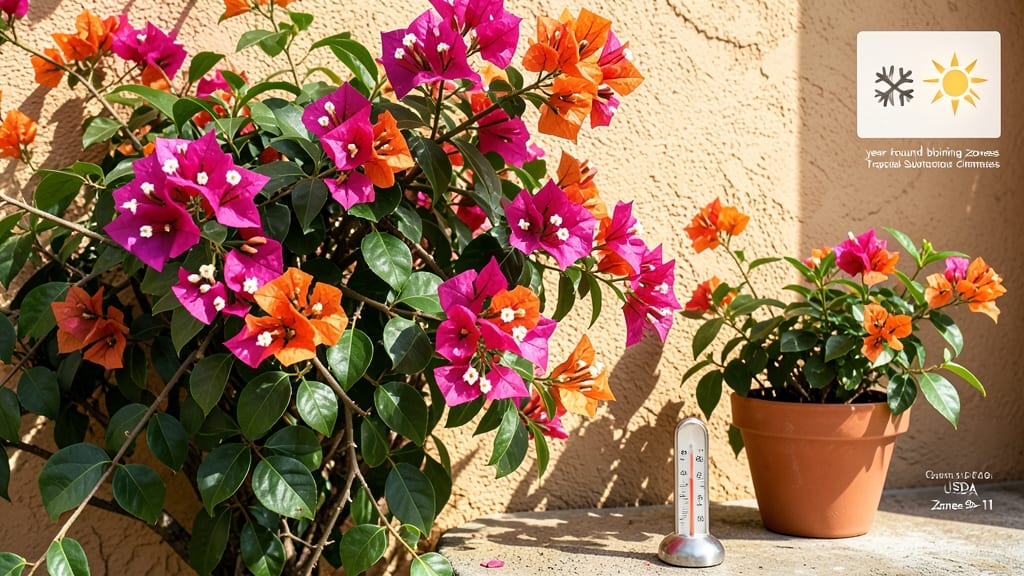
Bougainvillea blooms all year only in ideal tropical climates with consistent warmth, moisture, and proper pruning. In cooler regions, growth slows or stops, and blooms may pause during winter months unless grown in containers and moved indoors.
Bougainvillea thrives in conditions that mimic its native tropical habitats, where temperatures stay above 60°F year-round. 🌺 The plant responds to seasonal changes in cooler climates by entering dormancy, which explains why many gardeners struggle to maintain continuous blooms.
I've seen dramatic differences when moving potted bougainvillea indoors during winter—keeping it near a sunny window can trick the plant into blooming again, though the flowers may be smaller. The key isn't just warmth but consistent care that adapts to your local climate's limitations.
What often surprises people is how quickly bougainvillea reacts to environmental shifts. A sudden frost can kill the plant outright, while even mild winters may cause leaves to drop.
That's why I recommend monitoring your local frost dates and planning accordingly—whether that means bringing containers inside or choosing cold-hardy varieties like 'California Gold'. The right approach depends entirely on where you live and how much effort you're willing to put into maintaining those vibrant blooms.
💡 In This Article
- Climate and Seasonal Factors Affecting Bougainvillea Blooms
- Tips to Extend Bougainvillea Blooming Beyond One Season
Climate and seasonal factors affecting bougainvillea blooms
Bougainvillea's blooming cycle is directly tied to its native tropical environment, where temperatures rarely drop below 60°F and sunlight remains abundant year-round. The plant's flowering mechanism relies on a process called photoperiodism, where it responds to daylight length and temperature cues.
In tropical climates, bougainvillea receives 12-14 hours of sunlight daily, which triggers continuous blooming through a hormone called florigen that promotes flower development. 🌞 This is why bougainvillea in Florida or Hawaii can produce vibrant flowers in every season—its biological clock stays in perpetual "summer mode."
In temperate climates, the story changes dramatically. When temperatures fall below 50°F for extended periods, bougainvillea enters dormancy—a survival mechanism where growth slows and energy conserves. This often results in leaf drop and paused blooming, similar to how deciduous trees prepare for winter.
The plant's response varies by variety: some like 'Thornless' types handle cooler nights slightly better, while traditional varieties may need protection. Daylight exposure also matters—bougainvillea needs at least 6 hours of direct sunlight daily to maintain blooming, which is why indoor plants often struggle unless placed near south-facing windows.
The transition between seasons creates another challenge. Spring and fall serve as critical periods where bougainvillea either ramps up or shuts down blooming. For example, in California's Mediterranean climate, bougainvillea may bloom heavily in spring but enter dormancy by late fall when night temperatures drop to 45°F.
This seasonal rhythm explains why gardeners in Zone 9 (like Los Angeles) can enjoy year-round blooms with minimal intervention, while those in Zone 7 (like Denver) must take active measures to extend the flowering season. 🌡️ The key difference lies in how quickly the plant can recover from cooler periods—a trait influenced by both genetics and care practices.
Humidity plays a subtle but important role too. Bougainvillea originates from semi-arid regions where relative humidity averages 40-60%, but it adapts well to higher humidity in tropical zones.
In dry climates, the plant may produce smaller blooms unless given consistent moisture, while excessive humidity can promote fungal issues that weaken the plant's ability to flower. This balance explains why bougainvillea thrives in coastal areas like Miami but may struggle in desert regions without proper irrigation.
The plant's water needs shift seasonally—1-2 inches per week in summer versus ½ inch in winter—to prevent stress that could halt blooming.
What most people don't realize is how bougainvillea's root system affects its blooming cycle. The plant develops a deep taproot in ideal conditions, allowing it to access moisture and nutrients during dry periods. However, in containers or poor soil, roots become shallow and sensitive to temperature fluctuations.
This is why potted bougainvillea often shows more dramatic seasonal responses—roots in small containers cool faster at night, triggering dormancy. The solution?
Using 10-12 inch pots with well-draining soil and moving containers to sheltered locations during cold snaps can maintain blooming for months longer than in-ground plants in the same climate. 🌱