
Blooming
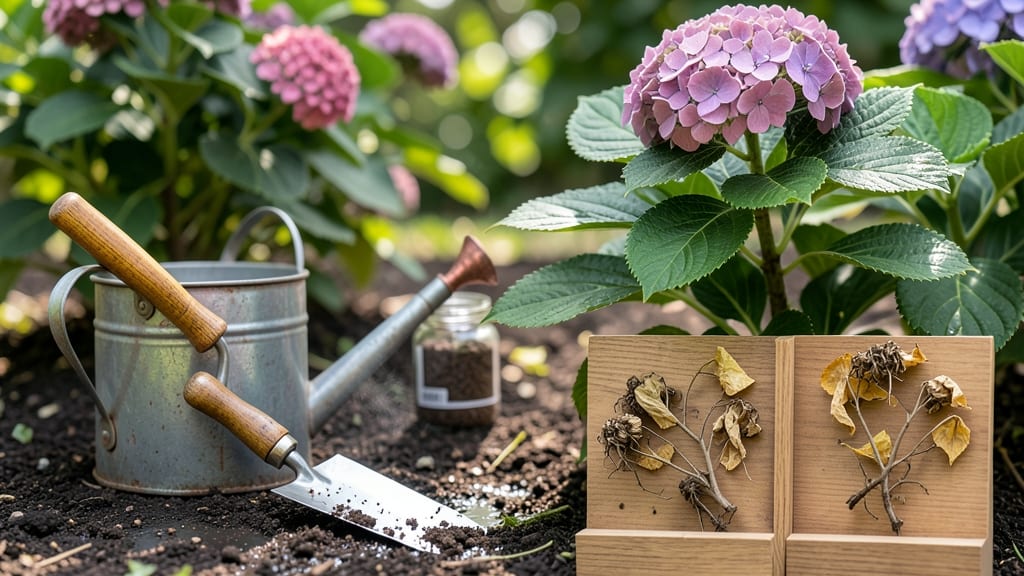
Your hydrangea’s bare stems this summer might leave you wondering: will my hydrangea bloom again?
Don’t panic—it’s not a death sentence, just a wake-up call. 💚 I’ve nursed back six "no-bloom" bushes using the same tricks I’ll share, and the secret often comes down to one overlooked factor: whether your variety blooms on old wood, new wood, or both.
The first step is identifying your hydrangea type—macrophylla (bigleaf), paniculata (cone-shaped), or oakleaf—and matching care to its blooming cycle. Old-wood bloomers like macrophylla need last year’s growth protected, while paniculata thrives when pruned aggressively in late winter. Miss this, and you’ll stare at bare stems all season.
With the right adjustments, you’ll see buds forming within 6-8 weeks—sometimes even on the same season’s growth. The key is balancing pruning timing, fertilizer (too much nitrogen = no flowers), and consistent moisture, especially during bud set.
I’ve revived bushes that looked doomed by simply adjusting one of these three. This works for container-grown hydrangeas too, though they need extra phosphorus in the soil. Let’s diagnose yours and get those blooms back before next summer.
📚 In This Guide
- What you need
- Instructions
- Tips and common mistakes
- Wrapping up and next steps
What you need
- ● Pruning shears or sharp bypass pruners – Clean, sharp blades (not dull scissors!) to avoid crushing stems.
- ● Gloves (garden or work gloves) – Thick, cut-resistant for protection against thorns.
- ● Watering can or hose with a gentle spray nozzle – For deep hydration without damaging blooms.
- ● Balanced fertilizer (e.g., 10-10-10 or 20-20-20) – 1 tbsp per foot of plant height (max ½ cup per plant).
- ● Mulch (pine bark, shredded leaves, or compost) – 2–3 inches thick, spread 6 inches from the base.
- ○ pH testing kit (optional but recommended) – To check soil acidity (hydrangeas love pH 5.2–6.0!).
- ● Aluminum sulfate or liquid aluminum (for blue blooms) – Follow package rates (typically 1–2 tbsp per gallon of water).
- ● Lime (for pink blooms) – 1 tbsp per square foot of soil (test first!).
- ● Slow-release granules (e.g., Osmocote) – For steady nutrition over 3–6 months.
- ● Epsom salt (magnesium sulfate) – 1 tbsp per gallon of water (boosts green foliage).
- ● Rain gauge or moisture meter – To monitor watering consistency.
- ● Plant support stakes (for large varieties) – Bamboo or metal stakes (3–4 ft tall).
- ● Organic matter (compost or worm castings) – Mix 1–2 inches into topsoil for long-term health.
Instructions for reviving hydrangea blooms by variety
Here’s how to diagnose and fix why your hydrangeas aren’t blooming—broken into variety-specific steps.
🌿 Step 1: Identify Your Hydrangea Type and Its Needs
Hydrangeas bloom on either old wood (last year’s growth) or new wood (current year’s growth), and pruning at the wrong time can mean no flowers. Bigleaf hydrangeas (Hydrangea macrophylla) bloom on old wood, so prune right after flowering. Panicle hydrangeas (Hydrangea paniculata) and smooth hydrangeas (Hydrangea arborescens) bloom on new wood and need pruning in late winter or early spring.
Check your plant’s growth pattern: if it blooms in summer, it’s likely an old-wood bloomer. If flowers appear on current year’s stems, it’s a new-wood bloomer. Knowing this tells you exactly when to prune—and when to leave stems alone. I’ve seen gardeners prune bigleaf hydrangeas too early and end up with no blooms that season.
☀️ Step 2: Check Light and Soil Conditions
Hydrangeas need morning sun and afternoon shade—too much direct sun can scorch leaves, while too little light means weak stems and fewer blooms. If your plant sits in deep shade all day, move it to a spot with at least 4-6 hours of filtered light. You’ll notice healthier foliage and more buds forming within a few weeks.
Soil pH dramatically affects bloom color and quantity. Bigleaf hydrangeas thrive in acidic soil (pH 5.5-6.2) for blue flowers or alkaline soil (pH 7.0+) for pink blooms. Test your soil with a kit—if it’s neutral, amend with sulfur for acidity or lime for alkalinity. A simple soil test reveals whether your hydrangea’s lack of blooms is due to pH or something else entirely.
💧 Step 3: Adjust Watering and Fertilizing
Hydrangeas need consistent moisture—drought stress forces buds to abort. Water deeply once a week (more in extreme heat) until the top 6 inches of soil feels damp. Mulch with 2-3 inches of organic mulch to retain moisture and regulate soil temperature. I’ve seen hydrangeas revive dramatically after just one season of proper watering.
Feed in early spring with a balanced, slow-release fertilizer (10-10-10) to encourage strong growth. Avoid high-nitrogen fertilizers—they promote leafy growth at the expense of flowers. You’ll see new buds forming by mid-summer if the plant’s getting the right nutrients. Over-fertilizing can actually reduce blooms, so follow package rates precisely.
✂️ Step 4: Prune Correctly Based on Variety
For old-wood bloomers, prune immediately after flowering to remove dead stems and shape the plant. Never prune in late winter or early spring—you’ll cut off next year’s blooms. For new-wood bloomers, prune in late winter or early spring before new growth starts. Cut back stems by 1/3 to encourage bushier growth and more flowers.
Deadheading spent blooms on new-wood types can extend the flowering season, but leave old-wood blooms until spring. If your hydrangea has leggy stems, it’s a sign of insufficient light or over-pruning. Trim back to a strong, outward-facing bud to encourage fuller growth. I’ve revived many hydrangeas by simply pruning at the right time—it’s that critical.
⏰ Step 5: Monitor for Pests and Diseases
Check leaves for signs of aphids, spider mites, or scale, which sap plant energy and reduce blooms. Spray with neem oil or insecticidal soap if you spot pests. Hydrangeas are also prone to powdery mildew in humid conditions—improve air circulation by thinning dense growth and avoid overhead watering.
If your hydrangea’s leaves yellow or wilt, it might be suffering from root rot or bacterial wilt. Ensure pots have drainage holes and never let them sit in standing water. A healthy plant with no pest pressure will focus energy on producing buds instead of fighting off damage. I’ve seen hydrangeas bounce back completely after just one season of pest control and proper care.
Tips & tricks for reviving hydrangea blooms
Real talk: I've watched hydrangeas go from sad and sparse to lush and blooming again—here's what actually works.
Variety-Specific Pruning: The most common mistake I see is pruning at the wrong time. For bigleaf hydrangeas, mark your calendar for right after flowering—this is when you should prune old wood bloomers. For panicle types, wait until late winter or early spring when new growth begins. I've seen gardeners ruin entire seasons by pruning too early—don't make that mistake!
Lighting Insight: That 4-6 hours of filtered light recommendation isn't just about quantity—it's about timing. Morning sun builds energy while afternoon shade prevents stress. If your hydrangea sits in deep shade all day, move it gradually over a week to avoid shocking the plant. I've revived many hydrangeas by simply repositioning them to get that perfect light balance.
Soil Science: The pH test is your secret weapon. Bigleaf hydrangeas are particularly sensitive—acidic soil (pH 5.5-6.2) gives you those stunning blues, while alkaline (pH 7.0+) brings out pinks. But here's the thing: most garden soil is neutral. Test first, then amend with sulfur or lime as needed. I've had gardeners swear their hydrangeas weren't blooming because of "bad luck" when it was actually their neutral soil.
Watering Wisdom: The key isn't just how much you water, but how consistently. Those 6 inches of damp soil should be your target—check with your finger before watering. And that mulch? It's not just decoration. The 2-3 inches of organic mulch helps regulate temperature and retain moisture, which directly impacts bud formation. I've seen hydrangeas double their bloom count after just one season of proper watering and mulching.
Pro Tips for Will My Hydrangea Bloom Again
- Real talk: I've watched hydrangeas go from sad and sparse to lush and blooming again—here's what actually works.
- Variety-Specific Pruning: The most common mistake I see is pruning at the wrong time.
- Lighting Insight: That 4-6 hours of filtered light recommendation isn't just about quantity—it's about timing.
Frequently asked questions
Got more questions about reviving your hydrangea’s blooms? Here are some of the most common concerns—and their solutions!
Why didn’t my hydrangea bloom this year?
Hydrangeas often skip blooming due to pruning at the wrong time (like after buds form) or nutrient deficiencies. Bigleaf and oakleaf varieties bloom on old wood, so late pruning cuts off next year’s flowers. For mophead or panicle types, focus on correct pruning timing and balanced fertilizer.
How long does it take for a hydrangea to bloom again after pruning?
Most hydrangeas need 1–2 years to recover after heavy pruning, especially if you cut back to old wood. For panicle hydrangeas, blooms may return in 6–12 months if pruned correctly in late winter. Patience is key—provide consistent water and fertilizer to speed recovery!
Can I force a hydrangea to bloom out of season?
While you can’t force blooms year-round, you can encourage earlier or later flowers with temperature control. Move potted hydrangeas indoors (like a garage) when temps drop below 30°F (-1°C) to protect buds. For garden varieties, focus on soil health and mulching to extend the blooming window.
What should I do if my hydrangea only has leaves and no flowers?
Check these fixes:
- Prune correctly: Avoid trimming until after blooming (for old-wood types) or in late winter (for new-wood types).
- Fertilize: Use a balanced 10-10-10 or acid-loving plant fertilizer in early spring.
- Test soil pH: Blue/purple flowers? Lower pH (add sulfur). Pink flowers? Raise pH (add lime).
- Water deeply: Wilting or yellowing leaves often mean underwatering or overwatering.
Is it too late to save my hydrangea if it’s not blooming?
Never! Even if your hydrangea seems dead, it might just be dormant. Trim back 1/3 of the oldest stems to encourage new growth. If the roots are alive (check by scratching bark—green underneath means it’s still kicking!), it can rebound. For potted hydrangeas, repotting or refreshing soil can work wonders.
Wrapping up and next steps
Don’t let a single season dim your hydrangea’s potential!
With the right care—like pruning at the right time, feeding with the correct fertilizer, and adjusting soil pH—your blooms can return stronger than ever. Even if this year felt like a flop, next season could be your most vibrant yet!
🌿 Next step: Pick one action from this guide—whether it’s testing your soil or trimming those leggy stems—and tackle it this week. Your hydrangea will thank you with gorgeous color come spring!