
Blooming
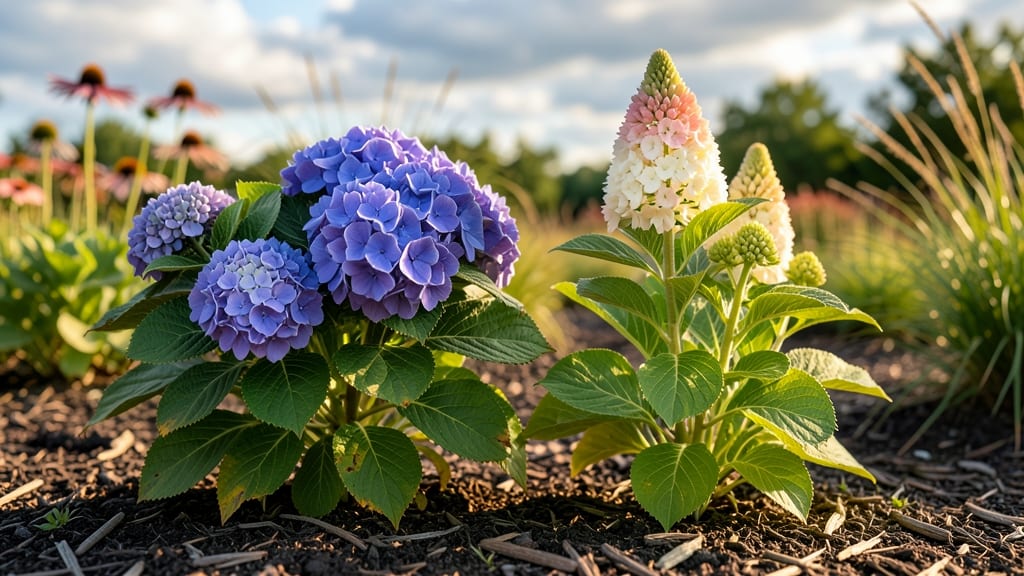
Hydrangeas in Illinois bloom between June and September, but timing depends on your zone, variety, and last frost date.
If you’ve ever waited eagerly for those bigleaf blooms to burst into color, only to be met with silence from your shrubs, you’re not alone. Illinois’ 5b-6b zones create a tricky dance between early springs and late frosts—one that can push blooms earlier or delay them entirely.
The key is understanding how your specific hydrangea type reacts: bigleaf varieties often wait until July, while panicle hydrangeas may start as early as June. Oakleaf hydrangeas, meanwhile, can extend the show into early fall, giving you three months of potential color if conditions are right.
Below, I’ll break down the exact timing by region, how to adjust pruning for Zone 5, and the small but mighty tweaks that turn "maybe" blooms into showstopping displays.
Hydrangea bloom timing in Illinois: month-by-month Zone 5 guide
Predicting when hydrangeas bloom in Illinois can feel like guessing the weather—especially in Zone 5, where early frosts and late springs create chaos. But with the right timing, you can enjoy bigleaf, panicle, and oakleaf hydrangeas bursting into color from June through September.
The key lies in understanding how regional microclimates and hydrangea types influence bloom windows.
Northern Illinois (like Chicago) often sees blooms 2-3 weeks later than southern regions (e.g., St. Louis), thanks to cooler temperatures and later last-frost dates. Meanwhile, panicle hydrangeas tend to bloom earlier than bigleaf varieties, which may wait until July for peak color.
Let’s break down the month-by-month schedule so you can plan your garden’s grand entrance.
In northern Illinois, where last frosts often linger until May 15, hydrangeas may not hit peak bloom until mid-July. This delay happens because bud formation (which starts in late summer) is sensitive to early fall temperatures.
If September frosts arrive early, blooms may fade faster, cutting the show short.
Southern Illinois, with its warmer microclimates near St. Louis, typically sees hydrangeas blooming 2-3 weeks earlier. For example, panicle hydrangeas might start in late June here, while bigleaf varieties could peak by early August. The Mississippi River valley acts like a heat sink, pushing bloom times forward.
If you’re in Chicago or the Quad Cities, watch for late-May bud swell—this is your cue that blooms are on the way. Oakleaf hydrangeas often lead the charge, with panicle types following closely. Bigleaf hydrangeas, however, may wait until July to shine, especially if spring was cool.
Mulching with 3-4 inches of organic matter can help insulate roots and encourage earlier blooms.
Don’t forget: soil pH plays a role in bloom timing too. Acidic soil (pH 5.5-6.0) enhances blue hues in bigleaf hydrangeas, while alkaline soil (pH 6.5-7.0) turns them pink. Testing your soil in early spring lets you adjust before buds form, ensuring vibrant blooms on schedule.
For gardeners in Zone 5b (like Peoria), aim to prune panicle hydrangeas in late February or March to encourage early blooms. Meanwhile, bigleaf and oakleaf types should be pruned right after flowering to avoid cutting off next year’s buds.
This timing ensures you don’t miss the June-August bloom window.
Pro tip: Deadhead spent blooms in September to redirect energy into next year’s buds. This simple step can push bloom times 1-2 weeks earlier in Zone 5, giving you a longer display. Just avoid pruning bigleaf hydrangeas until after late summer, or you’ll sacrifice next year’s flowers.
Finally, keep an eye on last-frost dates—they’re your best predictor of bloom timing. Use USDA frost maps to track your local trends, and adjust your expectations accordingly. With these Zone 5 secrets, you’ll turn your Illinois garden into a hydrangea showstopper year after year. 🌿
How to extend hydrangea blooms in Illinois: pruning and care hacks
Illinois gardeners know that hydrangea blooms can be fleeting, especially when summer heat and drought creep in. The key to longer-lasting flowers lies in understanding your specific hydrangea type and adjusting care to Illinois’ Zone 5 climate.
Whether you have bigleaf, panicle, or oakleaf varieties, small tweaks in pruning, watering, and soil can transform a single-season splash of color into months of vibrant displays.
Did you know panicle hydrangeas bloom on new wood while bigleaf varieties rely on old wood blooms? This distinction changes everything about when—and how—you prune. In Illinois, where late frosts and summer droughts are common, timing is everything.
Let’s dive into the care hacks that will keep your hydrangeas flowering from June through September.
Early Bloomers vs. Late Bloomers
- Bloom Time: June-July
- Prune After: Flowers fade (late fall/winter)
- Color Impact: pH-sensitive (blue/pink)
- Illinois Risk: Late frost damage
- Bloom Time: July-September
- Prune Before: New growth starts (early spring)
- Drought Tolerance: Higher than bigleaf
- Illinois Advantage: Extended fall color
Start with proper pruning to maximize bloom duration. For bigleaf hydrangeas, prune dead or weak stems in late winter or early spring (February-March) before buds swell.
Avoid heavy pruning—you’ll sacrifice next year’s blooms since they form on old wood. Panicle and oakleaf varieties, however, thrive with hard pruning in late winter to encourage new growth and larger blooms.
Illinois’ clay-heavy soils and summer droughts can stress hydrangeas, shortening their bloom time. To combat this, mulch heavily around the base (3-4 inches of organic mulch) to retain moisture and regulate soil temperature.
Water deeply 2-3 times per week during dry spells, focusing on the root zone. Morning watering prevents fungal issues, while drip irrigation delivers water efficiently without wetting foliage.
Don’t overlook soil pH—it’s the secret weapon for vibrant colors. Bigleaf hydrangeas change color based on pH: acidic soil (pH 5.5) produces blue blooms, while alkaline soil (pH 6.5) yields pink flowers.
Test your soil in early spring and amend with sulfur or lime as needed. Panicle hydrangeas, on the other hand, aren’t pH-sensitive but benefit from well-draining, slightly acidic soil.
For extended blooms, feed your hydrangeas with a balanced fertilizer (10-10-10) in early spring as new growth appears. Avoid high-nitrogen fertilizers—they promote foliage over flowers.
In July, apply a low-nitrogen, high-phosphorus fertilizer to encourage reblooming. Deadhead spent blooms regularly to redirect energy into new flowers, especially for panicle hydrangeas.
With these care hacks, your Illinois hydrangeas can bloom 2-3 weeks longer than average. The key is knowing your variety, pruning strategically, and adapting to Zone 5’s challenges.
Soon, your garden will be the talk of the neighborhood with hydrangeas that steal the show all summer long! 🌷