
Blooming
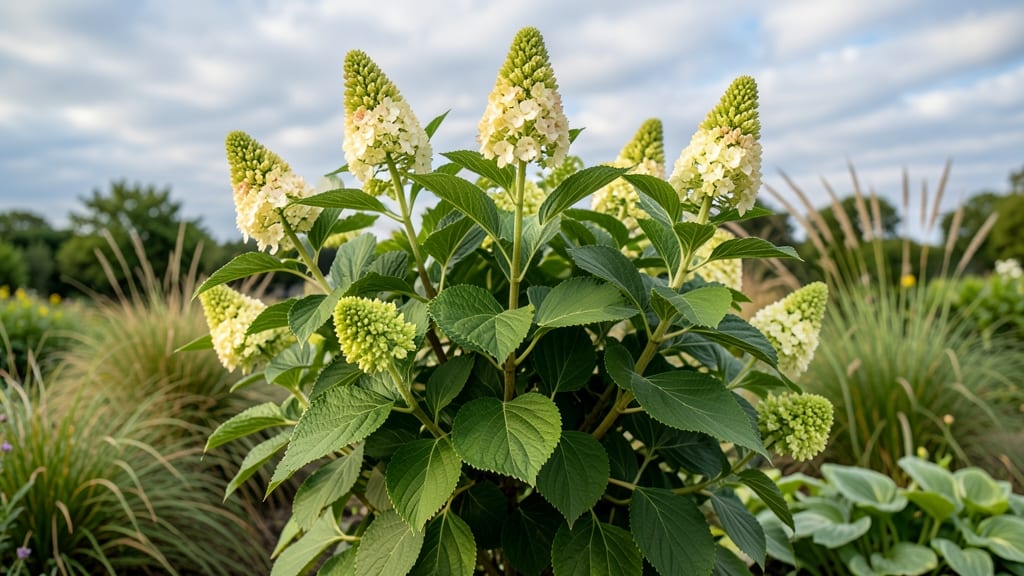
Panicle hydrangeas bloom on new wood because their flower buds develop in late summer after the previous year’s growth, so pruning timing directly impacts next spring’s flowers. Most varieties must be cut back right after blooming to stimulate fresh stems that will produce blossoms.
This growth habit means your pruning decisions in late summer or early fall set the stage for next year's showstopping blooms. 🌸 The key is understanding that these hydrangeas rely entirely on fresh, current-season growth for their flower production—unlike some varieties that bloom on old wood.
For example, 'Limelight' and 'Little Lime' are exceptions that produce flowers on both old and new wood, giving gardeners more flexibility in their pruning schedule.
When you prune at the right time—just after the flowers fade—you're essentially telling the plant to focus its energy on developing new stems that will bear next year's blossoms.
The buds form in late summer, so any major pruning done earlier in the season could remove potential flowering stems before they even develop.
💡 In This Article
- How Panicle Hydrangea Bud Formation Works
- Pruning Panicle Hydrangeas for Optimal Blooms
How panicle hydrangea bud formation works
Panicle hydrangeas develop their flower buds in late summer—typically between July and August—on the current year's growth rather than the previous year's stems. This process begins when the plant detects shortening daylight hours and cooling temperatures, signaling it's time to prepare for dormancy.
The buds form at the tips of new shoots that emerged in spring, which is why these hydrangeas are classified as "new wood" bloomers. 🌿
The actual bud formation involves specialized cells called meristematic cells that divide rapidly in response to hormonal cues, particularly auxin and cytokinins. These hormones stimulate cell growth while gibberellins help elongate the stems.
What's fascinating is that these buds remain dormant through winter, only breaking dormancy when daytime temperatures consistently reach 50-55°F in early spring. This timing explains why pruning too early can remove potential flowering stems before buds even form.
Light exposure plays a crucial role too. Buds develop best when stems receive at least 6 hours of direct sunlight daily, though partial shade is often preferred for leaf health.
The plant's energy allocation shifts dramatically during this period—up to 70% of its resources may go toward bud development rather than foliage growth. This is why over-fertilizing with nitrogen in late summer can backfire, producing lush leaves at the expense of flower buds. 🌸
Here's what happens if you prune at the wrong time: Cutting back in early summer removes these newly forming buds before they've had a chance to develop. Conversely, waiting until late fall or winter risks damaging the buds during harsh weather.
The ideal window is immediately after flowering (late spring to early summer), when the plant has already completed its primary bloom cycle but still has time to generate new stems for next year's flowers.
Consider the variety 'Annabelle' as an example. Its buds form along the current season's stems, which is why it produces such abundant blooms—often 8-12 inches wide—each spring. The plant's ability to regenerate stems quickly means it can recover well from pruning, but only if done correctly.
This biological process explains why panicle hydrangeas can look so healthy one year and then produce dramatically fewer flowers the next if pruned at the wrong time.
The temperature threshold for bud formation typically occurs when nighttime temperatures drop below 60°F for several consecutive nights. This cooling triggers a cascade of physiological changes, including the production of abscisic acid, which helps prepare the plant for dormancy while ensuring flower buds remain protected.
Understanding this process helps explain why gardeners in warmer climates sometimes see delayed bud formation compared to those in cooler regions.