
Blooming
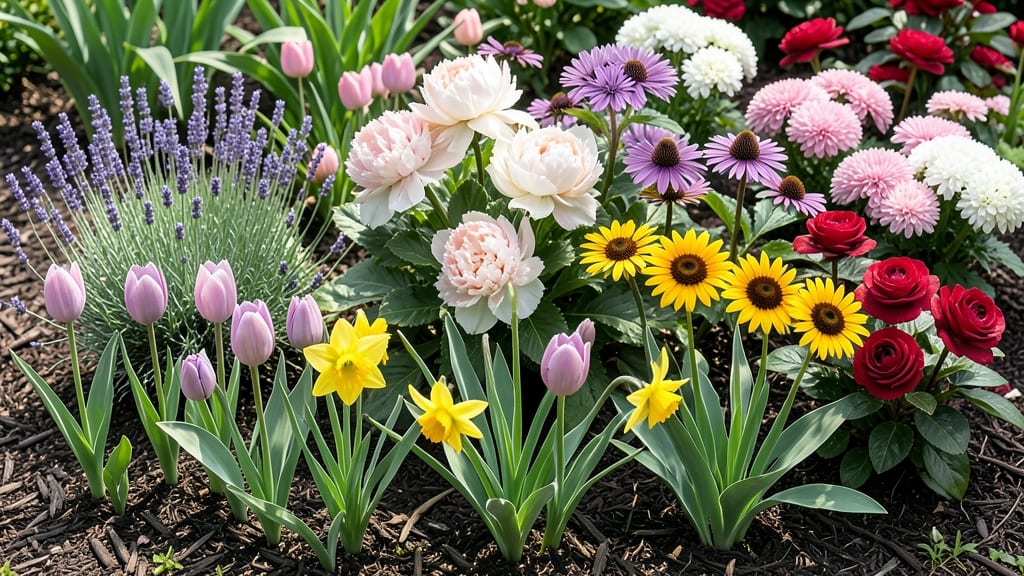
What's currently in bloom now varies by season and region, but spring typically features vibrant tulips, cheerful daffodils, and delicate cherry blossoms, while summer bursts with bold roses, cheerful sunflowers, and lush hydrangeas. Autumn showcases hardy chrysanthemums and starry asters, and winter brings evergreens plus festive poinsettias in milder climates. For exact timing, consult your local bloom calendar.
Your garden's seasonal beauty depends on more than just the calendar—it's all about your local climate zone and microclimates. 🌸 For example, Southern California might see camellias blooming in winter while Northern states still have snow, while coastal areas often enjoy earlier springs due to ocean moderation.
I always recommend checking your USDA hardiness zone to select flowers that will thrive year-round, with some varieties like lavender blooming multiple times if given proper care.
To create continuous color, I suggest mixing early bloomers like crocuses with mid-season peonies and late-season coneflowers. This staggered approach ensures your garden never looks bare, even between seasons. Plus, pairing flowers with complementary colors—like purple clematis with yellow daylilies—can make each bloom stand out more dramatically. 💫
💡 In This Article
- Seasonal Flower Blooms by U.S. Climate Zones
- How to Plan Your Garden for Year-Round Color
Seasonal flower blooms by u.s. climate zones
The timing of what's in bloom hinges on three key factors: USDA hardiness zones, average frost dates, and sunlight exposure. For instance, Zone 5 (northern states) sees tulips emerge in late April after the last frost, while Zone 9 (southern California) enjoys camellias blooming as early as November.
The difference comes from 10-15°F temperature variations between zones, which directly affects root dormancy periods and flowering triggers. 🌸
Sunlight exposure creates microclimates even within the same zone. South-facing slopes warm up 5-10°F faster than north-facing areas, allowing early bloomers like crocuses to appear weeks sooner. Coastal regions also benefit from ocean moderation—San Francisco's 70°F winters let roses bloom year-round, while inland areas might see them dormant.
Even soil type matters: sandy soils warm faster than clay, accelerating spring blooms by 7-14 days.
Early bloomers like daffodils thrive in Zone 3-7 with their 10-12 week cold stratification requirement, while late-season coneflowers (Zone 3-9) need 60-90 days of warm weather to trigger their fall displays.
What most gardeners don't realize is that these timing differences create natural succession—just when spring bulbs fade, summer perennials take over. This biological rhythm explains why professional gardens never look empty between seasons. ✨
Here's how to use this knowledge: In Zone 6, plant peonies (late May) alongside early daffodils (April) to bridge the gap. For Zone 8-10, extend summer color with tropical flowers like hibiscus that bloom until first frost.
The key is selecting varieties with staggered maturity dates—like 3-4 week differences between successive plantings of the same species.
Consider these zone-specific standouts:
- Zones 3-5: Hardy perennials like black-eyed Susans (July-Sept) that thrive in 20-30°F winters
- Zones 6-8: Heat-tolerant roses (June-October) that need 6+ hours of sunlight daily
- Zones 9-11: Year-round bloomers like bougainvillea that respond to 60-80°F temperatures
The science behind these variations lies in photoperiodism—the plant's internal clock that responds to daylight length. For example, chrysanthemums (fall bloomers) need 12-14 hours of daylight to trigger flowering, which explains their September-October peak in most regions. Understanding these mechanisms lets you push bloom times by 2-4 weeks through strategic planting and seasonal adjustments. 💫