
Blooming
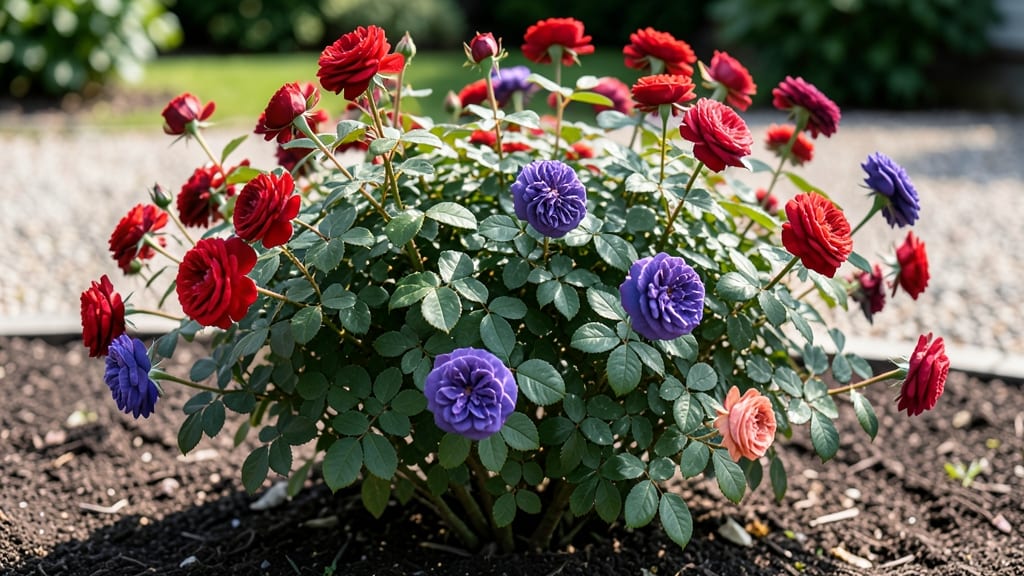
Knockout roses don’t just bloom all summer—they keep throwing out purple spikes from spring until frost, with almost no breaks. 🌸 I’ve grown them for years, and the only time they pause is when temps drop below 20°F. No deadheading, no fuss, just nonstop color that turns heads (and jealous neighbors).
The secret lies in their genetics: bred to be disease-resistant and repeat-blooming, they focus energy on flowers instead of hips or seed pods. Prune once in late winter to shape them, and they’ll reward you with 3-4 inches of blooms every 5-6 weeks.
Even in hot, humid summers, they stay vibrant where other roses wilt. By late August, you’ll still be snipping fresh buds for bouquets or cutting gardens. The only real variable? Your zone—zones 5-9 handle them best, but even in cooler areas, they’ll bloom until the first hard frost.
That’s 10+ weeks of color with almost no maintenance. They’re the ultimate lazy gardener’s dream: plant, water occasionally, and enjoy the show. No wonder they’re America’s top-selling rose!
Why Summer Blooms Fade Fast
Knockout roses are famous for their nonstop blooms, but even these tough plants can hit a snag—especially when summer heat and stress take over. If your roses are skipping their usual purple spikes, the issue usually boils down to a few key factors.
Understanding these will help you keep your garden vibrant all season long.
Extreme summer heat can push Knockout roses past their comfort zone. These roses thrive in USDA Zones 4-9, but when temperatures soar above 90°F (32°C) for weeks, their blooms can wilt faster than expected. Here’s why:
- Transpiration overload: Roses lose moisture rapidly through their leaves in high heat. If the soil dries out too quickly, roots can’t keep up, causing buds to drop before opening.
- Root zone stress: Even if you water regularly, shallow watering (like sprinklers) doesn’t reach the deep roots Knockout roses need. This leads to hydric stress, where the plant prioritizes survival over blooming.
- Nighttime recovery matters: If daytime temps spike but nights stay hot (above 75°F/24°C), roses don’t get the restorative dip in temperature they need to reset for new blooms.
Actionable fix: Water deeply 2-3 times per week (not daily!) using soaker hoses or drip irrigation to saturate the 12-18 inches of soil around the roots. Mulch with 2-3 inches of organic matter (like shredded bark) to retain moisture and cool roots.
Knockout roses are heavy feeders, and summer is when they demand the most energy. If the soil lacks key nutrients or is depleted from prior blooms, your roses may throw a tantrum by dropping buds or blooming sparsely.
- Nitrogen deficiency: Lush foliage requires nitrogen, but if it’s missing, buds may abort. A quick soil test can confirm, but signs include yellowing lower leaves or stunted growth.
- Phosphorus & potassium crash: These nutrients fuel flowering. If your soil is low in phosphorus (P), buds may form but fail to open. Potassium (K) deficiency weakens the plant’s stress response, making it more prone to heat or disease.
- Micronutrient gaps: Even small deficiencies in magnesium, calcium, or zinc can disrupt flower development. Symptoms might look like interveinal chlorosis (yellowing between leaf veins) or distorted new growth.
Actionable fix:
- Fertilize with a balanced, slow-release rose fertilizer (look for 10-10-10 or 12-12-12 NPK) every 6-8 weeks during summer.
- Add compost or worm castings to the soil surface to replenish organic matter.
- For a quick boost, use a liquid bloom booster (like fish emulsion or seaweed extract) every 2-3 weeks in water.
Knockout roses are disease-resistant, but summer pests and fungi can still sneak in and sabotage blooms. Common culprits include:
| Pest/Disease | How It Stops Blooms | Signs to Watch For |
|---|---|---|
| Japanese Beetles | Chewing on buds and leaves, starving the plant of energy. | Skeletons of leaves, chewed petals, and black, jelly-like frass (poop). |
| Spider Mites | Sucking sap from leaves, causing stress and reduced photosynthesis. | Fine webbing on undersides of leaves, bronzed or stippled leaves. |
| Black Spot Fungus | Weakens foliage, diverting energy away from blooms. | Black spots with yellow halos on leaves, premature leaf drop. |
| Powdery Mildew | Covers leaves in a white film, blocking sunlight and stunting growth. | White, powdery coating on leaves, distorted new growth. |
Actionable fix:
- Spray roses with neem oil or insecticidal soap every 7-10 days to deter beetles and mites.
- Remove infected leaves immediately and dispose of them in the trash (not compost).
- Improve air circulation by pruning crowded branches and spacing plants 3-4 feet apart.
- Apply a fungicide (like copper-based or sulfur-based) at the first sign of mildew or spots.
Knockout roses are low-maintenance, but improper pruning can send mixed signals to the plant, causing it to focus on regrowth instead of blooming. Common mistakes include:
- Over-pruning in late spring: If you cut back too aggressively after the first flush of blooms, the plant may not have enough energy to produce a second wave.
- Cutting into old wood: Knockout roses bloom on new wood. Pruning back to last year’s growth removes potential bloom sites.
- Leaving stubs: Cutting too close to the stem (or leaving more than ¼ inch) invites disease and weakens the plant.
Actionable fix:
- Prune lightly after the first bloom cycle (late spring) to encourage a second flush, but avoid heavy cuts.
- Always cut just above a leaf node (the bump where leaves grow) at a 45-degree angle.
- Use sterilized shears (wipe with rubbing alcohol) to prevent disease spread.
By tackling these root causes—heat stress, nutrient gaps, pests, and pruning errors—you’ll give your Knockout roses the best shot at year-round purple spikes. Most issues are fixable with a little extra care, so don’t let summer slow you down!
Revive Your Knockout Roses Summer Bloom
Knockout roses are the rockstars of the garden—disease-resistant, low-maintenance, and supposed to bloom nonstop. But if your bushes are throwing a summer fizzle, don’t panic! The fix is often simpler than you think.
Below, we’ll tackle the most common culprits behind sparse blooms and show you how to bring back those vibrant purple spikes—without deadheading drama.
Cause: Knockout roses need room to stretch their roots (and their blooms). If they’re packed in too tight, they’ll focus on survival, not flowers.
Fix It: 🔥 Prune the roots (gently!) if your roses are crammed in. Dig around the base and tease apart any tangled roots with your fingers or a fork. Aim for 12–18 inches of space between bushes. 🍳 Divide overgrown clumps if needed. Snip the plant into sections with clean shears, ensuring each has roots and stems. Replant immediately in fresh soil. 👨🍳 Upgrade the planting hole. If roots are shallow, dig a trench (not just a hole) to encourage deeper growth. Mix in compost or aged manure to loosen compacted soil.
Prevent It: ✨ Space new plants 3–4 feet apart at planting time. 🌡️ Mulch heavily (2–3 inches) to deter weeds that compete for nutrients.
Cause: While Knockout roses love sun, intense afternoon heat (especially in zones 8–10) can scorch leaves and halt blooming. Too little sun? They’ll stretch and produce fewer flowers.
Fix It: 🔥 Provide afternoon shade if your roses are wilting. A lightweight shade cloth (30–50%) or a nearby tree can help. 🍳 Water deeply in the heat. Soak the root zone 1–2 inches per week (more in extreme heat). Use drip irrigation to keep leaves dry and reduce stress. 👨🍳 Adjust fertilizer timing. Stop feeding 6–8 weeks before the first frost—summer heat + fertilizer = leafy growth, not blooms.
Prevent It: 💡 Plant in partial shade if you’re in a scorching climate (e.g., near a west-facing wall). 🎯 Choose heat-tolerant varieties like ‘Double Knock Out’ or ‘Radrazz’ for hotter zones.
Cause: Knockout roses are drought-tolerant but not drought-proof. Too little water = stressed plants; too much = root rot and fewer blooms.
Fix It: 🔥 Check soil moisture. Stick your finger 2 inches deep—if it’s dry, water. If it’s soggy, hold off. 🍳 Water at the base, not the leaves, to prevent fungal issues. Use a soaker hose for even distribution. 👨🍳 Improve drainage if your soil stays waterlogged. Amend with perlite or sand to help roots breathe.
Prevent It: ✨ Mulch with wood chips to retain moisture and regulate soil temp. 🌡️ Water in the morning to reduce evaporation and fungal risk.
Cause: Even disease-resistant Knockouts can get black spot, powdery mildew, or rose rosette virus if humidity is high or airflow is poor.
Fix It: 🔥 Prune infected branches immediately—sterilize shears with rubbing alcohol between cuts. 🍳 Apply neem oil or fungicide (like copper spray) preventatively every 2–3 weeks in humid climates. 👨🍳 Thin out foliage to improve airflow. Remove crossing branches and suckers at the base.
Prevent It: 💡 Space plants for airflow (3–4 feet apart). 🎯 Water at the base and avoid overhead sprinklers.
Cause: Knockouts bloom best with balanced nutrients, but too much nitrogen = lush leaves, no flowers.
Fix It: 🔥 Test your soil (a simple kit from a garden center works). Aim for pH 6.0–6.5. 🍳 Use a bloom-boosting fertilizer (like 5-10-5 or rose-specific formula) every 4–6 weeks during growing season. 👨🍳 Top-dress with compost in early spring for slow-release nutrients.
Prevent It: ✨ Avoid high-nitrogen fertilizers (like lawn food)—they promote foliage over flowers. 🌡️ Feed lightly in summer to avoid stressing the plant.
Cause: Knockout roses can live 10+ years, but older bushes may slow down. If the problem persists, it might be time for a refresh.
Fix It: 🔥 Rejuvenation pruning: Cut back 1/3 of the oldest canes to the ground in early spring. This encourages new growth. 🍳 Divide and multiply: Dig up the plant, separate the roots, and replant the healthiest sections. 👨🍳 Replace if needed: If the plant is woody, bare, or diseased, dig it up and start fresh with a new rose.
Prevent It: 💡 Prune annually to remove dead wood and encourage new blooms. 🎯 Rotate varieties every few years to keep your garden vibrant.
If your roses are still struggling, try this 30-day reset:
- Prune (remove 1/3 of oldest canes).
- Amend soil (add compost + perlite).
- Fertilize (bloom booster).
- Water deeply (1–2 inches per week).
- Watch & adjust—you’ll likely see new blooms in 4–6 weeks!
With these fixes, your Knockout roses should be bursting with purple spikes from spring to frost—no deadheading required. 🌸
Frequently asked questions about Knockout roses
Why do Knockout roses bloom continuously all summer?
These roses are bred to be repeat-bloomers, meaning they produce flowers continuously from spring until frost. Their genetics focus energy on blooms instead of seed pods, and they don't need deadheading. The secret is their disease resistance and ability to thrive in USDA Zones 4-9 with minimal care.
Will Knockout roses bloom in hot climates like Zone 9 or 10?
Yes, but they may need extra care in extreme heat. Provide afternoon shade if temps hit 95°F+, and water deeply 2-3 times per week to keep roots cool. Varieties like 'Double Knock Out' handle heat better than standard types. Mulch heavily to retain moisture and prevent soil overheating.
Do Knockout roses need special fertilizer for continuous blooming?
Use a balanced rose fertilizer (10-10-10 NPK) every 6-8 weeks during growing season. Avoid high-nitrogen fertilizers that promote foliage over flowers. For a quick boost, add compost or worm castings in spring. Stop fertilizing 6-8 weeks before first frost to let the plant harden off.
Can I grow Knockout roses in containers?
Choose a container at least 18 inches wide and deep with drainage holes. Use well-draining potting mix and water when the top 1-2 inches of soil dry out. Container-grown roses bloom just as prolifically but may need more frequent watering. Fertilize monthly during growing season with a water-soluble rose food.
What's the best time to prune Knockout roses for summer blooms?
Prune lightly in late winter (just before new growth starts) to shape the bush. After the first bloom cycle, do a light cleanup prune to remove dead wood. Never prune into old wood - these roses bloom on new growth. Use clean, sharp shears and cut at a 45-degree angle just above a leaf node.