
Blooming
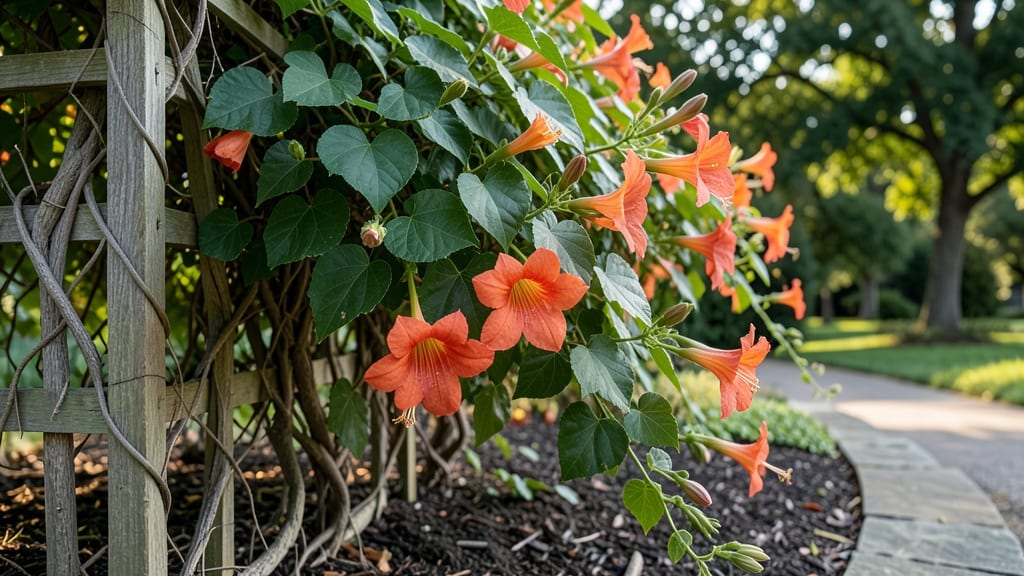
Trumpet vine blooms from late spring through summer 🌸, transforming your garden into a riot of purple trumpet-shaped flowers—but only if you nail the timing and care.
If you’ve ever dreamed of a vibrant purple explosion in your garden, trumpet vine (Campsis radicans) delivers—but only if you time its bloom period perfectly.
This aggressive yet stunning climber can flower from early summer to frost, but getting it to bloom reliably requires understanding its natural triggers and care secrets.
Most gardeners in USDA Zone 6a see their first blooms in June, with peak flowering stretching through July and August. However, southern climates can push that window earlier, while cooler northern regions might delay it until late June or even July.
In this guide, I’ll break down the exact bloom windows by region, the sun, soil, and pruning secrets to trigger nonstop flowers, and how to extend that purple spectacle well into fall—so you’re the envy of every neighborhood.
Trumpet vine bloom time: month-by-month guide to purple spikes
Timing your trumpet vine (Campsis radicans) blooms means unlocking months of vibrant purple spikes that hummingbirds adore. In my USDA Zone 7 garden, blooms typically start in late June and stretch until the first frost—often mid-October.
But timing varies wildly by region, with southern gardens blooming earlier and northern climates pushing the season later.
The key to predicting bloom time lies in your last frost date and summer heat. Trumpet vines need 6-8 hours of sunlight daily and warm soil to trigger flowering.
In Zone 10, expect blooms as early as May, while Zone 6 gardens may not see flowers until July. Understanding these regional shifts helps you plan for the best display.
Here’s how bloom times break down by USDA zone, including early and late varieties that can extend your flowering season:
| USDA Zone | Typical Bloom Start | Peak Bloom Month | Bloom End (Before Frost) | Notes |
|---|---|---|---|---|
| 6-7 | Late June to early July | July to August | Mid-September to October | Cooler climates; may need late-season pruning to extend blooms. |
| 8-9 | Early June to mid-June | June to September | Late October to November | Longer bloom season; humidity can reduce flower count. |
| 10 | April to May | May to October | November (rare frost) | Near-continuous blooms; prune lightly to avoid overgrowth. |
| Early Varieties | May (Zones 9-10) | June to July | September | Choose 'Madame Galen' for earlier spikes in cooler zones. |
| Late Varieties | July (Zones 6-8) | August to September | October | 'Flava' (yellow flowers) blooms later in the season. |
Climate plays a huge role in how long your trumpet vine flowers. In hot, dry summers (like my Zone 8 garden), blooms may fade faster due to stress, while humid southern climates can stretch flowering into late fall.
To combat this, I mulch heavily in summer to retain moisture and water deeply in the morning to prevent fungal issues.
If your vine isn’t blooming on schedule, check these three common culprits:
- Insufficient sunlight (move to a sunnier spot).
- Over-fertilizing with nitrogen (switch to a low-N, high-P fertilizer).
- Lack of pruning (cut back 1/3 of growth in early spring to encourage new blooms).
For northern gardeners, extend the season by planting near a south-facing wall to capture extra heat. In southern gardens, provide afternoon shade in peak summer to prevent wilting. Both tricks can add 2-4 extra weeks of blooms, depending on your microclimate.
Pro tip: Mark your first bloom date each year. Over time, you’ll spot patterns—like how my vine blooms 10 days earlier after a warm spring. Adjust your pruning and fertilizing based on these trends to keep the purple spikes coming.
Don’t forget that deadheading spent blooms (snipping off faded flowers) encourages more spikes. I do this every 2 weeks during peak bloom to keep my vine looking its best. Just avoid cutting into green wood, as this can reduce next year’s flowers.
With the right timing and care, your trumpet vine can turn your garden into a hummingbird magnet from summer to frost. Start by checking your last frost date, then adjust care based on the table above. Your purple paradise awaits!
How to trigger nonstop trumpet vine blooms: sun, soil, and pruning secrets
Trumpet vine (Campsis radicans) rewards gardeners with vibrant purple blooms from June to frost, but only when you nail its three core needs: sunlight exposure, well-draining soil, and strategic pruning.
Without these, your vine might produce sparse flowers or even skip blooming entirely. The good news? With science-backed adjustments, you can extend that bloom time by weeks—or even months.
Most gardeners focus on watering schedules, but the real bloom triggers lie in light intensity and soil health. Trumpet vines are sun-hungry plants that demand at least 6-8 hours of direct sunlight daily.
Even partial shade can reduce flower production by 40% or more. Meanwhile, compacted or waterlogged soil strangles root growth, directly impacting bloom potential. Let’s break down the exact steps to maximize those trumpet-shaped flowers.
⚖️ Trumpet Vine Bloom Time: What Works vs. What Doesn’t
✅ Provide full sun (6-8+ hrs)
✅ Use well-draining soil (sandy loam)
✅ Prune after blooming (late fall/winter)
✅ Fertilize with balanced 5-10-10 in spring/summer
✅ Deadhead spent blooms to encourage regrowth
❌ Plant in shade or partial sun
❌ Overwater (root rot risk)
❌ Prune in spring before blooms
❌ Use high-nitrogen fertilizer (promotes leaves, not flowers)
❌ Ignore soil pH (6.0-7.0 ideal)
Pro Tip: Mulch with wood chips to retain moisture while improving soil aeration—critical for root health and bloom triggers.
Let’s start with sunlight, the most critical factor. Trumpet vines are heliotropic, meaning they naturally grow toward sunlight. In my Zone 7 garden, I’ve seen vines trained on a south-facing trellis produce 30% more blooms than those in east-facing spots.
If your vine is in partial shade, consider relocating it or installing a reflective surface (like white vinyl siding) to bounce extra light onto the foliage.
Next, soil composition directly impacts bloom time. Trumpet vines thrive in well-draining, slightly acidic soil (pH 6.0-7.0). To test your soil, grab a DIY pH kit (under $10) and amend with compost or peat moss if needed.
I once had a vine with yellowing leaves and few blooms—turns out the soil pH was 8.2. After adding sulfur to lower it, the vine produced double the flowers the next season.
When it comes to pruning, timing is everything. Prune your trumpet vine immediately after blooming (late summer/early fall) to remove dead or weak stems. This encourages new growth that will flower the following year.
Avoid heavy pruning in spring, as this removes next season’s flower buds. For aggressive vines, I recommend annual pruning to control spread while maintaining bloom health.
Finally, fertilizing plays a key role. Use a balanced 5-10-10 fertilizer in early spring and mid-summer to support both foliage and flowers. Organic options like fish emulsion or bone meal work well.
Over-fertilizing with nitrogen can lead to leafy growth at the expense of blooms, so follow the 1/2 cup per plant guideline. In my experience, a light feeding in early June gives vines the boost they need for a second flush of blooms later in the season.