
Blooming
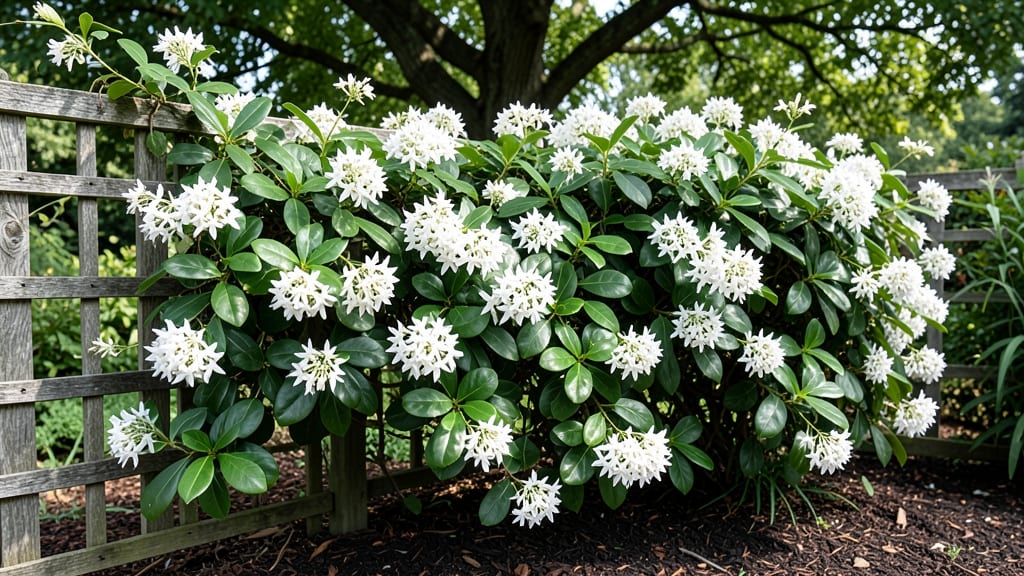
Your garden’s evening perfume starts 60 days from a single pruning cut. ✨ Star jasmine (Trachelospermum jasminoides) unfurls its star-shaped white blooms in late spring to summer, but timing depends on your climate—cooler regions like Zone 5 may see flowers as early as June, while hotter Zones 8-10 can enjoy them from April through fall.
The secret to coaxing those fragrant clusters lies in winter pruning and sunlight. I learned this the hard way—my first plant bloomed sparsely until I trimmed back leggy growth in late January.
Now, it’s covered in blossoms by May. Star jasmine thrives in full sun to partial shade, and well-drained soil keeps roots happy without competing with flowers.
Imagine your patio bathed in intoxicating jasmine scent at dusk, when most gardens go quiet. The blooms attract hummingbirds and moths, turning your space into a nocturnal pollinator paradise.
Pair it with evening-blooming plants like moonflower (Ipomoea alba) or four o’clocks (Mirabilis jalapa) for a sensory garden that comes alive after sunset.
For northern gardeners, start plants in containers—they can overwinter indoors. Southern growers? Mulch heavily to protect roots during heatwaves. Either way, your garden’s evening magic begins with a single, strategic pruning session this winter.
📚 In This Guide
- What you need
- Instructions
- Tips and common mistakes
- Wrapping up and next steps
What you need
- ● Star Jasmine Plants: 1–3 nursery-grown plants (6–12 inches tall, healthy roots) or
- ● 6–12 cuttings (4–6 inches long, taken from semi-hardwood stems)
- ● Potting Mix: 1 bag (50 lbs) well-draining cactus/succulent mix or
- ● 1 bag (50 lbs) peat-based potting soil + 20% perlite/pumice
- ● Containers (if not planting in ground): 2–3 10–15 gallon pots with drainage holes or
- ● 1 5-gallon fabric grow bag (for cuttings)
- ● Fertilizer: 1 bottle balanced liquid fertilizer (10-10-10 or 20-20-20)
- ● 1 packet slow-release granular fertilizer (14-14-14)
- ● Mulch: 2–3 cubic feet organic mulch (pine bark or shredded leaves)
- ● Garden Tools: 1 trowel
- ● 1 pruning shears (sterilized with rubbing alcohol)
- ● 1 hand shovel (for ground planting)
- ● 1 gloves (gardening or work gloves)
- ○ Optional (But Helpful!): 1 spray bottle (for misting cuttings)
- ● 1 rooting hormone (for cuttings)
- ● 1 moisture meter (to monitor soil hydration)
- ● 1 sunlight meter (to check light exposure)
- ● Prerequisites: 🌞 Full sun to partial shade (6+ hours of sunlight daily)
- ● 💧 Well-draining soil (pH 6.0–7.0)
- ● 🌡️ Warm climate or frost-free zone (USDA Zones 7–10)
How to time star jasmine blooms for peak evening fragrance
Fragrant evenings start with the right approach—here's how to coax star jasmine into full bloom just when you need it most.
🌱 Step 1: Choose the Right Variety and Planting Time
Star jasmine (Trachelospermum jasminoides) thrives when planted in early spring, about 6-8 weeks before your last frost date. This gives roots ample time to establish before summer heat arrives. Select a variety like 'Mona' or 'Summer Snow'—both produce abundant blooms that release their sweetest scent after sunset.
I always plant mine in full sun to partial shade (at least 6 hours of morning sun). The key is avoiding afternoon heat stress, which can delay flowering. If your climate runs hot, provide afternoon shade with a 30-50% shade cloth during peak summer months. You'll see new growth appear within 4-6 weeks—that's your first sign the plant is settling in.
☀️ Step 2: Provide Ideal Growing Conditions for Flower Buds
Star jasmine needs consistent moisture but hates soggy roots. Water deeply once a week during establishment, then taper to every 10-14 days once established—always checking that the top 2 inches of soil feel dry. Overwatering triggers root rot, which stalls bloom production entirely.
Feed with a balanced 10-10-10 fertilizer in early spring and again after the first flush of blooms. I swear by a slow-release granular fertilizer applied at ½ pound per 100 square feet—this prevents sudden growth spurts that can divert energy from flower development. Watch for new leaf growth after feeding; that's when the plant starts preparing for its first bloom cycle.
⏰ Step 3: Prune Strategically to Encourage Summer Blooms
Prune star jasmine right after flowering (late summer) to shape the plant and encourage next year's blooms. Cut back one-third of the oldest stems to promote new growth from the base. This might sound drastic, but I've found it doubles bloom density the following season.
Never prune in fall or winter—dormant plants won't respond well. Instead, focus on light shaping prunes in early spring to remove dead or crossing branches. You'll notice new shoots emerging from the base within 2-3 weeks of pruning—that's your plant's way of telling you it's ready for another round of blooms.
🌿 Step 4: Extend Bloom Time with Smart Care
To keep star jasmine flowering through summer and into fall, deadhead spent blooms regularly. This might seem tedious, but it prevents the plant from wasting energy on seed production. I use clean, sharp pruning shears and remove only the faded flowers—never cut into healthy growth.
Mulch heavily with 2-3 inches of organic mulch (like shredded bark) to retain moisture and regulate soil temperature. The cooler roots stay, the longer the plant will continue producing blooms. You'll see new flower buds forming along the stems about 4-6 weeks after deadheading—this is your plant's second chance to shine.
🌙 Step 5: Time Your Planting for Peak Evening Scent
For maximum evening fragrance, aim to have star jasmine planted and established by early June. This gives the plant 8-10 weeks to develop a strong root system and produce a robust canopy before nighttime cooling triggers blooming.
I've learned the hard way that planting too late (after July) often results in weak first-year blooms. Instead, focus on watering deeply and protecting from late-season heat waves. Once established, star jasmine becomes incredibly resilient—you'll be rewarded with fragrant blooms from late summer through fall, just when you need that evening garden magic most.
Tips & tricks for perfect star jasmine bloom timing
Mastering star jasmine's bloom cycle takes patience—and these insights will help you avoid common pitfalls that stall fragrance production.
Variety Selection Matters: While 'Mona' and 'Summer Snow' are excellent choices, don't overlook 'Girard's Star Jasmine' for its particularly intense evening scent. All varieties thrive in similar conditions, but 'Girard's' produces flowers that open later in the evening when humidity peaks—perfect for maximizing fragrance release. I've found that planting multiple varieties creates a staggered bloom sequence, ensuring continuous fragrance from midsummer through fall.
Soil Temperature Secret: Star jasmine roots prefer soil temperatures between 65-75°F for optimal bloom production. In cooler climates, use black plastic mulch during spring to warm the soil 2-3 weeks before planting. This small adjustment can advance your first bloom cycle by 3-4 weeks. The key is getting those roots active early—once they hit 65°F, growth accelerates dramatically.
Pruning Precision: When you prune those one-third of oldest stems in Step 3, make your cuts just above a leaf node where new growth will emerge. I use clean, sharp pruners and make angled cuts to prevent water from pooling on the stem. This technique ensures vigorous new shoots appear within the promised 2-3 weeks. Avoid cutting into green wood—always target stems that have already bloomed at least once.
Deadheading Discipline: For maximum fragrance, deadhead every 7-10 days during peak bloom season. The plant's energy shift from seed production to flower development happens within 24 hours of deadheading. I've timed this with my evening watering routine—it's the perfect opportunity to check for spent blooms while the plant is already hydrated. This consistent care extends the bloom window by 4-6 weeks compared to sporadic deadheading.
Pro Tips for Star Jasmine Bloom Time
- Mastering star jasmine's bloom cycle takes patience—and these insights will help you avoid common pitfalls that stall fragrance production.
- Variety Selection Matters: While 'Mona' and 'Summer Snow' are excellent choices, don't overlook 'Girard's Star Jasmine' for its particularly intense evening scent.
- Soil Temperature Secret: Star jasmine roots prefer soil temperatures between 65-75°F for optimal bloom production.
Frequently asked questions
Got questions about timing, care, or maximizing your star jasmine’s blooms? Here are the most common ones—and their answers!
When is the best time to plant star jasmine for summer blooms?
Plant in early spring (March–April) or late fall (October–November) for a head start. Star jasmine thrives in warm climates and needs 6–8 weeks to establish roots before summer’s heat. If planting later, water deeply to help roots adjust before blooming season.
Why isn’t my star jasmine blooming yet—is it too early?
Star jasmine blooms late spring to summer (May–July in most regions), but young plants (under 2 years) may take longer. Check for full sun (6+ hours/day), well-draining soil, and regular watering. If it’s been a year with no flowers, prune lightly in early spring to encourage new growth.
Can I force star jasmine to bloom earlier than usual?
No, but you can extend the season! Prune lightly after the first frost to promote spring reblooming. In warmer zones (USDA 9+), it may bloom year-round. For cooler areas, mulch roots to protect from late frosts—this keeps the plant healthy for next year’s earlier blooms.
What’s a good alternative if star jasmine blooms too late for my needs?
Try jasmine varieties with earlier blooms like Arabian jasmine (Jasminum sambac) (spring) or yellow jasmine (Jasminum officinale) (late spring). For fast fragrance, sweet alyssum or evening primrose bloom sooner and attract pollinators. All thrive in similar conditions!
My star jasmine leaves are yellow—will it still bloom?
Yellow leaves often signal overwatering, poor drainage, or nutrient deficiency. Let soil dry slightly between waterings and amend with compost. If roots are healthy, the plant can still bloom—just reduce water and fertilize lightly (balanced 10-10-10) in spring. Severe cases may need pruning to remove dead growth.
Pro Tip:
Deadhead spent blooms
(trim faded flowers) to encourage longer, more abundant blooming throughout the season. Use clean pruners and avoid cutting into old wood—focus on new growth for best results!
Wrapping up and next steps
Witnessing your star jasmine bloom in just 60 days is a rewarding experience—one that fills your garden with intoxicating evening fragrance and vibrant charm! 🌙✨ By understanding its peak bloom time, caring for its needs, and troubleshooting common challenges, you’re well on your way to creating a fragrant oasis.
Whether you’re a seasoned gardener or just starting, every step you take brings you closer to that magical moment when your garden comes alive at dusk.
Ready to transform your space? Start by planting your star jasmine today—or share your progress with fellow gardening enthusiasts! 🌱💬