
Blooming
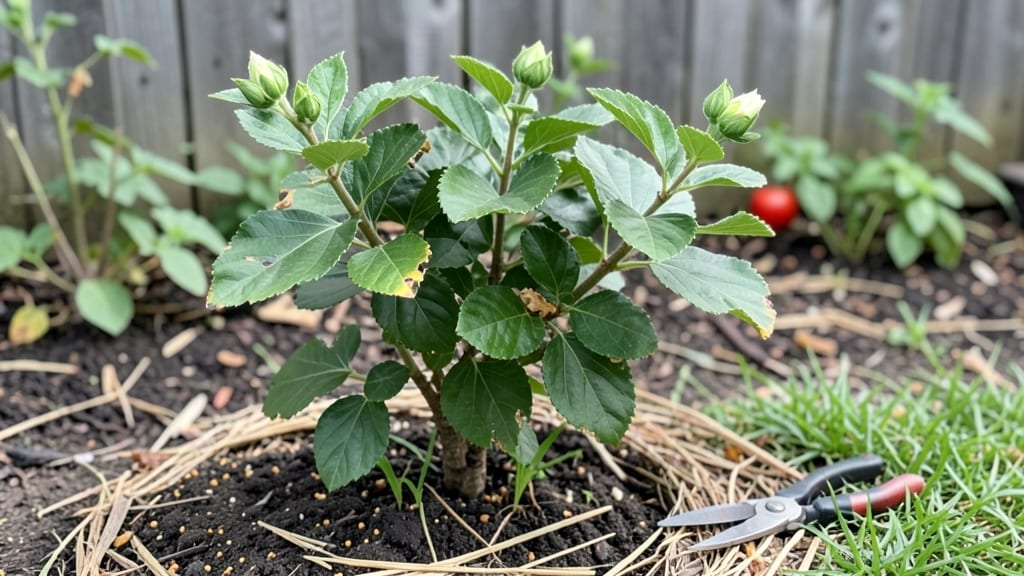
Hibiscus stopped flowering when they’re not getting enough sunlight, nutrients, or the right care timing. 🌿 I’ve nursed back more than a few bare-stemmed hibiscus by focusing on three quick fixes: light, pruning, and feeding—each one a game-changer for revival.
The worst part? Most gardeners overlook the simplest solutions until the plant’s nearly given up.
First, check your plant’s sunlight. Hibiscus need 6+ hours of direct sun daily, and if yours is in shade, it’ll focus on leaves instead of blooms. Next, prune back leggy growth in early spring to encourage new, bushier stems—this is where flowers form.
Finally, feed with a balanced fertilizer (10-10-10) in spring and a bloom booster (high phosphorus) when buds form.
Within 4-6 weeks, you’ll see fresh green growth and, eventually, those bold blooms returning. The key is consistency—don’t skip fertilizing or let the plant dry out completely. Even neglected hibiscus bounce back with the right adjustments, and you’ll have flowers again before you know it.
Season matters too. If your hibiscus is dormant in winter (like tropical varieties), hold off on pruning until spring. For hardy types, a light prune in late winter can jumpstart blooming. Let’s get yours back on track!
Root Causes of Sudden Flower Loss
When your hibiscus plant suddenly stops producing its stunning blooms, it’s often a sign that something fundamental is out of balance. Understanding the why behind the problem is the first step to bringing back those vibrant flowers.
Below, we break down the most common reasons—rooted in science—and what they mean for your plant’s health.
🌱 Nutrient deficiencies: the hidden starvation
A hibiscus plant is a heavy feeder, and when it lacks essential nutrients, it prioritizes leaf growth over flower production. The most critical deficiencies include:
- Nitrogen (N) imbalance: Too much nitrogen promotes lush foliage but stops flowering entirely. While nitrogen is vital for growth, an excess throws off the plant’s energy balance, leaving no resources for blooms. Test your soil—if the nitrogen-to-phosphorus ratio is skewed (e.g., 3:1 or higher), your hibiscus may be "overfed" for flowers.
- Phosphorus (P) shortage: Phosphorus is the "flowering nutrient," responsible for energy transfer and root development. Without enough P, your hibiscus may produce small, weak buds that drop off before opening. Look for purplish or dark green leaves with slow growth—a classic sign of phosphorus deficiency.
- Potassium (K) deficiency: Potassium regulates water uptake and stress responses. A lack of it weakens the plant’s ability to support heavy blooms, leading to yellowing leaf edges (a condition called chlorosis) and stunted flower development.
💡 Pro Tip: Use a balanced, slow-release fertilizer (like a 10-10-10 or 5-10-10 blend) in early spring and mid-summer. For a quick fix, apply a phosphorus-rich fertilizer (e.g., bone meal or a 0-10-10 formula) to encourage bud formation.
☀️ Light and temperature stress: too much or too little
Hibiscus plants are tropical at heart and demand specific light and temperature conditions to flower. Deviate from these, and your plant will shift its energy away from blooms:
- Insufficient sunlight: Hibiscus needs 6–8 hours of direct sunlight daily. In low-light conditions, the plant stretches (etiolation) and produces fewer, smaller flowers—or none at all. If your plant is indoors, move it near a south- or west-facing window or supplement with grow lights (12–14 hours of light per day).
- Excessive heat or cold stress:
- Too hot: Temperatures above 90°F (32°C) can cause buds to drop prematurely or fail to open. Provide afternoon shade in extreme heat.
- Too cold: Hibiscus won’t flower below 60°F (15°C). Drafts, air conditioning vents, or sudden temperature drops (like overnight chills) can shock the plant and halt blooming.
- Seasonal dormancy: Some hibiscus varieties (like Hibiscus rosa-sinensis) naturally stop flowering in winter due to shorter daylight hours. This isn’t a problem—it’s biological timing! Prune spent blooms in late winter to encourage new growth as days lengthen.
🌡️ Quick Fix: Monitor your plant’s microclimate. Use a thermometer to track temperature swings and adjust shading or heating as needed. For indoor plants, a heat mat in winter can help maintain ideal temps.
💧 Watering woes: the drowning or thirsty dilemma
Watering is a delicate balance—too much or too little can both sabotage flowering. Hibiscus roots need consistent moisture but hate soggy soil:
- Overwatering: Hibiscus roots are sensitive to waterlogged soil, which cuts off oxygen and triggers root rot. When roots struggle, the plant can’t absorb nutrients or water efficiently, leading to dropped buds and yellow leaves. Check soil moisture by sticking your finger 2 inches deep—if it’s damp, wait to water.
- Underwatering: While hibiscus can tolerate brief dry spells, chronic drought stress causes buds to abort. The plant conserves energy by halting non-essential functions—like flowering. Look for crispy leaf edges or wilting as warning signs.
- Inconsistent watering: Hibiscus hates moisture fluctuations. Alternating between drought and overwatering confuses the plant’s growth cycles, leading to bud drop and poor flowering. Aim for 1–1.5 inches of water per week (more in heatwaves).
💧 Actionable Tip: Use well-draining soil (a mix of potting soil, perlite, and sand) and water deeply but infrequently. For container-grown hibiscus, ensure pots have drainage holes and elevate them slightly to prevent root rot.
🌿 Pruning and growth habits: overdue or overzealous trims
Pruning is essential for hibiscus health, but timing and technique can make or break your blooms:
- Pruning at the wrong time: Hibiscus flowers on new growth. If you prune too late in the season (after summer), you remove potential flowering stems. Always prune in early spring to encourage vigorous new shoots.
- Removing too many stems: Hibiscus flowers on terminal buds (the tips of branches). Heavy pruning can reduce the number of flowering sites. Never cut back more than 1/3 of the plant’s height in one session.
- Not pruning dead or diseased branches: Overgrown or diseased stems compete for resources, starving healthy branches of energy needed for blooms. Regularly inspect your plant and snip off any brown, mushy, or crisscrossing stems.
✂️ Pruning Guide:
- 🔥 Best time: Late winter or early spring (before new growth starts).
- 🍳 Tools: Use sterilized, sharp pruners to avoid tearing stems.
- 👨🍳 Method: Cut just above a leaf node (the bump where leaves grow) at a 45-degree angle.
- 🥘 Avoid: Topping the plant (cutting the very top) unless it’s overgrown—this can stunt flowering.
🐞 Pests and diseases: silent flower saboteurs
Hidden pests and pathogens drain your hibiscus’s energy, leaving it too weak to produce blooms. Common culprits include:
- Aphids, spider mites, or whiteflies: These sap-sucking insects weaken the plant by feeding on leaves and stems. Infestations cause stunted growth and dropped
Revive Your Hibiscus Blooms Now
If your hibiscus has stopped flowering, don’t panic—there’s always a way to bring back those vibrant blooms! The key is identifying the root cause and taking targeted action. Below, we’ve mapped out practical solutions for each common issue, along with prevention tips to keep your hibiscus thriving long-term.
Let’s get those flowers back in full force! 🌸💐
🌱 Fix 1: Insufficient Sunlight → Move to Brighter Spot
Hibiscus plants are sun-worshippers! If they’re not getting enough light, they’ll focus on growing leaves instead of blooming.
How to Fix It:
- 🔥 Relocate your hibiscus to a spot with 6–8 hours of direct sunlight daily (south- or west-facing windows or a sunny patio).
- 🌡️ Adjust gradually—if moving outdoors, acclimate it over 1–2 weeks to avoid shock.
- 💡 Pro Tip: If indoors, supplement with a grow light (12–14 hours/day) to mimic natural sunlight.
Prevention Tips:
- 🌿 Choose the right location before planting—hibiscus thrives in full sun.
- 📅 Monitor light exposure in winter when days shorten; use artificial light if needed.
💧 Fix 2: Overwatering or Poor Drainage → Balance Moisture
Too much water (or soggy soil) stresses hibiscus roots, halting flower production. Conversely, underwatering can also stunt blooms.
How to Fix It:
- 👨🍳 Check soil moisture—stick your finger 1–2 inches deep; water only if dry.
- 🔪 Improve drainage by:
- Adding perlite or sand to heavy clay soil.
- Repotting into a container with drainage holes if in pots.
- Elevating pots to prevent water pooling.
- ⏰ Water deeply but less often—aim for 1–1.5 inches per week (adjust for climate).
Prevention Tips:
- 🌡️ Use a moisture meter to avoid guesswork.
- 💡 Mulch around the base (2–3 inches) to retain moisture without over-saturating soil.
🌿 Fix 3: Nutrient Deficiency → Fertilize Smartly
Hibiscus needs phosphorus and potassium for blooms, but too much nitrogen (common in lawn fertilizers) promotes leaves over flowers.
How to Fix It:
- 🍳 Switch to a bloom-boosting fertilizer (look for a 5-10-10 or 10-20-20 NPK ratio).
- 📊 Feed every 4–6 weeks during growing season (spring–fall).
- 💡 Pro Tip: Use fish emulsion or banana peel tea for a potassium boost (great for flower production).
Prevention Tips:
- ✨ Avoid high-nitrogen fertilizers (like lawn food)—they’ll give you lush foliage but few blooms.
- 🌱 Test soil annually to check nutrient levels.
❄️ Fix 4: Temperature Stress → Protect from Extremes
Hibiscus flowers drop when exposed to frost, heatwaves, or sudden temperature swings. Even indoor hibiscus can suffer from drafts or AC blasts.
How to Fix It:
- 🌡️ Move potted hibiscus indoors before frost (below 50°F/10°C).
- 🏡 Shield from cold drafts—keep away from doors, windows, or vents.
- 💡 For outdoor plants: Use frost cloth in winter or mulch the base for insulation.
Prevention Tips:
- 🌿 Plant in microclimates (e.g., near a south-facing wall) to buffer temperature shifts.
- 📅 Gradually harden off potted hibiscus before moving them back outside in spring.
🐛 Fix 5: Pests or Disease → Inspect and Treat
Pests like aphids, spider mites, or whiteflies sap energy meant for flowers. Fungal issues (like powdery mildew) can also stunt blooming.
How to Fix It:
- 🔪 Inspect leaves for pests—wipe off aphids with a soapy water spray (1 tsp mild soap per quart of water).
- 🌿 Treat fungal issues with:
- Neem oil spray (1 tbsp neem oil + 1 quart water + drop of dish soap).
- Baking soda solution (1 tsp baking soda + 1 quart water) for powdery mildew.
- 💡 Pro Tip: Encourage beneficial insects (like ladybugs) to control pests naturally.
Prevention Tips:
- 🌱 Space plants properly for airflow (prevents fungal growth).
- 📊 Prune regularly to remove diseased leaves.
With these fixes, your hibiscus should bounce back with bold, colorful blooms in no time! Remember, consistency is key—whether it’s sunlight, water, or nutrients, small adjustments make a big difference. Happy gardening! 🌺🌿
Frequently asked questions
Why does my hibiscus stop flowering suddenly?
Hibiscus plants often halt blooming due to imbalanced care—think of it like a tropical vacationer needing the right conditions! Common culprits include insufficient 6+ hours of direct sunlight, nutrient deficiencies (especially phosphorus), or extreme temperature shifts. Even overwatering can stress roots, leaving no energy for flowers. Check your plant’s environment first—light, soil moisture, and fertilizer balance make the biggest difference.
How can I encourage new blooms after a long break?
Start with a spring pruning—cut back leggy stems by about a third to encourage fresh growth. Then focus on feeding: switch to a phosphorus-rich fertilizer (5-10-10 ratio) to stimulate bud formation. Pair this with consistent watering (keeping soil evenly moist but not soggy) and ensure your plant gets its daily sun quota. Within 4-6 weeks, you’ll see new growth—and those signature blooms returning!
Is my hibiscus just going dormant, or is it really stopping to flower?
Some hibiscus varieties naturally pause flowering in winter due to shorter daylight hours, but others truly stop because of care issues. Look for seasonal patterns—if blooms vanish consistently in colder months, it’s likely biological. However, if it’s mid-summer and your plant has suddenly quit, check for stress factors like overwatering, pests, or insufficient light. A quick environmental audit can clarify!
Can I revive my hibiscus after it’s been neglected for months?
Even severely neglected hibiscus can bounce back with targeted care. Start by repotting into well-draining soil if roots are crowded, then focus on balanced feeding (alternate between general and bloom-specific fertilizers). Gradually reintroduce sunlight and stabilize watering habits. Patience is key—expect 2-3 months for recovery, but many gardeners report stunning reblooms after just one growing season of proper care.
What’s the fastest way to get my hibiscus to flower again?
The quickest fix combines three actions: move to full sun, apply a high-phosphorus fertilizer, and prune back any dead growth. For indoor plants, supplement with 12-hour grow lights daily. While results typically appear in 4-6 weeks, you can also try "trick" methods like gently shaking the plant to encourage pollination (even indoors!) or placing it near a humidifier to mimic tropical conditions. Consistency is your best ally!