
Blooming
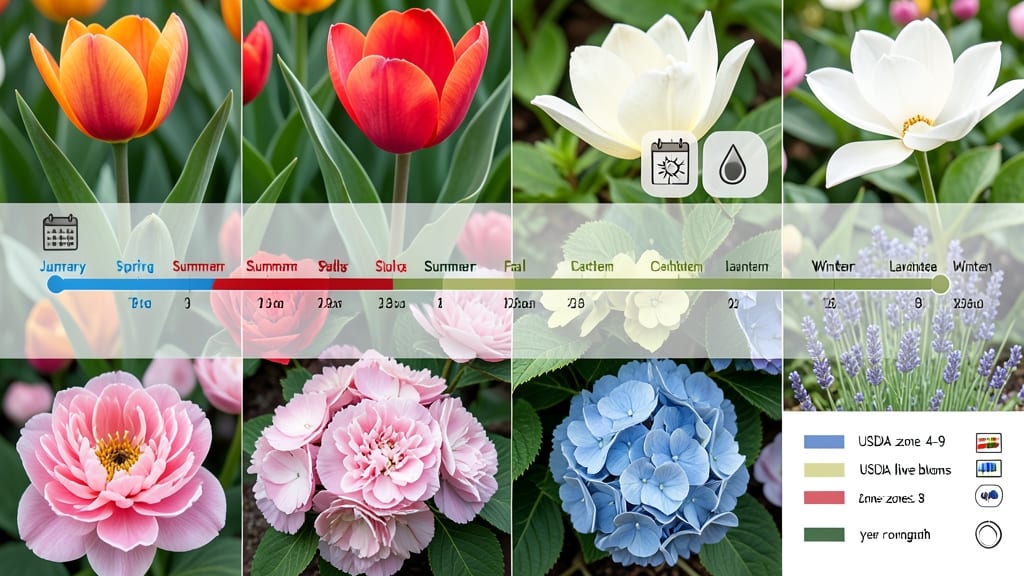
Your garden’s color calendar starts here—knowing the flower bloom time chart means never a dull moment from spring through frost. 🌸 I’ve tracked bloom times for years, and the secret to a showstopping garden isn’t just picking pretty plants—it’s aligning them with the right months so your yard stays vibrant all season long.
Most gardeners overlook how zone-specific timing changes everything. A peony in Zone 5 bursts into bloom by May, while the same variety in Zone 8 might wait until March—planting too early or late can leave you with bare patches.
The chart I’m sharing cuts through the guesswork, listing peak bloom windows for perennials, annuals, and bulbs so you can plan with confidence. By the end, you’ll have a year-round color roadmap—think early spring daffodils, summer hydrangeas, and fall mums—plus pro tips to stretch blooms longer.
You’ll also learn which flowers attract pollinators at key times, so your garden isn’t just pretty but productive too. This works for any climate, from cold-hardy Zone 3 to mild Zone 10. Let’s turn your garden into a living timeline of color!
📚 In This Guide
- What you need
- Instructions
- Tips and common mistakes
- Wrapping up and next steps
What you need
- ● Printed or digital USDA Plant Hardiness Zone Map – Identify your specific zone (e.g., Zone 3-10). blank">Download it here.
- ● Notebook or digital document – For recording bloom times (lined paper or a spreadsheet like Google Sheets).
- ● Color-coded pens or highlighters – At least 3 colors (e.g., pink for spring, blue for summer, green for fall/winter).
- ● Ruler (12-inch) – For neat, straight lines if designing a physical chart.
- ● List of local flowers – Research 10-15 native or common flowers in your zone (e.g., tulips, roses, hydrangeas).
- ● Calendar or bloom time database – Use trusted sources like blank">Missouri Botanical Garden or Proven Winners.
- ● Sticky notes or tabs – For marking key bloom periods on a physical calendar.
- ● Printer & cardstock – To create a laminated or framed chart for your garden.
- ● Photo references – Print images of flowers to add visuals to your chart.
- ● Garden journal – To track real-time blooms and adjust your chart annually.
- ● Design software – Canva or Adobe Illustrator for a polished digital version.
How to plan your garden for season-long color
Here's how I map out bloom times to keep my garden vibrant all year—no guessing, just science-backed timing.
📅 Step 1: Identify Your USDA Hardiness Zone
First, locate your zone using the USDA map—this determines when flowers wake up in spring and when they fade in fall. I always check my zone (I'm in Zone 7a) because bloom times shift dramatically between zones. For example, tulips burst in March-April in Zone 5 but wait until April-May in Zone 8.
Write down your zone number—it's the foundation for every bloom time decision. If you're unsure, check your local extension office or use a plant hardiness zone finder online. This single step prevents the frustration of planting bulbs too early or too late.
☀️ Step 2: Map Annuals by Seasonal Waves
Divide your garden into three color waves: early spring (March-April), summer (May-August), and fall (September-October). I plant pansies and snapdragons in early spring for March-May color, then swap them out in June for zinnias and marigolds that bloom until frost.
For fall, I rely on mums and asters—they pick up where summer flowers leave off. The key is overlapping bloom periods by 2-3 weeks so you never have bare spots. A quick sketch of your garden with bloom dates written in the margins keeps everything organized.
🌱 Step 3: Schedule Perennials by Bloom Season
Perennials are the backbone of your bloom chart because they return year after year. I group them by season: spring bloomers like peonies (May-June), summer bloomers like coneflowers (July-August), and late-season options like sedum (September-October).
Write down each perennial's bloom time and note its height—tall flowers like delphiniums (June-July) go in the back, while shorter ones like coreopsis (June-September) fill the front. This ensures every season gets star treatment without crowding.
🌿 Step 4: Layer Bulbs for Continuous Color
Bulbs are the secret to filling gaps between blooms. I plant daffodils (March-April) for early color, then alliums (May-June) as they fade. For late summer, crocuses (September-October) step in when most flowers have retired. The trick is planting bulbs with 4-6 week overlaps in bloom time.
Check your bulb catalog for specific varieties—some tulips bloom in April, while others wait until May. I always plant a mix of early, mid, and late varieties to stretch the show. A simple spreadsheet with bloom dates keeps track of everything.
⏰ Step 5: Adjust for Your Microclimate
Your garden's microclimate—sun exposure, wind, and soil—can shift bloom times by 1-2 weeks. I notice my south-facing border blooms 2 weeks earlier than the north side. If your garden runs cooler, push bloom times back by 7-10 days and choose cold-hardy varieties.
Keep a bloom journal for a year to track what actually blooms when in your space. This becomes your personalized bloom chart. For example, I learned that black-eyed Susans bloom 3 weeks later in my shady corner than in full sun.
Tips & tricks for creating a vibrant season-long garden
Real talk: Even the most beautiful gardens can look patchy if you don't plan bloom times strategically. Here's what I've learned after years of trial and error.
Zone-Specific Planning: Don't just rely on general bloom charts—your specific USDA zone makes all the difference. For example, in Zone 6, peonies bloom in late May, but in Zone 9, they wait until June. I always cross-reference my zone with local garden centers' recommendations to fine-tune timing. This prevents the heartbreak of planting spring bulbs too early for your climate.
Overlap Strategy: The secret to continuous color lies in those 2-3 week overlaps between bloom periods. I keep a color wheel handy when planning—purples and blues from pansies transition beautifully into yellows from coreopsis. This visual continuity makes your garden look intentional, not haphazard. Think of it like a floral color palette that flows seamlessly from season to season.
Microclimate Mapping: Your garden isn't one uniform space—it's a collection of microclimates. I sketch my garden with sun exposure notes: full sun areas bloom earlier, while shady spots might delay blooms by 3 weeks. This is why my black-eyed Susans bloom in August in sunny spots but not until September in the shade. A simple walkthrough with a notepad before planting saves you from guessing later.
Bulb Layering Hack: When planting bulbs, I group them by bloom time but also by height. Tall daffodils go in the back for early spring, while shorter crocuses fill the front for fall color. The key is creating vertical layers that reveal themselves season by season. This creates that "wow" factor when you walk through your garden—each season has its own story to tell through the plants.
Pro Tips for Flower Bloom Time Chart
- Real talk: Even the most beautiful gardens can look patchy if you don't plan bloom times strategically.
- Zone-Specific Planning: Don't just rely on general bloom charts—your specific USDA zone makes all the difference.
- Overlap Strategy: The secret to continuous color lies in those 2-3 week overlaps between bloom periods.
Frequently asked questions
Got questions about flower bloom times? You’re not alone! Here are some of the most common queries—and their answers—to help you plan your garden like a pro.
Why do bloom times vary by USDA hardiness zone?
Climate plays a huge role! Cooler zones (like Zone 3) often see later blooms due to shorter growing seasons, while warmer zones (like Zone 9) may bloom earlier or even year-round for some flowers. Always check your specific zone for the most accurate flower bloom time chart.
Can I force flowers to bloom earlier or later?
Some flowers respond to tricks like chilling (for bulbs) or heat treatment (for tropicals), but most blooms are tied to natural light cycles. For best results, stick to your zone’s typical bloom windows—unless you’re growing in containers, where you can move plants to extend seasons!
What if my flowers aren’t blooming on schedule?
Check for these culprits: light (too little sun?), water (drought stress?), or nutrients (fertilizer needs?). Overcrowded roots or pests can also delay blooms. Adjust care and monitor for 2–3 weeks before assuming the plant is incompatible with your zone.
Are there flowers that bloom year-round in my area?
Yes! Annuals like zinnia or marigold (in warm zones) and perennials like lavender (with deadheading) can provide near-constant color. For a low-maintenance option, try bougainvillea (Zones 9–11) or salvia (Zones 5–10).
How do I create a bloom sequence for continuous color?
Layer flowers with staggered bloom times! For example:
- Early spring: Crocus (Zone 3–9)
- Mid-spring: Tulips (Zone 3–8)
- Summer: Daylilies (Zone 3–10)
- Fall: Chrysanthemums (Zone 5–9)
Wrapping up and next steps
Understanding your zone-specific bloom times is the first step to creating a garden that bursts with color year-round! 🌸 Whether you’re planning seasonal displays or simply curious about when your favorites will shine, this chart gives you the confidence to time your plantings like a pro.
Now that you’re armed with the knowledge, why not sketch a garden layout or visit your local nursery to pick out blooms that align with your climate? Every petal you plant is a step toward a vibrant, thriving outdoor space!