
Flowers
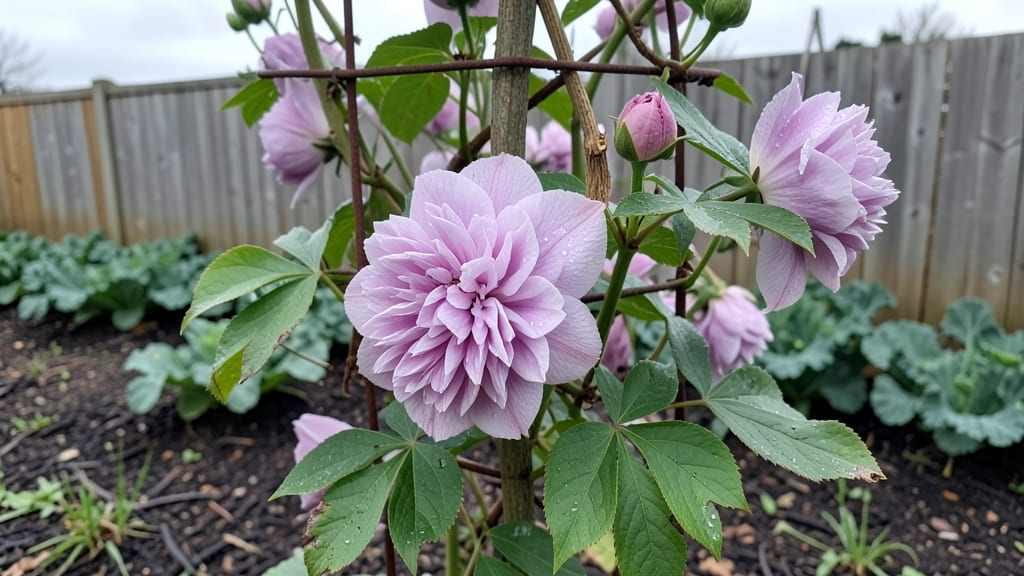
Growing a double flowering clematis 🌸 means waking up to vines heavy with blooms that last from summer through fall—but only if you prune them right.
Picture this: You’ve spent months waiting for those lush, layered petals to appear, only to find your vine looking bare by next season. That’s the difference between a thriving trellis and a pruning mistake.
The good news? With the right timing and technique, you can turn that frustration into a year-round showstopper.
Double flowering clematis thrive in full sun and well-drained soil, but their blooms depend on one thing more than anything else: pruning. Cut too much, too little, or at the wrong time, and you’ll miss out on the repeat blooms that make them worth the effort.
Here’s how to get it right from the start.
From identifying dead wood to knowing when to step back, I’ll walk you through the exact steps to keep your clematis climbing, blooming, and stealing the show—without the guesswork.
How to prune double flowering clematis for maximum blooms
Double flowering clematis varieties—like Nelly Moser or Jackmanii—produce extra-lush blooms but require precise pruning to thrive. Unlike single-flowering types, their heavy blooms need careful stem management to avoid weakening the vine. The key? Pruning at the right time and technique to encourage year-round flowering.
Most double-flowering clematis belong to Group 2 or 3, meaning they bloom on both old and new wood. This dual-flowering nature demands a two-step pruning approach: a late-winter cleanup followed by light summer maintenance.
Skip these steps, and you risk fewer blooms or even vine decline.
When to prune: The best time is late winter or early spring (just before new growth starts). For Group 2 varieties, prune after the first flush of blooms in summer to promote reblooming. Always prune before buds swell to avoid damaging emerging flowers.
Step-by-Step Pruning Guide for Double Flowering Clematis
- Step 1: Gather Tools
- Clean, sharp pruners (sterilized with rubbing alcohol)
- Garden gloves (to protect from thorns)
- Disinfectant spray (for tools between cuts)
- Step 2: Identify Dead Wood
- Cut out brown, mushy stems (no green beneath bark)
- Remove stems with blackened or hollow centers
- Look for peeling bark or no leaf buds
- Step 3: Prune to Healthy Buds
- Cut back last year’s stems to 2-3 healthy buds above ground
- For Group 2, leave some old wood (blooms on mature stems)
- For Group 3, cut all old wood to 12 inches from base
- Step 4: Thin for Airflow
- Remove crossing or tangled stems (reduces disease risk)
- Keep 3-5 strongest stems per vine for optimal blooms
- Avoid over-thinning—leave enough foliage for photosynthesis
- Step 5: Summer Maintenance
- After first bloom flush, trim spent flowers to encourage reblooming
- Remove weak or leggy growth to redirect energy to stronger stems
- Deadhead faded blooms but leave some seed heads for winter interest
After pruning, sterilize your tools again to prevent clematis wilt, a fungal disease that thrives in open wounds. Apply a balanced fertilizer (like 5-10-10) to support new growth. Double flowering clematis are heavy feeders, so feed again after the first bloom flush in summer.
For Group 2 varieties, like 'Comtesse de Bouchaud', focus on preserving last year’s stems while encouraging new growth. In contrast, Group 3 types (like 'Jackmanii') bloom only on new wood, so you can prune harder in late winter.
Always label your vines if you mix groups to avoid confusion.
One common mistake is pruning too late in spring, which delays blooming. Another is cutting into old wood that still has dormant buds. To avoid this, count buds from the base—never guess. For reblooming varieties, a light summer trim keeps energy flowing to new flower clusters.
Water deeply after pruning to help the vine recover. Double flowering clematis need consistent moisture but hate soggy roots. Mulch around the base with organic matter to retain moisture and insulate roots during temperature swings.
With the right pruning schedule, your clematis will reward you with continuous blooms from summer to fall.
Pro tip: Take a before-and-after photo of your pruned vine. Comparing the structure before and after helps you spot improved airflow and stronger growth patterns next season. Over time, you’ll refine your technique to maximize blooms while keeping your vine healthy and vigorous.
Common pruning mistakes that kill double flowering clematis
Double flowering clematis thrives on precision pruning, but even small mistakes can stunt growth or eliminate blooms. As someone who’s nursed these vines back from pruning disasters, I’ve learned that timing, technique, and plant classification matter more than most gardeners realize.
One wrong cut can send your clematis into a year-long recovery—or worse, permanent decline. Let’s unpack the five fatal errors and how to sidestep them.
First, many gardeners assume all clematis prune the same way. But double flowering types (Groups 2 & 3) demand special care. Unlike single-flowering varieties, they bloom on both old and new wood, making aggressive pruning risky.
Ignoring this distinction often leads to bare stems or stunted growth. The key? Knowing your clematis’s group classification before you touch the shears.
⚠️
Double flowering clematis (Groups 2 & 3) bloom on both old and new wood. Cutting back more than 1/3 of the vine in late winter risks removing next season’s early blooms. 3 signs you’ve over-pruned:
- No buds appear by mid-April
- Stems are bare or stubby (no growth nodes)
- Leaves are small and sparse after pruning
Recovery tip: Leave 2-3 strong stems uncut and fertilize with high-phosphorus feed to encourage reblooming.
Another common mistake is pruning at the wrong time. Many gardeners wait until spring to prune, but double flowering clematis need attention right after blooming. If you delay until late spring or summer, you risk cutting off new flower buds that form on current year’s growth.
My rule of thumb? Prune Group 2 clematis in early spring (March) and Group 3 after their first flush of blooms (June-July).
Cutting back healthy stems is another silent killer. Look for brown, mushy, or hollow stems—these are dead and should go. But if a stem is green and firm, it’s alive.
Pruning it removes potential blooms. Always leave 2-3 eyes (buds) on each stem to ensure regrowth. Pro tip: Use sterilized pruners to avoid spreading disease between cuts.
Some gardeners also make the error of pruning too close to the base. Double flowering clematis need strong basal growth for next year’s blooms. Cutting too low removes dormant buds hidden near the crown.
Aim to leave 6-12 inches of stem above the soil line. This ensures your vine has energy reserves for spring growth while still allowing airflow to prevent rot.
Finally, neglecting post-pruning care can undo all your hard work. After pruning, apply a balanced fertilizer (10-10-10) and mulch around the base to retain moisture. Double flowering clematis are thirsty vines, especially after pruning.
Water deeply once a week until new growth appears. Skipping this step often leads to weak stems and fewer blooms the following season.