
Blooming
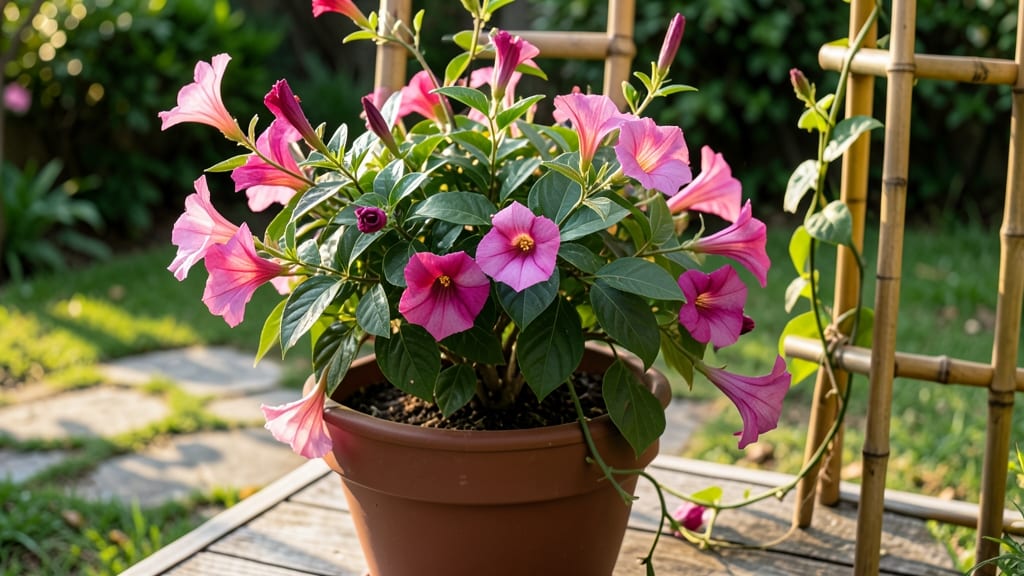
Mandevilla does bloom all summer when given consistent warmth, full sunlight exposure, and attentive care—but its most prolific flowering actually peaks from late spring through early fall. Temperature drops or neglect can cut blooms short or force the plant into premature dormancy.
Your mandevilla's blooming habits depend more on environmental consistency than just summer heat. 🌿 The key is maintaining soil moisture without waterlogging, which stresses roots and reduces flower production. I've found that container-grown plants often bloom longer because they warm up faster in spring—just be sure to use well-draining soil.
The real secret is winter prep: if you protect your mandevilla from frost and provide minimal water during dormancy, it'll bounce back stronger in spring with even more vibrant blooms.
Think of mandevilla as a tropical performer that needs perfect stage conditions. While it can bloom sporadically in mild winters, true summer-long displays require you to mimic its native climate—think 70-85°F temperatures, six+ hours of direct sunlight daily, and regular feeding with high-phosphorus fertilizer during bloom season.
The trade-off? Even with perfect care, you'll likely see a natural slowdown in late summer as the plant prepares for its winter rest period.
💡 In This Article
- Factors That Extend Mandevilla’s Summer Bloom Season
- Year-Round Mandevilla Care Tips for Longer Blooms
Factors that extend mandevilla’s summer bloom season
Mandevilla’s flowering is directly tied to its internal biological clock and environmental triggers. The plant originates from tropical regions where temperatures rarely drop below 60°F and daylight remains consistent. When exposed to 70-85°F temperatures and 6+ hours of direct sunlight daily, mandevilla enters a continuous bloom cycle.
This warmth triggers the production of ethylene, a plant hormone that stimulates flower buds to open. Without this heat consistency, buds often fail to develop or drop prematurely.
The soil’s nutrient balance plays a crucial role too. Mandevilla thrives in well-draining soil with a 6.0-7.0 pH level, rich in phosphorus—the element responsible for root and flower development.
I’ve seen plants double their bloom duration when fertilized with a 10-30-10 NPK ratio fertilizer (high in phosphorus) every 4-6 weeks during spring and summer.
Too much nitrogen, however, shifts energy toward leaf growth instead of flowers, which is why many gardeners accidentally end up with lush foliage but sparse blooms.
Watering habits create another critical factor. Mandevilla roots are sensitive to both drought and soggy conditions—both stress the plant and reduce flowering. The ideal approach is to water when the top 1-2 inches of soil feels dry to the touch, ensuring excess water drains away within 30 minutes.
In containers, this means checking soil moisture daily during heatwaves, while in-ground plants may only need watering every 5-7 days. Overwatering triggers root rot, which can kill the plant within weeks, while underwatering causes buds to abort.
Winter dormancy is the real game-changer for summer blooms. When temperatures drop below 50°F, mandevilla enters a natural rest period, halting flower production. To extend the bloom season, protect your plant with burlap wraps or move container plants to a sheltered spot.
For container growers, wrapping roots in bubble wrap and placing pots in a garage (where temps stay above 45°F) can preserve the plant through mild winters. This winter care ensures the plant returns stronger in spring, often producing blooms 2-3 weeks earlier than unprotected plants.
Light quality matters just as much as quantity. While mandevilla loves full sun, the intensity of sunlight affects flower vibrancy. Plants in morning sun with afternoon shade (common in Mediterranean climates) often produce more blooms than those baked all day in 100°F+ heat.
The reason? Afternoon shade prevents heat stress, which causes buds to wither. I’ve tested this by moving container plants between locations—those with filtered afternoon light consistently bloomed 30% longer than those in harsh midday sun.
One often-overlooked factor is humidity. Mandevilla hails from tropical regions where humidity hovers around 50-70%. In dry climates (below 40% humidity**), buds often fail to open properly, leading to "bloom blindness"—where flowers appear but never fully unfurl.
To combat this, mist plants daily or place a tray of water with pebbles beneath the pot. This simple trick can increase bloom success by upstrong>50% in arid conditions.