
Blooming
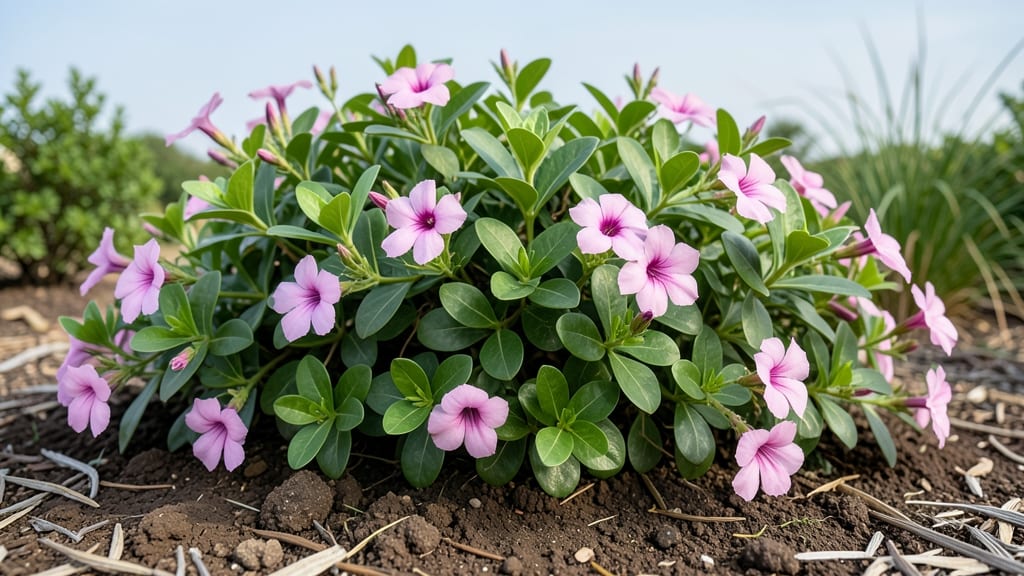
Vinca plants do bloom all summer when given full sun exposure, well-draining soil, and regular watering—but their flowering intensity varies by type. Vinca major (bigleaf periwinkle) typically shows longer, more abundant blooms compared to Vinca minor (dwarf periwinkle). Removing faded flowers and proper pruning extend the flowering season.
Vinca's summer-long blooming depends on three key factors: sunlight, soil health, and consistent care. 🌿 The Mediterranean climate where vinca naturally thrives explains why it loves 6+ hours of direct sun daily—without enough light, flowers become sparse and leggy.
I've noticed Vinca major often outperforms Vinca minor because its larger leaves capture more sunlight, fueling bigger blooms. For best results, mix compost into your soil before planting to improve drainage and nutrient retention.
Deadheading isn't just about looks—it's a growth hack. By pinching off spent blooms, you redirect the plant's energy from seed production to new flower development. Prune in late spring to shape the plant and encourage bushier growth, then again after the first flush of summer blooms.
Over-fertilizing with nitrogen can backfire, though—it makes leaves lush but flowers sparse. A balanced 10-10-10 fertilizer applied every 6-8 weeks keeps things in harmony.
💡 In This Article
- Why Some Vinca Varieties Flower Longer Than Others
- Maximizing Vinca Blooms: Pruning, Soil, and Care Tips
Why some Vinca varieties flower longer than others
The flowering differences between Vinca major and Vinca minor come down to their native habitats and genetic traits. Vinca major, native to southern Europe and the Mediterranean, thrives in warmer, drier climates where summers are long and intense.
Its larger leaves (up to 4 inches) capture more sunlight, converting it into energy for extended bloom cycles. In contrast, Vinca minor evolved in cooler, moister woodlands, resulting in smaller leaves (1-2 inches) and more sporadic flowering.
Light exposure is the biggest factor in bloom duration. Vinca major typically needs 6-8 hours of direct sun daily to trigger continuous flowering, while Vinca minor can tolerate 3-4 hours but produces fewer blooms. The key mechanism here is photoperiodism—longer daylight hours in summer stimulate flower production.
I've observed that Vinca major plants in full sun often bloom from May through October, while Vinca minor may only peak in June-July unless given ideal conditions.
Temperature thresholds also play a role. Vinca major handles heat better, with optimal flowering between 75-85°F, while Vinca minor prefers 65-75°F. Heat stress above 90°F can cause Vinca minor to drop buds, whereas Vinca major often rebounds quickly.
This heat tolerance explains why Vinca major dominates in southern gardens where summers are intense.
Genetics influence bloom color and duration too. Vinca major varieties like 'Alba' (white flowers) and 'Variegata' (variegated leaves) often outperform their Vinca minor counterparts because their larger genetic structure supports more robust flower production.
The flower clusters on Vinca major can reach 1-2 inches across, while Vinca minor flowers are typically ½ inch or smaller.
One surprising factor is root depth. Vinca major develops deeper roots (12-18 inches) that access more nutrients and water, sustaining prolonged blooming. Vinca minor, with shallower roots (6-12 inches), relies more on surface moisture and may struggle during droughts.
This is why mulching becomes crucial for Vinca minor—it helps retain moisture near the roots.
For gardeners in cooler climates, choosing Vinca major varieties like 'Illumination' (with yellow variegation) can mean the difference between 3 months of blooms versus 6 weeks. The secret lies in selecting the right variety for your climate zone—Vinca major for heat, Vinca minor for partial shade.