
Blooming
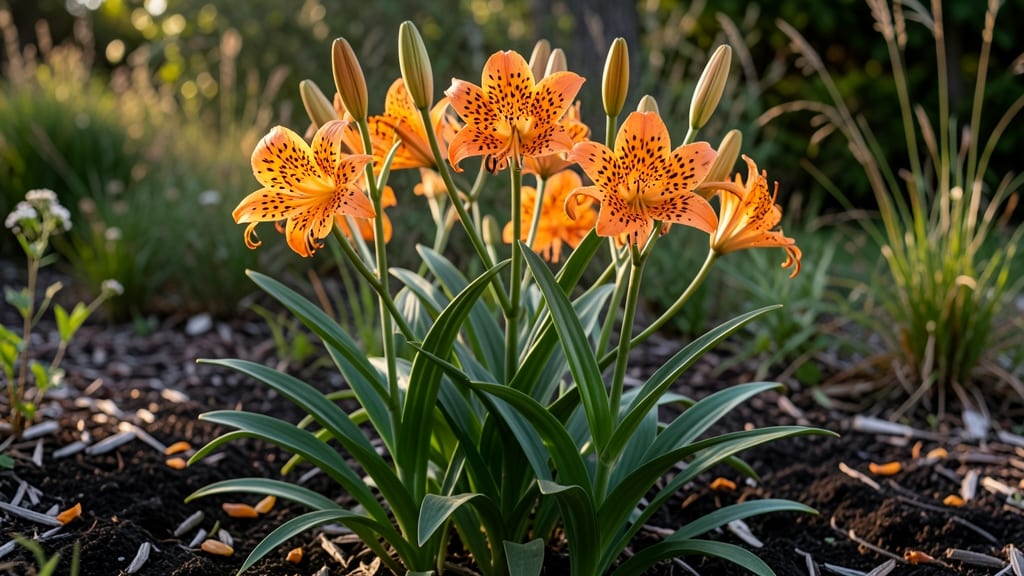
Tiger lilies do not typically bloom all summer, since most varieties produce flowers for just 4-6 weeks during late spring and early summer. However, Lilium lancifolium (Tiger Lily) and late-blooming hybrids like 'Stargazer' can continue flowering into mid-summer with consistent care and deadheading.
Most tiger lilies follow a natural seasonal bloom cycle tied to daylight length and temperature shifts. 🌸 Once they've expended energy on their initial 4-6 week flowering period, their focus shifts to seed production rather than reblooming.
The key exception is Lilium lancifolium and its hybrids, which have been selectively bred to extend their flowering window when given proper growing conditions.
To encourage these late-season varieties to keep blooming, I recommend removing spent flowers promptly (deadheading) and fertilizing with a balanced bloom booster every 4-6 weeks. 💫 Consistent moisture—about 1-1.5 inches per week—and partial shade in hot afternoons also help sustain their energy reserves.
The 'Stargazer' hybrid, for example, often rewards this care with a second flush of blooms in late summer.
💡 In This Article
- Why Most Tiger Lilies Stop Blooming Early
- How to Extend Tiger Lily Blooms Beyond Summer
Why most tiger lilies stop blooming early
The primary reason tiger lilies (Lilium lancifolium) follow a strict 4-6 week bloom cycle is rooted in their natural energy conservation strategy. After producing vibrant orange-red flowers, these plants redirect their resources toward seed development rather than prolonging blooms.
This shift occurs because flowering is metabolically expensive—each bloom requires significant energy for nectar production, pollen development, and attracting pollinators. Once the initial flush of flowers opens, the plant prioritizes reproductive success over aesthetic display.
Daylight length plays a critical role in this cycle. Most tiger lilies are photoperiod-sensitive, meaning they respond to decreasing daylight hours after the summer solstice.
As days shorten in late June, the plant's internal clock signals it's time to wind down flowering and prepare for dormancy. 🌞 This biological mechanism explains why even healthy specimens in ideal conditions typically stop producing new buds by early July.
The exception lies in late-blooming hybrids like 'Stargazer', which have been bred to delay this photoperiod response by up to 6 weeks, allowing them to extend their display into August.
Temperature fluctuations also influence bloom duration. Tiger lilies thrive in 60-75°F conditions during their active growth phase. When temperatures consistently exceed 85°F—common in mid-summer—the plants experience stress that accelerates their flowering cessation.
The high heat causes increased transpiration (water loss through leaves), forcing the plant to divert energy toward survival rather than bloom production. This is why northern climates often see slightly longer bloom periods compared to southern regions where summer heat arrives earlier.
Another key factor is the plant's bulb energy reserves. Each year, tiger lilies store carbohydrates in their bulbs during the growing season. After the initial bloom period, these reserves become depleted as the plant focuses on seed production.
Unlike perennials that can replenish reserves through photosynthesis, tiger lilies have limited capacity to recover quickly enough for a second bloom cycle without human intervention. 💡 This biological limitation explains why even well-cared-for plants rarely produce a second flush of flowers without specific cultural practices.
Comparing early-season varieties to late-blooming types reveals this difference clearly. Standard tiger lilies like 'Black Beauty' typically bloom from late May to early June, while 'Stargazer' hybrids extend this window to July-August.
The difference lies in their genetic programming—late bloomers have been selectively bred to delay their photoperiod response and maintain better energy balance under summer conditions. This genetic modification allows them to continue producing flowers even as daylight hours decrease.