
Pests
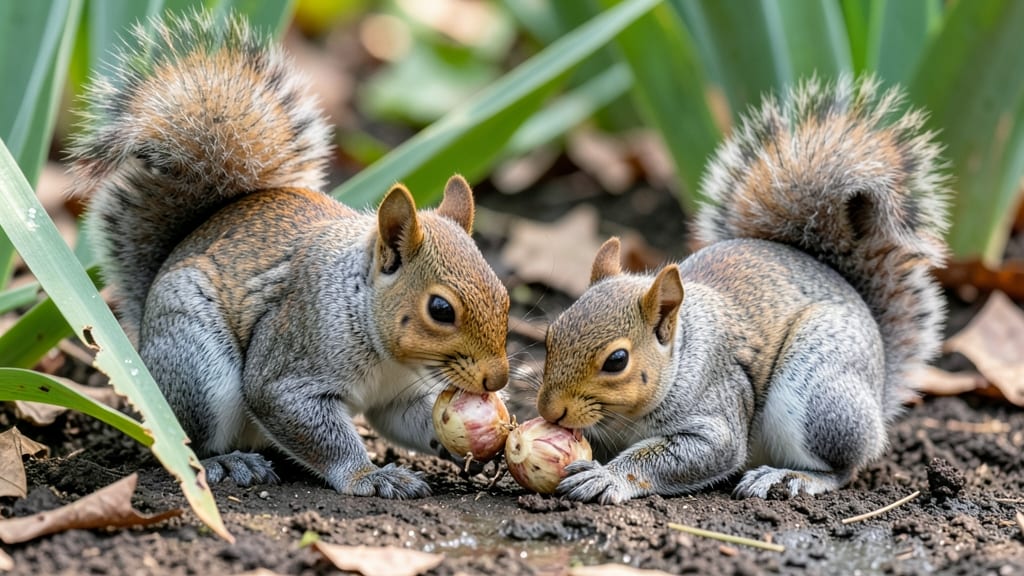
Squirrels do eat iris bulbs, digging them up to feed on their starchy roots and tender shoots, often leaving empty holes and damaged foliage in their wake. Their foraging can destroy entire iris clumps if left unchecked.
These rodents aren’t just after the showy blooms—they’re drawn to the nutrient-rich roots beneath, which provide a high-energy snack during late winter and early spring when natural food is scarce. 🌱 Unlike deer or rabbits that might nibble foliage, squirrels go straight for the bulb, often uprooting entire plants in a single session.
Their digging also disrupts the soil, making your irises more vulnerable to disease or winter freeze.
💡 In This Article
- Why Squirrels Target Iris Bulbs
- Effective Iris Bulb Protection Methods
Why squirrels target iris bulbs
Here's what's actually happening when squirrels go after iris bulbs: they're not just random garden pests—they're strategic foragers. Iris bulbs contain a surprising amount of carbohydrates (about 15-20% dry weight) and moisture, making them an energy-dense food source during late winter and early spring when natural options are limited.
This is particularly critical for squirrels preparing for breeding season, when they need to store fat reserves quickly. The tender shoots emerging in early spring are especially appealing because they're packed with easily digestible sugars and proteins.
The key factor is timing—squirrels time their bulb raids perfectly. They begin digging in late winter (February-March) when the ground is still workable but before the foliage becomes too tough.
Their digging habits differ from other pests: voles prefer to gnaw through roots underground, while deer might browse foliage, but squirrels use their powerful front claws to excavate entire bulbs in a matter of minutes.
This leaves those distinctive 2-3 inch deep holes that gardeners often mistake for mole activity, but with a key difference—they're usually 1-2 inches wide, perfectly sized for a squirrel's paws.
What most people don't realize is how this behavior impacts iris health. When squirrels remove bulbs, they're not just taking food—they're disrupting the plant's entire growth cycle.
Iris bulbs rely on their underground storage to produce next year's foliage, and when squirrels dig them up, they often leave behind damaged or incomplete bulbs that won't regenerate properly.
The damage compounds over years, as squirrels return to the same garden spots season after season, creating what wildlife experts call "foraging hotspots."
This targeted behavior also explains why squirrels prefer certain iris varieties. They particularly love bearded iris because the thick rhizomes provide more substantial nutrition than the thinner bulbs of other types.
The rhizomes contain higher concentrations of starch granules (up to 30% by weight in some varieties), which squirrels can metabolize quickly for energy. Interestingly, squirrels rarely eat the flowers themselves—they're more interested in the hidden nutritional goldmine below ground.
The science behind this involves squirrel physiology too. Their digestive systems are adapted to process high-fiber, low-moisture foods efficiently, but iris bulbs provide a rare combination of both moisture and carbohydrates that's particularly valuable during their mating season.
Studies show that female squirrels with access to high-energy foods like iris bulbs produce 20-30% more offspring than those with limited food sources, which creates strong evolutionary pressure for this behavior to continue.
What makes this even more frustrating for gardeners is how squirrels learn from each other. Once one squirrel discovers a particularly rich iris patch, they'll mark the location with scent and return repeatedly, often bringing their young to teach them where the best food sources are.
This collective memory means that once your irises become a known food source, they're likely to remain a target for generations of squirrels.