
Blooming
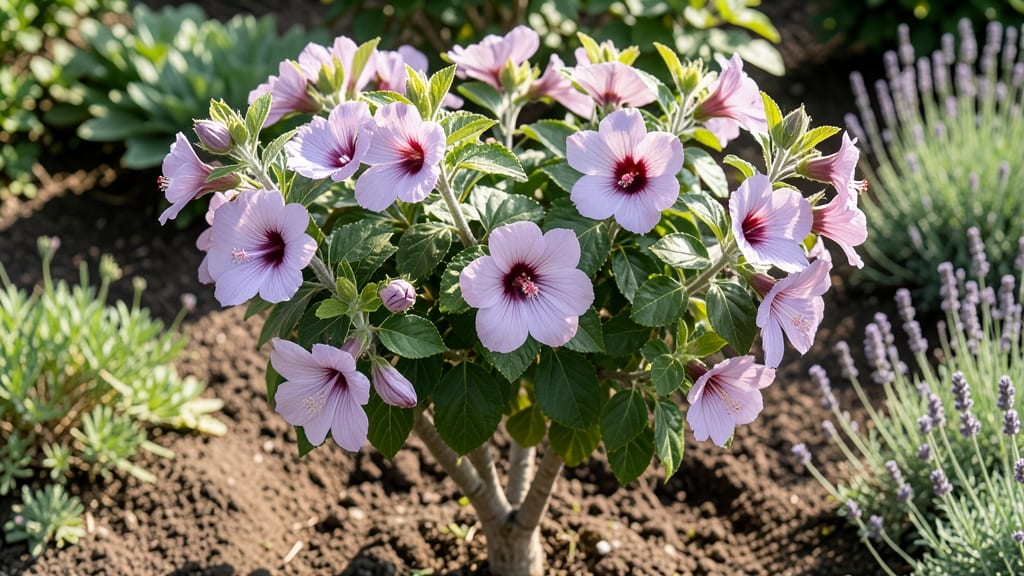
Rose of Sharon blooms all summer in warm climates, but most varieties produce one flush of flowers unless pruned properly or grown in zones 7-10. Reblooming types like 'Avalanche' and 'Alba' thrive with consistent care and pruning after flowering to encourage new growth.
Rose of Sharon bushes in zones 7-10 naturally extend their blooming season because the warm weather prevents dormancy cycles. 🌸 The key is understanding how these plants respond to seasonal cues—when days shorten in cooler areas, they enter a rest period, but in mild climates, they keep producing buds.
For example, 'Avalanche' varieties can continue flowering from early summer through fall if you deadhead spent blooms regularly and maintain consistent moisture.
What sets reblooming types apart is their ability to produce multiple flower cycles in a single season. These varieties require more attention than their one-time-blooming counterparts, but the payoff is stunning continuous color.
I've found that mulching around the base helps retain soil moisture, which is especially important during hot summer months when water stress can halt new growth.
If you're in a cooler zone, don't give up hope—selecting cold-hardy rebloomers and providing winter protection can still give you extended summer blooms. The secret lies in balancing pruning timing with your local climate patterns to maximize the plant's natural growth cycles.
💡 In This Article
- How Pruning and Climate Extend Rose of Sharon Bloom Seasons
- Top 2 Reblooming Rose of Sharon Varieties for Continuous Summer Flowers
How pruning and climate extend Rose of Sharon bloom seasons
Rose of Sharon's blooming patterns are directly tied to its growth cycles, which are triggered by a combination of temperature, daylight hours, and pruning practices. In zones 7-10, where winters rarely drop below 20°F, the plant remains in active growth year-round, allowing it to produce multiple flower flushes.
The key mechanism is how these bushes respond to seasonal light changes—longer daylight hours in summer stimulate hormonal shifts that promote bud formation. 🌿 Unlike single-blooming varieties, rebloomers like 'Avalanche' can produce new shoots from dormant buds along their stems when given the right conditions.
Pruning plays a critical role in extending the bloom season. When you remove spent flowers (deadheading), you're not just cleaning up—you're signaling the plant to redirect its energy toward producing new buds rather than setting seed.
For maximum results, prune after each major bloom cycle, typically in late spring and again in early fall. Studies show that cutting back 25-30% of the previous year's growth in late winter encourages vigorous new shoots that will bear flowers.
In cooler zones (5-6), where dormancy is more pronounced, pruning should be lighter to avoid stimulating growth too early in the season.
The relationship between climate and blooming is fascinating. In northern climates, Rose of Sharon often produces just one flush of flowers in early summer before entering dormancy. The plant's natural response to shorter days and cooler temperatures is to conserve energy.
However, in mild winter zones, this dormancy period is skipped entirely. For example, in zone 9, I've seen continuous blooms from June through October with minimal intervention—just consistent watering and occasional deadheading. The difference comes down to how the plant interprets seasonal cues.
Sunlight exposure is another critical factor. Rose of Sharon thrives in full sun (at least 6-8 hours daily), which maximizes photosynthesis and flower production. In shaded conditions, growth becomes leggy and sparse, reducing the plant's ability to produce abundant blooms.
The ideal scenario is a location with morning sun and afternoon shade in hot climates, which prevents stress while still providing sufficient light for flowering. When growing in containers, rotate the pot every few weeks to ensure even sunlight exposure on all sides.
For gardeners in transitional zones (like zone 6-7), a strategic approach combines pruning with seasonal adjustments. After the first bloom cycle, apply a balanced fertilizer (10-10-10) to encourage new growth. Then, as temperatures rise in late summer, provide afternoon shade if your region experiences heatwaves above 90°F.
This two-pronged approach—nutrient support and temperature management—can coax a second bloom cycle even in cooler climates. The result is a bush that continues flowering well into fall, often until the first frost.
What most gardeners don't realize is how water stress affects blooming patterns. During drought periods, Rose of Sharon will prioritize survival over flowering, often dropping buds before they open. To prevent this, maintain 1-1.5 inches of water weekly, especially during bud formation.
Mulching with 2-3 inches of organic matter helps retain moisture and regulate soil temperature, creating optimal conditions for continuous blooming. The combination of proper watering, strategic pruning, and climate awareness transforms a one-time bloomer into a summer-long spectacle.