
Blooming
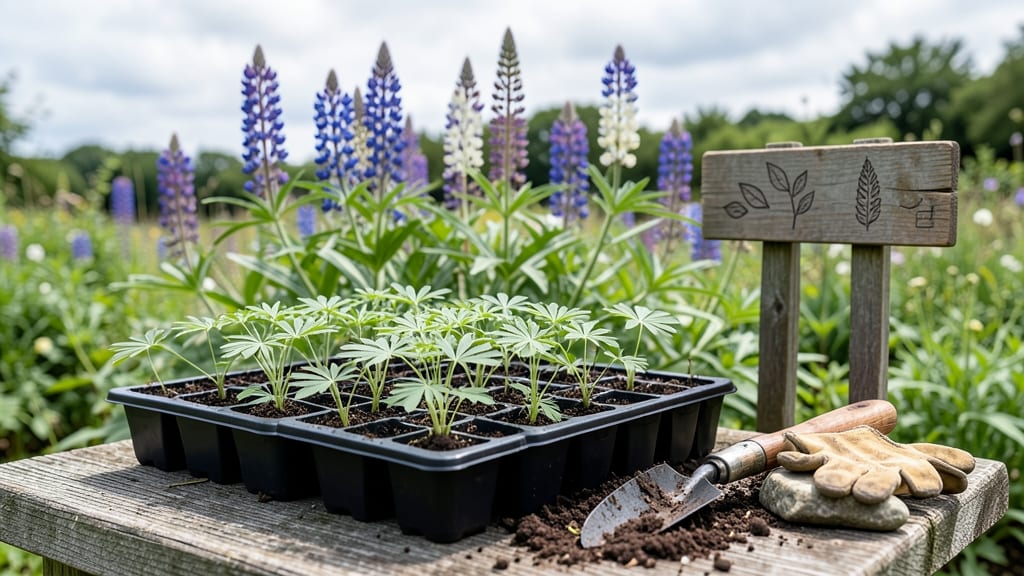
Lupines do not bloom the first year in most cases, as they prioritize developing deep root systems and leafy growth for future flowering. Only compact varieties like 'Russell Hybrid' or 'Myrtle' might show occasional blooms, while standard types need 1-2 seasons to mature fully.
This first-year focus isn't wasted energy—it's lupines' survival strategy. 🌱 Their deep taproots (up to 3 feet) anchor them against drought and poor soil, while leafy growth stores nutrients for next year's showstopper blooms.
I've seen gardeners impatiently dig up first-year lupines only to find their roots already outpacing their tops—proof that patience pays off. Even in ideal conditions, most lupines won't flower until their second spring, when they've built enough reserves.
For immediate color, the 'Russell Hybrid' and 'Myrtle' varieties are your best bets—they're bred to be more forgiving about blooming early. These dwarf types top out at 2-3 feet and often produce 10-20 flowers their first year, though they'll still perform better with consistent moisture and well-draining soil.
Think of them as the fast-food version of lupines—still delicious, just with a shorter wait time.
💡 In This Article
- Why Lupines Delay Flowering the First Year
- Fast-Blooming Lupine Varieties for Immediate Color
Why lupines delay flowering the first year
Lupines prioritize root development over flowering in their first year because they're what botanists call "biennial" or "perennial" plants with a delayed reproduction strategy.
Unlike annuals that flower and set seed in a single season, lupines invest heavily in building a robust root system—some varieties develop roots that reach 3-5 feet deep.
This underground growth stores nutrients and water, creating a reserve for next year's energy-intensive flowering process. 🌱 The trade-off is worth it: plants with deeper roots are far more resilient to drought and poor soil conditions.
This growth pattern is similar to other perennials like peonies or delphiniums, which also delay flowering to establish themselves. However, lupines take it further—their taproots can penetrate 12-18 inches within just a few months, while their leafy shoots remain relatively modest.
The foliage you see in the first year is actually working to photosynthesize and build up carbohydrates through the plant's leaves, which get transported to the roots for storage.
It's like a savings account for the plant, ensuring it has enough resources to produce flowers, seeds, and new growth in subsequent years.
Environmental factors significantly influence this process. Lupines planted in well-draining, slightly acidic soil (pH 6.0-7.0) with full sun will develop faster than those in heavy clay or shaded areas.
Poor soil conditions can delay flowering by another year because the plant must first remediate the soil—lupines are nitrogen-fixers, meaning their roots host bacteria that convert atmospheric nitrogen into usable forms.
This process takes energy, further explaining why flowering gets postponed. 💡 Even in ideal conditions, most lupines won't produce more than a handful of blooms in their first year, if any.
What most gardeners don't realize is that lupines are also sensitive to temperature fluctuations. If planted too late in the season, they may not have enough growing time to establish their root systems before winter.
The optimal planting window is 4-6 weeks before your first frost date, giving them 8-10 weeks of growth before cold sets in. This early start allows their roots to develop enough to survive winter dormancy and emerge stronger in spring. The result?
A plant that's ready to put all its energy into flowering by its second year.
Consider this comparison: A 2-foot-tall first-year lupine might have roots extending 3-4 feet underground, while a similarly sized delphinium would have roots only 1-2 feet deep. This root-to-shoot ratio explains why lupines often look "underwhelming" above ground but are actually thriving below.
The key takeaway is that this first-year growth phase is critical—skipping it means weaker plants and fewer blooms in later years. 💫
For those eager to see flowers sooner, the solution lies in choosing the right varieties or providing optimal growing conditions. However, even with perfect care, most lupines will still prioritize root and foliage growth over flowering in their inaugural season.
The patience pays off dramatically in year two, when a well-established lupine can produce hundreds of blooms on a single plant.