
Blooming
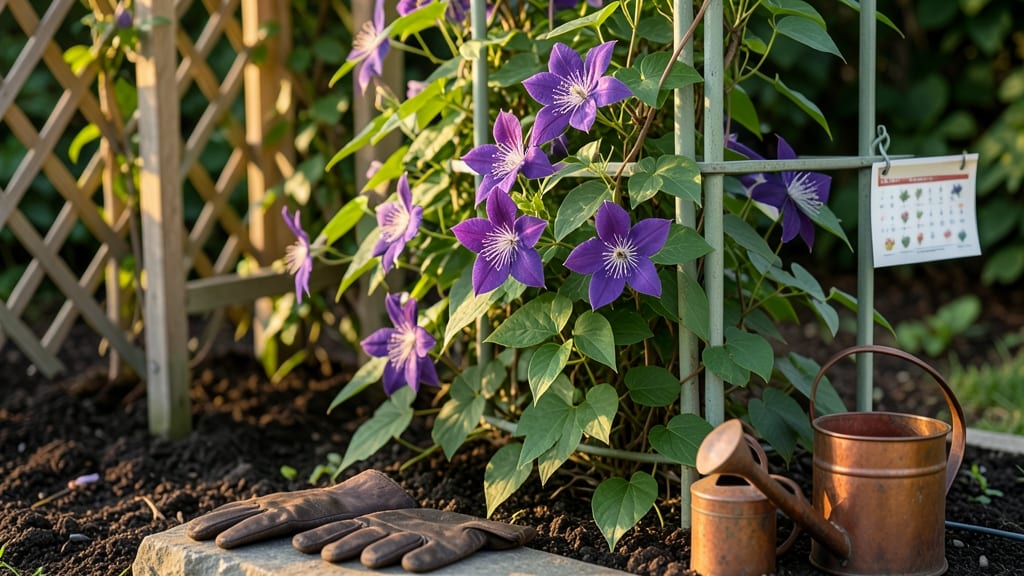
Clematis bloom time depends on your hardiness zone and pruning group, with spring and late-winter flowers arriving as early as February in warm climates or as late as June in cooler regions.
Wondering why your clematis isn’t blooming—or when to expect that stunning second flush of flowers? The answer lies in your hardiness zone, and understanding it can transform your vine’s performance.
For example, in Zone 6a, early bloomers like Group 1 clematis may burst into color by April, while late-season varieties need a little patience until June or even July. Meanwhile, in warmer zones like 8 or 9, you might catch those first buds as early as February.
Below, I break down the exact bloom windows by zone, how to coax a second flush, and what to watch for if your vine is playing hard to bloom—plus, the simple care tweaks that make all the difference.
When clematis blooms by USDA hardiness Zone: first flowering months
Clematis plants are famous for their dramatic blooms, but the timing varies dramatically depending on your USDA hardiness zone. In warmer southern zones (7-10), you might see early winter blooms, while northern zones (3-6) typically wait until late spring.
Understanding these patterns helps you set realistic expectations and adjust care routines for optimal results.
Most clematis varieties bloom in two waves: the primary flush in spring and a secondary flush in late summer. However, the exact timing depends on your zone's last frost date and microclimates like urban heat islands or coastal breezes.
For example, a Zone 8 garden in Florida may bloom in January, while a Zone 6 garden in Minnesota waits until May.
Let's explore how your zone affects bloom timing, including regional variations and microclimate factors that can shift these windows by weeks.
In Zone 3-4, where winters are harsh, clematis plants often delay blooming until soil temperatures reach 55°F (13°C). This typically happens in late May or early June, depending on how quickly your soil warms.
I've found that using black landscape fabric around the base can accelerate this process by 2-3 weeks.
For Zone 5-6 gardeners, the primary bloom window usually opens in early May, but this can vary by 10-14 days based on whether you're in a continental climate (like Chicago) versus a maritime climate (like Seattle). Maritime zones often see earlier blooms due to milder winters and cooler summers.
Southern gardeners in Zones 7-10 enjoy the advantage of year-round growth potential, with many varieties blooming as early as January. However, this comes with trade-offs: high humidity can promote fungal diseases, while intense summer heat may cause buds to drop.
Providing afternoon shade for Zone 9-10 plants helps maintain bloom quality.
Microclimates play a surprisingly large role in bloom timing. For example, a south-facing wall can create a Zone 5 microclimate in a Zone 4 garden, advancing blooms by 2-3 weeks.
Similarly, urban heat islands in cities like Phoenix (Zone 9) can push blooms 4 weeks earlier than rural areas at the same latitude.
If you're in a transitional zone (like Zone 6b), pay attention to last frost dates and adjust pruning accordingly. Some years, you might get a false spring where buds appear in March only to be killed by late frost.
In these cases, I recommend delaying pruning until after April 15 to avoid this common mistake.
For gardeners in Zones 8-10, the challenge often shifts to maintaining blooms through summer heat. Clematis varieties like 'Jackmanii' thrive in these conditions, while
How to trigger a second clematis bloom: pruning and care secrets
Clematis plants are famous for their stunning blooms, but many gardeners miss the second flush of flowers that can extend the season. The secret lies in understanding your clematis pruning group and adjusting care at the right time.
With the right techniques, you can encourage a second bloom cycle that lasts well into fall.
First, identify your clematis type—Group 1 blooms early, Group 2 blooms mid-season, and Group 3 blooms late. Each group requires a different pruning approach to trigger that second bloom.
For example, Group 3 clematis (like 'Jackmanii') needs minimal pruning to rebloom, while Group 1 (early bloomers) should be pruned lightly after the first flush.
Step-by-Step Guide to Encourage a Second Bloom
- Step 1: Prune at the Right Time
For Group 2 and 3 clematis, prune immediately after the first bloom cycle (late spring). Remove dead or weak stems but leave healthy buds to encourage new growth. - Step 2: Feed for Blooms
Apply a high-phosphorus fertilizer (like 5-10-10) every 4-6 weeks during the growing season. Stop feeding in late summer to harden off new growth for winter. - Step 3: Water Deeply
Water at the base of the plant in the morning to avoid fungal issues. Deep soaking once a week (or more in heat) keeps roots hydrated without encouraging leaf diseases. - Step 4: Provide Support
Ensure your clematis has a trellis or sturdy arbor. New growth needs support to climb and produce second-season blooms without breaking. - Step 5: Deadhead Lightly
Remove faded blooms but leave some seed heads to signal the plant to rebloom. Over-deadheading can reduce the second flush.
Another key factor is sunlight. Clematis thrives in full sun to partial shade, but too much shade after the first bloom can stunt the second cycle. If your vine is in a shady spot, consider relocating it to a sunnier area for better results.
Finally, monitor your clematis for pests like clematis wilt or aphids, which can stress the plant and delay blooming. A neem oil spray applied early in the season keeps pests at bay without harming beneficial insects.
With these adjustments, your clematis can reward you with a second stunning bloom cycle that lasts well into autumn. The key is consistency—prune, feed, and water at the right times, and your vine will thrive! 🌸