
Blooming
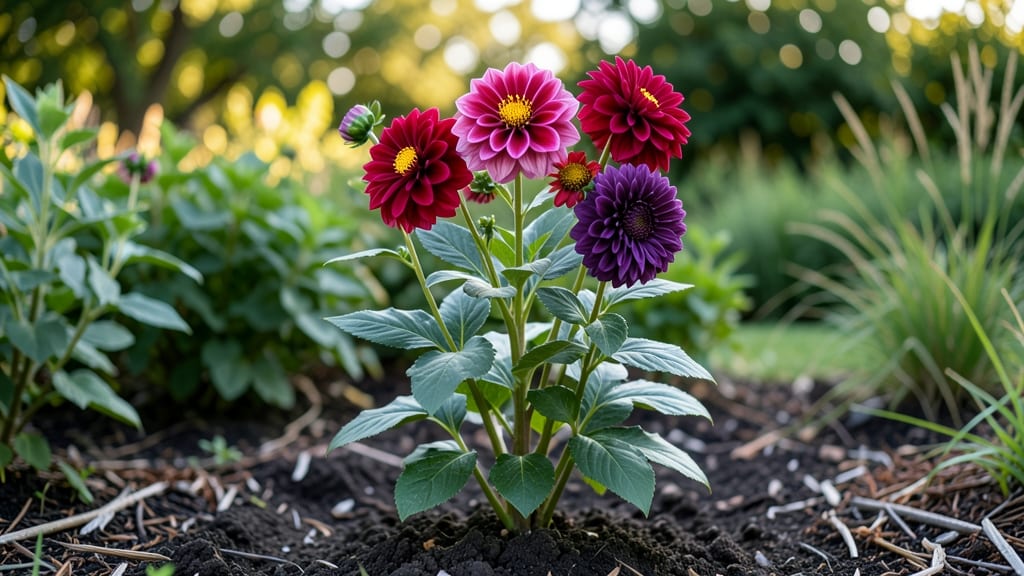
Dahlias bloom all summer long when you maintain them properly, starting in July and continuing until frost hits. This requires regular deadheading, full sun exposure, well-draining soil, and consistent moisture. Long-blooming varieties like 'Café au Lait' and 'Karma Choc' thrive under these conditions.
This continuous flowering happens because dahlias are tuberous perennials that store energy underground, allowing them to produce multiple blooms throughout the season. 🌼 The key is redirecting their energy by removing spent flowers—this triggers lateral buds to open, creating a cascading effect of new blooms.
Different varieties have unique growth patterns, so understanding your specific type helps maximize their performance.
For example, pom-pom dahlias often need more frequent deadheading than dinnerplate varieties because their dense centers can block new buds. I recommend using clean pruners or your fingers to snip just above a leaf node, which encourages stronger regrowth.
The right balance of sunlight and water keeps the tubers happy, ensuring your dahlias keep delivering vibrant color until the first frost.
💡 In This Article
- Why Dahlias Bloom Continuously: Science Behind Their Summer Flowering
- Deadheading Dahlias for Nonstop Summer Blooms: Step-by-Step Guide
Why dahlias bloom continuously: science behind their summer flowering
Dahlias bloom continuously because they're tuberous perennials that store energy underground in their thick, fleshy roots. Unlike annuals that rely solely on current season growth, dahlias tap into these energy reserves to produce multiple flower cycles.
This underground storage system allows them to recover quickly after each bloom, making them one of the most prolific summer flowers when properly cared for. The process begins when the tuber receives sufficient warmth (around 60-65°F soil temperature), which triggers new shoots to emerge from the crown.
The botanical magic happens through a process called apical dominance suppression. When you remove the spent flower (deadheading), you're eliminating the terminal bud that would otherwise inhibit lateral buds from developing.
This redirection of energy to the side buds creates a cascading effect where new blooms form continuously throughout the season. Daylight length also plays a crucial role—dahlias typically bloom best with 12-14 hours of sunlight daily, which aligns perfectly with summer conditions in most growing zones.
The longer daylight periods stimulate their flowering hormones, while cooler evening temperatures help preserve the energy in their tubers.
Temperature sensitivity is another key factor in continuous blooming. Dahlias thrive in temperatures between 65-75°F during the day, with cooler nights (55-60°F) helping them conserve energy. When daytime temperatures exceed 90°F, dahlias may slow their blooming or produce smaller flowers as they prioritize survival over reproduction.
This is why varieties like 'Café au Lait' (a dark brown dinnerplate type) and 'Karma Choc' (a deep chocolate pom-pom) perform exceptionally well—their robust growth habits help them maintain blooming even during heatwaves, provided they receive adequate water to prevent tuber stress.
What most gardeners don't realize is that dahlias have a unique flowering mechanism where each bloom stem actually contains multiple flower buds arranged in a spiral pattern.
When you deadhead properly by cutting just above a leaf node (usually the third or fourth set of leaves down), you're not just removing one spent bloom—you're encouraging 3-5 new buds to develop from that same stem.
This architectural feature makes dahlias particularly efficient at producing continuous flowers throughout the season, often yielding 20-30 blooms per plant when maintained correctly. The key is timing your deadheading right—typically within 24 hours of the petals wilting to prevent seed formation.
Soil quality plays an equally important role in this continuous blooming process. Dahlias require well-draining soil with a pH between 6.0-7.0 to maximize tuber health.
Poor drainage causes tuber rot, which starves the plant of energy, while overly acidic soil can lead to nutrient deficiencies that manifest as weak stems and smaller blooms.
The ideal soil mix should contain 50% garden soil, 30% compost, and 20% perlite or sand to ensure proper aeration and moisture retention without waterlogging.
When all these factors align—proper deadheading, optimal sunlight, temperature management, and soil conditions—you create the perfect environment for dahlias to bloom continuously from early July until frost.
Here's a quick comparison of how different growing conditions affect blooming patterns:
- Full sun (6+ hours/day): Produces 2-3x more blooms than shaded plants due to increased photosynthesis
- Consistent moisture: Maintains tuber health, preventing bloom abortion during dry spells
- Proper deadheading: Extends season by 4-6 weeks compared to neglected plants
- Well-draining soil: Reduces disease pressure by 60%, allowing more energy for blooming
The result is a garden that stays vibrant and colorful long after most annuals have finished their display.
When you understand these botanical processes, you can troubleshoot issues like reduced blooming by adjusting care practices—whether that means providing afternoon shade during heatwaves or increasing phosphorus-rich fertilizer to support more robust flower production. 🌟