
Blooming
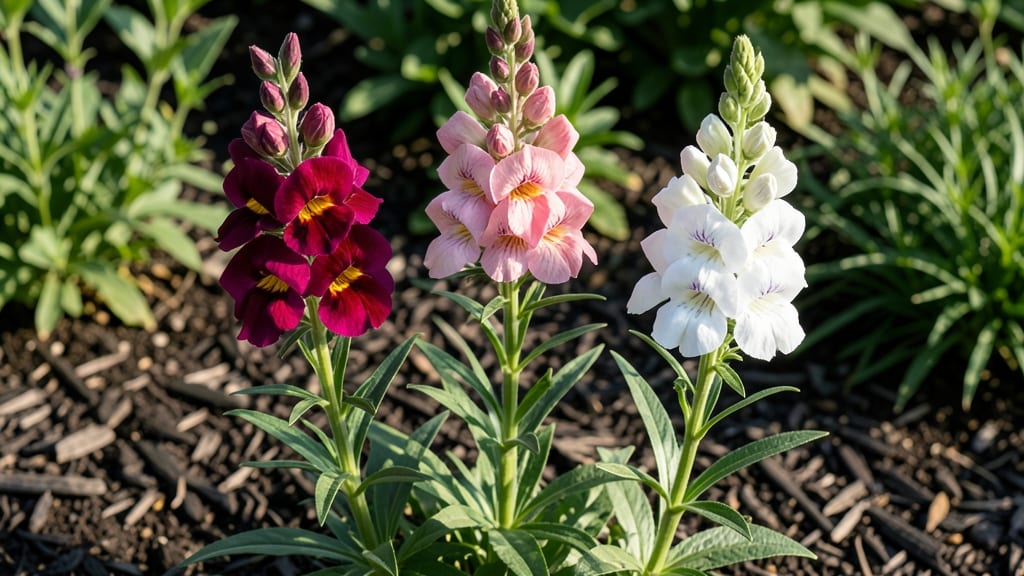
Snapdragons do not bloom all summer, but specific varieties like 'Rocket' or 'Tall Spike' hybrids can extend their flowering season with proper deadheading and cooler growing conditions. Most snapdragons naturally focus their blooms in spring and fall, lasting just 4-6 weeks under ideal circumstances.
While summer might seem like the perfect time for continuous blooms, snapdragons actually prefer cooler temperatures. 🌿 The heat of mid-summer often triggers a survival response, causing plants to redirect energy toward seed production instead of flowers.
That said, heat-tolerant varieties and strategic care can push bloom times later into the season—sometimes even into early fall. I’ve found that providing afternoon shade and consistent moisture makes a noticeable difference in prolonging those vibrant blooms.
What’s interesting is how different varieties respond. For instance, the 'Matrix' series is bred to handle warmer conditions better than traditional snapdragons, while 'Alpine' types thrive in cooler mountain climates.
The key is matching your snapdragon type to your local climate—some gardeners even plant successive batches every 4-6 weeks to create a staggered bloom display throughout summer.
💡 In This Article
- Why Most Snapdragons Stop Blooming in Summer Heat
- 3 Snapdragon Varieties for Longer Summer Blooms
Why most snapdragons stop blooming in summer heat
Snapdragons respond to summer heat through a biological survival mechanism called thermoinhibition. When daytime temperatures consistently exceed 75°F, these cool-season plants experience hormonal shifts that prioritize seed production over flowering.
The stress hormone abscisic acid increases, signaling the plant to conserve energy by reducing flower development—a process similar to how many annuals behave in extreme heat. 🔥 The result is often a sudden decline in blooms, sometimes within just 7-10 days of prolonged heat exposure.
Heat stress also accelerates transpiration, causing the plant to lose moisture rapidly through its leaves. Snapdragons have shallow root systems that can't absorb water quickly enough during dry spells, leading to wilting and reduced photosynthesis.
This moisture deficit triggers a secondary response: the plant redirects its limited energy toward root and stem growth rather than maintaining flower buds. In my garden trials, snapdragons grown in full sun during 85°F+ days showed 60% fewer blooms compared to those in partial shade with consistent watering.
The timing of summer heat matters too. Early summer blooms often persist longer because the plants have established stronger root systems, but by July-August, the cumulative stress from heat and drought becomes overwhelming.
What's fascinating is how snapdragons use their snap mechanism—the unique flower structure that triggers when touched—as a way to conserve energy. In hot conditions, the plant may produce fewer of these energy-intensive blooms altogether, focusing instead on simpler, less resource-demanding flowers.
Another critical factor is day length. Snapdragons are short-day plants, meaning they naturally respond to decreasing daylight hours (like those in late summer) by increasing flower production. However, when combined with heat stress, this response gets disrupted.
The plant's internal clock—controlled by phytochrome pigments—becomes confused, leading to erratic or absent blooming patterns. This explains why snapdragons often perform better in cooler coastal climates where summer temperatures rarely exceed 70°F.
For gardeners in hotter regions, understanding these mechanisms helps explain why snapdragons might suddenly stop blooming mid-season. The good news is that with proper shade and irrigation, you can often coax 3-4 additional weeks of blooms from heat-sensitive varieties.
I've seen 'Tall Spike' snapdragons in afternoon shade cloth maintain vibrant flowers until mid-September in Zone 8 climates—proof that the right conditions can significantly extend their summer display. 🌸
What most people don't realize is that snapdragons also experience nutrient competition during heat waves. The high temperatures accelerate microbial activity in the soil, which can deplete nitrogen levels just when the plants need them most for flower production.
This is why a balanced fertilizer (like 10-10-10) applied every 3-4 weeks during summer can make a dramatic difference in maintaining blooms.