
Blooming
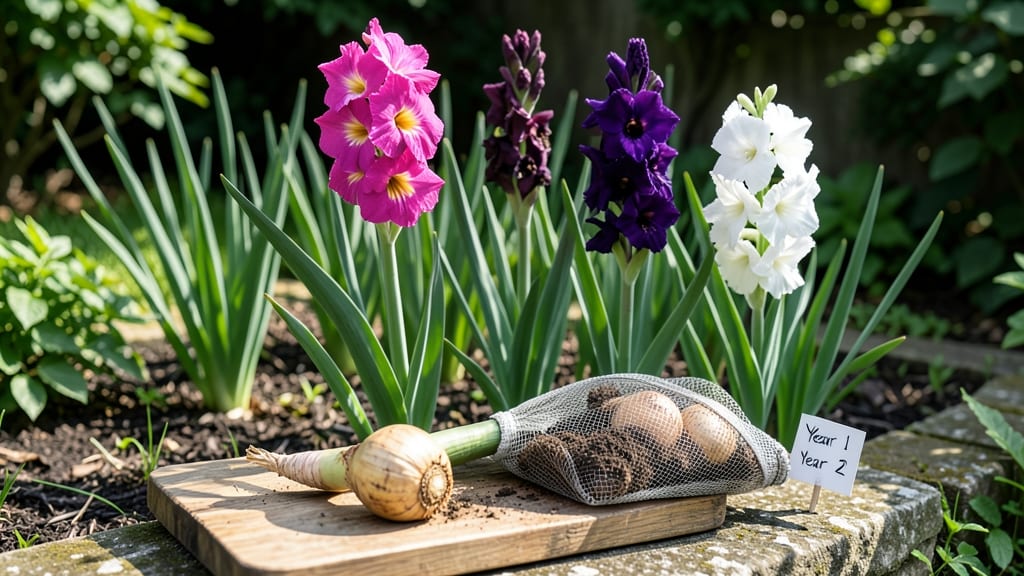
Gladiolus don't bloom every year as perennials in most climates—their underground corms typically die back after flowering, forcing gardeners to replant annually for consistent blooms unless grown in frost-free regions where they may survive for 2-3 seasons with proper care.
These striking flowers act like annuals because their corms—thickened underground stems—lack the hardiness to survive freezing temperatures. 🌱 In colder zones, the corms often shrivel after flowering, while in warmer areas (USDA Zone 7+), they can sometimes persist if protected.
The key to repeat blooms lies in either replanting fresh corms each spring or carefully storing and overwintering existing ones.
What many gardeners don't realize is that even in mild climates, gladiolus corms gradually deplete their energy reserves after multiple bloom cycles. This is why professional growers often recommend digging up corms after flowering, curing them, and storing them in a cool, dry place until replanting season.
The right soil preparation—rich in organic matter and with proper drainage—can also help extend their lifespan by 1-2 seasons.
💡 In This Article
- Why Gladiolus Act Like Annuals Despite Being Perennials
- How to Extend Gladiolus Blooms Across Seasons
Why gladiolus act like annuals despite being perennials
The confusion stems from gladiolus being classified as perennials in botanical terms, but their behavior in most gardens is annual-like due to their corms' extreme cold sensitivity. These corms—thickened underground stems—contain all the energy reserves needed for flowering, but they lack the protective layers of true hardy perennials like peonies.
When temperatures drop below 20°F, the corms' cells begin to break down, a process accelerated by moisture in the soil. 🌱
Here's the science: gladiolus corms store energy in the form of starches and sugars, but they don't produce the same protective compounds that allow hardy perennials to survive winter.
In USDA Zones 8-10, where winters rarely drop below 10°F, corms can sometimes persist for 2-3 seasons if protected by mulch. However, in colder zones, even a single freeze can trigger irreversible damage to the corm's vascular system, preventing next year's growth.
The root system plays a crucial role too. Unlike true perennials that develop extensive root networks, gladiolus rely on a single, central corm that produces shallow, fibrous roots.
These roots can't anchor deeply enough to draw moisture from lower soil layers during drought, and they're equally vulnerable to winter's freeze-thaw cycles. This makes gladiolus particularly dependent on gardeners for survival in most climates.
What most gardeners overlook is the energy trade-off: each flowering cycle drains 60-70% of the corm's stored reserves. After blooming, the corm's primary focus shifts to producing replacement corms (called "cormels"), leaving little energy for winter survival.
This is why even in mild climates, corms often shrivel by their second season without intervention.
Consider this comparison: a peony corm can survive decades because it develops a protective tunic and stores energy in multiple underground structures. A gladiolus corm, however, is essentially a single "use-and-replace" storage unit—think of it like a disposable energy battery rather than a rechargeable one. 🔋
The exception occurs in frost-free regions where gardeners can leave corms in the ground year-round. In these areas, the corms continue producing new growth each spring from the same root system, allowing for true perennial behavior.
The key difference is the absence of winter stress that triggers dormancy and eventual decline.