
Pruning
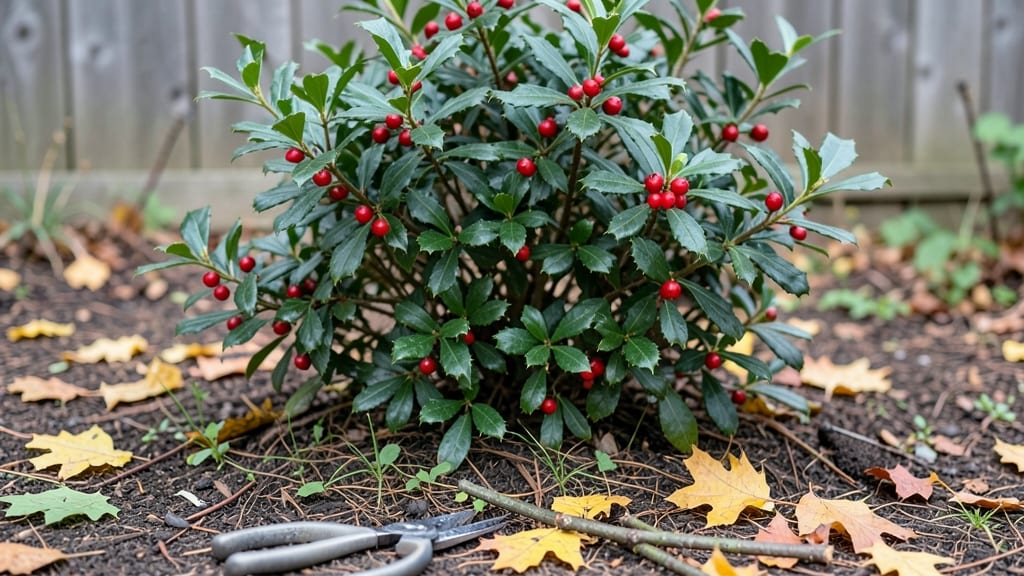
Trimming holly bushes in the fall is risky because it removes protective leaves needed for winter and can damage next year’s berries. Wait until late winter or early spring after flowering, then prune selectively to shape the bush without over-trimming.
Holly bushes rely on their leaves to photosynthesize through winter, storing energy for spring growth and berry production—cutting them back in fall disrupts this natural cycle. 🌿 The berries also play a role in wildlife support, so removing foliage too early can leave birds and animals without food sources.
Instead, I always wait until after flowering in late winter, when the plant has already pushed new growth and is less vulnerable to stress.
Timing isn’t the only factor—how you prune matters just as much. Over-trimming can expose the bush to cold damage or invite pests, while selective cuts encourage denser, healthier regrowth.
I recommend focusing on removing only dead or crossing branches first, then shaping gradually over 2-3 years to avoid shocking the plant. Sterilizing your tools between cuts prevents disease spread, which is especially critical for holly’s delicate new shoots.
💡 In This Article
- Why Fall Pruning Damages Holly Bushes
- Step-by-Step Guide to Pruning Holly Bushes Safely
Why fall pruning damages holly bushes
Holly bushes enter a delicate winter survival mode where their broad, waxy leaves act as natural insulation and solar panels. These leaves continue photosynthesizing at reduced rates even in cold weather, producing the 30-50% of carbohydrates needed to fuel spring growth and berry development.
When you prune in fall, you remove this protective canopy just as temperatures drop, forcing the plant to divert energy toward regrowing leaves instead of storing nutrients for next year’s fruit. 🌿 This biological stress can weaken the holly’s root system, making it more susceptible to winter dieback.
The berries themselves follow a precise annual cycle: they ripen in late summer/fall, then persist through winter to provide food for birds and wildlife. Removing foliage in fall disrupts this ecosystem relationship while also cutting off the berry-producing branches from sunlight.
Studies show that holly bushes exposed to more than 30% leaf removal in fall can experience up to 40% reduction in flowering the following spring, as the plant prioritizes leaf regrowth over reproductive energy.
The waxy leaf surface also helps prevent water loss during winter desiccation—a critical adaptation in many holly species.
Timing matters because holly bushes are already preparing for dormancy by fall. Their growth slows as temperatures drop, and aggressive pruning triggers unnecessary stress responses like increased ethylene production (a plant hormone that accelerates aging).
What most gardeners don’t realize is that holly branches contain resin-filled ducts that can ooze when cut improperly, creating open wounds that invite fungal infections like Phytophthora—a common pathogen in damp fall conditions.
This is why professional arborists recommend waiting until late winter when the plant is actively regrowing but hasn’t yet pushed new buds.
Consider the contrast between fall and spring pruning: in late winter, the holly has already completed its winter dormancy and is ready to allocate resources to new growth. The ideal window is typically February through early March, after flowering but before bud break.
This timing allows you to remove up to 25% of the plant’s volume without triggering stress responses. The key is to prune just above outward-facing buds, which encourages fuller growth patterns while maintaining the bush’s natural shape. 🌱
Another critical factor is the holly’s root system. These plants develop extensive shallow roots that spread horizontally, creating a dense network that supports both structural stability and nutrient uptake. Fall pruning disrupts this balance by removing above-ground biomass while the roots remain active in nutrient absorption.
The plant then faces a nutrient deficit as it tries to regrow foliage during winter’s limited growing conditions, often resulting in stunted growth or yellowing leaves the following season.
For those who must prune in fall (perhaps due to storm damage), the solution is minimal intervention: remove only dead, diseased, or crossing branches—never more than 10% of the plant’s total volume.
Use sharp, sterilized bypass pruners to make clean cuts at a 45-degree angle, about ¼ inch above a bud.
Apply a thin layer of horticultural sealant to larger cuts to prevent pathogen entry, and avoid pruning after mid-October in most climates to give the plant maximum recovery time before winter.