
Flowers
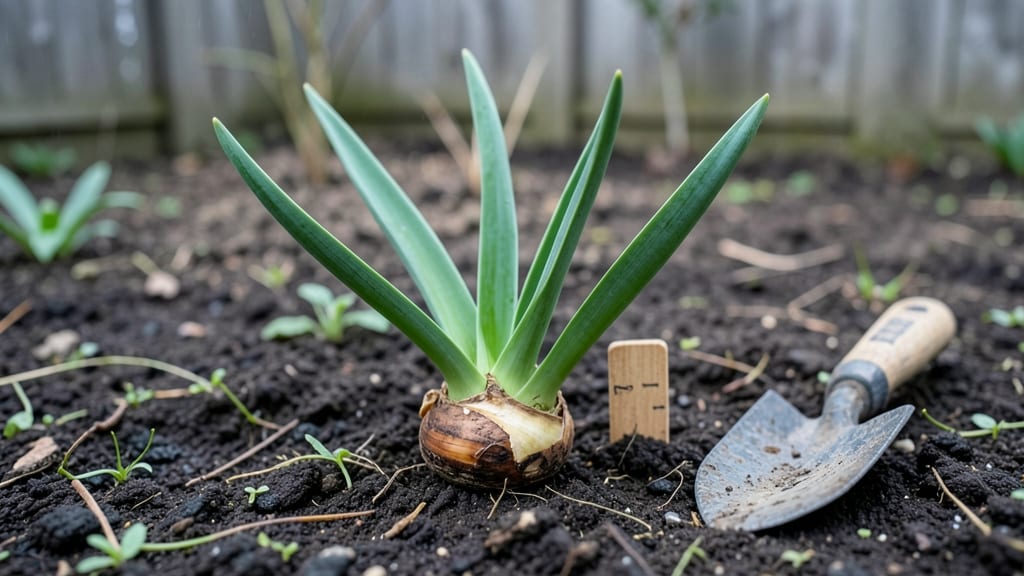
Mastering bulb identification by leaf before digging in will help you plant with confidence—and spare you from a garden full of surprises—and maybe a few regrets.
Ever dug up a mysterious bulb from your garden only to wonder, What flower will grow from this? The leaves hold the key 🌱—learn how to decode their shape, texture, and arrangement to identify bulbs with confidence before planting.
Most gardeners focus on blooms, but the real clues are hidden in the foliage. A long, strap-like leaf might signal a daffodil, while broad, fleshy leaves could mean a lily. Even the way leaves grow—whether they fan out or spiral—can reveal the bulb’s identity.
In this guide, I’ll walk you through 8 telltale signs to spot common bulbs, avoid common mistakes, and plant with precision. No more guessing—just confident gardening.
How leaf shape and texture reveal hidden bulb identities
Identifying bulbs by their leaves is like reading a botanical fingerprint—each shape, texture, and arrangement tells a unique story. When you spot long, strap-like leaves emerging in early spring, you’re likely looking at a daffodil.
But those broad, fleshy leaves with visible veins? That’s probably a lily waiting to bloom. Understanding these clues helps you avoid planting the wrong bulb in your garden and ensures your spring display thrives.
The key lies in examining leaf width, edge smoothness, and venation patterns. For example, tulips have narrow, pointed leaves with parallel veins, while hyacinths boast broader, sword-shaped foliage. These differences aren’t just academic—they directly impact how you care for your bulbs, from sunlight needs to watering schedules.
Let’s break down the most common bulb types by their leaf characteristics so you can confidently match what’s growing in your garden to the right bulb. Whether you’re a beginner or a seasoned gardener, these visual cues will save you time and frustration.
| Bulb Type | Leaf Shape | Leaf Texture | Edge Type | Venation | Key Distinction |
|---|---|---|---|---|---|
| Daffodil | Long, strap-like | Smooth, slightly waxy | Smooth or slightly wavy | Parallel veins | Leaves appear in clusters; toxic to pets |
| Tulip | Narrow, lance-shaped | Smooth, slightly hairy at base | Smooth or slightly serrated | Parallel veins | Leaves grow alternately; early spring blooms |
| Hyacinth | Sword-shaped, broad | Smooth, slightly fleshy | Smooth | Parallel veins | Strong fragrance; leaves grow in basal rosette |
| Lily | Broad, lance-shaped | Smooth, slightly leathery | Smooth or slightly serrated | Prominent midrib with side veins | Large, showy blooms; tall stems |
| Allium | Thin, grass-like | Smooth, hollow stems | Smooth | Parallel veins | Round, globe-shaped flowers; late spring blooms |
| Crocus | Narrow, grass-like | Smooth, slightly leathery | Smooth | Parallel veins | Early spring blooms; small, cup-shaped flowers |
One of the most common mix-ups happens between tulips and hyacinths. Both have sword-shaped leaves, but hyacinth leaves are broader and flesher, while tulip leaves are narrower and more papery.
If you’re unsure, check the leaf arrangement: hyacinths grow in a basal rosette, while tulips alternate along the stem.
Another trick is to look at the leaf edges. Daffodils often have slightly wavy edges, while lilies tend to have smooth, leathery leaves with visible veins. These subtle differences can help you avoid planting bulbs in the wrong spot—like tucking a sun-loving lily into a shady corner.
Don’t overlook leaf texture either. Alliums have thin, almost hollow stems, while crocuses boast leathery, grass-like leaves. These textures aren’t just for show—they influence how much water each bulb needs.
For example, fleshy leaves like those on lilies store more moisture, so they tolerate drier conditions better than thin, papery leaves like tulips.
Pro tip: If you’re still unsure, wait until the flower emerges. While leaves are helpful, the bloom itself is the ultimate identifier. But why wait when you can decode the clues right from the start? With practice, you’ll spot these differences in seconds—no guesswork needed.
Next time you’re digging in your garden and spot a mysterious bulb, pause and examine its leaves. You’ll be amazed at how quickly you can match them to the right flower. Happy planting! 🌱
8 Telltale leaf signs to identify common garden bulbs
Identifying garden bulbs by their leaves can save you from planting the wrong flower or wasting time on misdiagnosed issues. The leaf arrangement, texture, and color are like fingerprints for bulbs—each tells a unique story.
For example, crocus leaves appear early in winter, while alliums boast bold, sword-like foliage that’s impossible to miss. By mastering these 8 telltale signs, you’ll confidently match leaves to bulbs before they even bloom.
Start by observing the leaf base—whether it’s smooth, hairy, or variegated. Next, check the leaf edges: are they smooth, toothed, or wavy? These details narrow down your options to just a few bulbs.
For instance, snowdrops have narrow, grass-like leaves, while tulips feature broader, lance-shaped foliage. Pair these observations with the leaf arrangement—whether they grow in clusters or alternately—and you’ll crack the bulb identification code.
- 📌 1. Leaf Width: Narrow leaves (e.g., crocus, snowdrop) vs. wide leaves (e.g., lily, tulip)
- 📌 2. Leaf Texture: Smooth (e.g., daffodil) vs. hairy (e.g., hyacinth) vs. glossy (e.g., allium)
- 📌 3. Leaf Arrangement: Basal rosette (e.g., tulip) vs. alternate (e.g., fritillary)
- 📌 4. Leaf Color: Solid green (e.g., daffodil) vs. variegated (e.g., variegated hyacinth)
- 📌 5. Leaf Edges: Serrated (e.g., lily) vs. smooth (e.g., allium)
- 📌 6. Leaf Length: Short (e.g., snowdrop) vs. long (e.g., tulip, up to 12 inches)
- 📌 7. Growth Time: Early spring (e.g., crocus) vs. late spring (e.g., tulip)
- 📌 8. Stem Presence: Leafless stems (e.g., allium) vs. foliage-covered stems (e.g., lily)
Let’s break down the leaf width first—this is your fastest filter. Narrow leaves (under ½ inch wide) almost always belong to crocuses or snowdrops, while wide leaves (over 1 inch) are classic for tulips or lilies.
For example, a daffodil has sword-shaped leaves that can reach 18 inches long, whereas a hyacinth sports narrower, hairy leaves that feel almost fuzzy to the touch. Pay attention to these textures—they’re often the deciding factor between lookalikes.
Next, focus on the leaf arrangement. Bulbs like tulips and daffodils grow leaves in a basal rosette close to the ground, while alliums often have alternate leaves along a stem. This pattern helps rule out entire bulb families.
For instance, if you spot leaves growing alternately along a stem, it’s likely a fritillary or grape hyacinth, not a tulip. Combine this with leaf color: variegated leaves (striped or splotched) are a dead giveaway for variegated hyacinths or certain lily varieties.
Finally, time your observations. Early spring leaves (like those of crocuses) are a clue that the bulb is winter-hardy and thrives in cold climates. Meanwhile, late spring leaves (such as tulips) suggest a bulb that prefers warmer soil to sprout.
By noting when leaves emerge, you’ll avoid planting crocuses where they’ll rot in summer heat or tulips in spots that freeze too early. These 8 signs turn bulb identification from guesswork into a science.