
Blooming
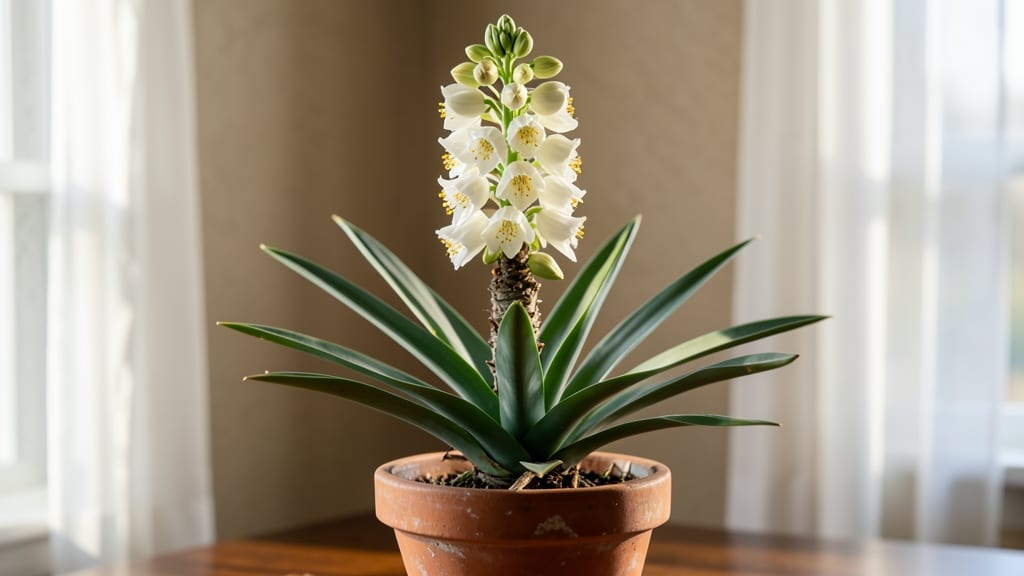
Yucca plants bloom in late spring to early summer, but the timing can be unpredictable unless you know the right triggers.
If your 🌵 yucca has gone years without a single bloom, you’re not alone—but this light-based trick could force it to flower again, even if it’s decades old. The secret lies in mimicking the natural cues that wake up dormant buds, and it’s easier than you think.
Yucca blooming depends on two key factors: sunlight exposure and seasonal shifts. Most species, like Yucca filamentosa and Yucca rostrata, need 6+ hours of direct sun daily and a period of cooler nights to trigger flower stalks.
In Zone 9b climates like Phoenix, this usually happens in March or April—but if your plant is stubborn, a little light manipulation can reset its cycle.
Below, I’ll show you how to read your yucca’s signals, the exact light schedule that forces reblooms, and the common mistakes that keep plants silent for years. Ready to turn that dormant 🌵 into a flowering showstopper?
When and why Yucca plants bloom: natural cycles vs. forced growth
Yucca plants are stunning desert shrubs that reward patience with dramatic spike-like blooms in late spring or summer—but many gardeners wait years for their first flower. The secret lies in understanding photoperiod sensitivity, where light exposure triggers blooming cycles.
Unlike annuals, yuccas follow a natural 2-5 year cycle between growth and flowering, often delaying blooms until they reach maturity or ideal conditions.
In their native USDA Zones 5-10, yuccas typically bloom between April and June, though Yucca filamentosa may flower earlier in Zone 7, while Yucca rostrata waits until late summer in Zone 9.
The key trigger? 12+ hours of darkness followed by long daylight periods—a pattern we can mimic to force reblooms. Without this light cue, even healthy yuccas may skip flowering entirely.
| Factor | Natural Bloom Window | Forced Bloom Conditions | Key Trigger |
|---|---|---|---|
| Species | Yucca filamentosa: April-June Yucca rostrata: June-August |
Any species with 12-hour darkness | Photoperiod sensitivity |
| Light Needs | Full sun (6+ hours daily) | 14+ hours light, 10-12 hours darkness | Daylength manipulation |
| Age Requirement | 3-5 years (mature size) | 2+ years (with proper light) | Accelerated maturity |
| Climate Zone | Zones 5-10 (native range) | Zones 5-10 (container adaptable) | Artificial light sources |
| Bloom Duration | 2-4 weeks per stalk | 3-6 weeks (extended with care) | Nutrient timing |
The science behind yucca blooming is fascinating: these plants are short-day photoperiodic, meaning they detect decreasing daylight in late summer to trigger flower buds. In Zone 9b climates like Phoenix, where days stay long year-round, yuccas often skip blooming entirely without intervention.
Even in ideal conditions, overwatering or high nitrogen can delay flowering by promoting leafy growth over reproductive cycles.
One common myth is that yuccas only bloom once in their lifetime—but with the right light manipulation, mature plants can rebloom annually or biennially. The trick? Simulate the natural short-day signal by providing 10-12 hours of darkness daily for 4-6 weeks in late winter.
This mimics the fall-to-winter transition that triggers bud formation. For container-grown yuccas, move them to a garage or covered patio during evening hours to achieve this effect.
Yucca species like Yucca gloriosa often bloom earlier than their filamentosa cousins because they’re slightly more light-sensitive. However, all yuccas share the same photoperiod requirement: they need to "see" the shortening daylight of late summer to begin flowering.
In northern climates (Zone 5-6), this happens naturally, but in southern zones (Zone 8-10), gardeners must artificially reduce light exposure to coax blooms.
Temperature also plays a role: yuccas need cool nights (50-60°F) for 2-3 weeks before blooming to set flower buds properly. In Zone 9b, where nights rarely drop below 65°F, this becomes another hurdle.
Use fan cooling or move potted yuccas to shadier, breezier spots overnight to simulate cooler conditions. Pair this with reduced watering (let soil dry completely) to signal the plant it’s time to flower.
If your yucca has never bloomed, it may be too young or stressed. Focus first on well-draining soil and full sun exposure—these are non-negotiable for flowering. Once
The light hack to force Yucca ReBlooms: step-by-step guide
Yuccas are famously stubborn about blooming, but their photoperiod sensitivity—response to light cycles—gives us a way to trick them. By mimicking the 12-hour darkness they experience in winter, you can force even mature yuccas to produce flower stalks when they’d normally skip a season.
This method works best in spring or fall, when natural light shifts create the perfect trigger.
Most gardeners miss the critical timing window because they assume yuccas bloom on their own schedule. The truth? They need a consistent light-dark cycle to set buds. Without it, your plant might sit there for years, looking healthy but stubbornly bloom-free.
The good news? You don’t need fancy equipment—just a little strategy and patience.
🌱 Step-by-Step Light Hack for Yucca ReBlooms
- 1 Choose your timing: Start in late winter (Feb) or early fall (Sept) for best results. Avoid summer—yuccas naturally rest then.
- 2 Move to darkness: Place your yucca in a completely dark space (closet, garage, or covered porch) for 12 hours nightly. Use a timer to track consistency.
- 3 Simulate sunlight: After 12 hours dark, expose it to 6+ hours of bright light (south-facing window or grow lights). Yuccas need full-spectrum light to process the signal.
- 4 Repeat for 6-8 weeks: Maintain this cycle nightly without breaks. Flower buds typically form after 45-50 days of consistent treatment.
- 5 Watch for stalks: Successful treatment produces a 1-3 ft tall flower stalk from the center. Once blooms fade, cut stalks at the base to redirect energy to next year’s growth.
⏰ Pro Tip: Use a smart plug timer for lights to automate the 12-hour rule—no guesswork!
For container-grown yuccas, this hack works even better because you control the environment. If your plant is outdoors, cover it with a black tarp for the 12-hour dark period (secure it tightly to block all light).
In pots, simply move them to a dark shed or basement—just ensure temperatures stay above 50°F (10°C).
Patience is key here. Some yuccas respond in 6 weeks, while others take 3 months to show buds. If you see no progress after 8 weeks, check your light source—yuccas need true full sun, not just bright room light.
A LED grow bulb (6000K color temp) can bridge gaps if natural light is weak.
Once your yucca blooms, enjoy the show—but don’t expect it to rebloom immediately. The first forced bloom resets the plant’s cycle, so you’ll likely see natural blooms next spring without extra effort. For repeat forced blooms, repeat the process annually in fall.