
Blooming
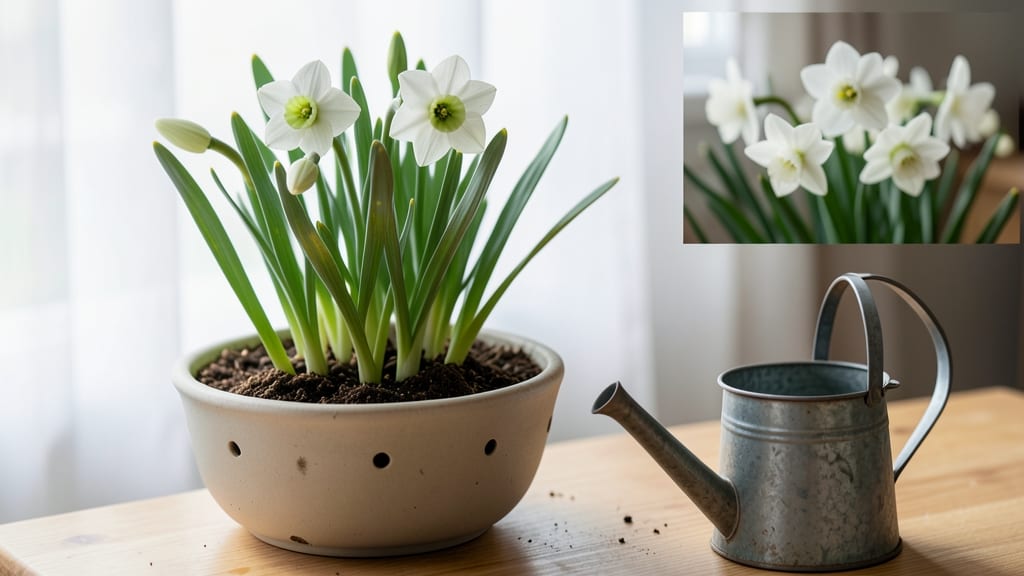
Paperwhites will bloom again only in rare cases, as most varieties are biennial bulbs that deplete their energy after flowering. The exceptions are ‘Grand Rapids’ and ‘Ziva,’ which may produce a second bloom with careful post-flowering care and proper dormancy conditions.
Most paperwhites follow a one-and-done blooming pattern because their energy reserves are fully expended after flowering. 🌸 Unlike perennial bulbs that store energy underground for years, paperwhites are annuals that prioritize reproduction over longevity.
The two reblooming varieties—‘Grand Rapids’ and ‘Ziva’—require specific conditions: consistent moisture during dormancy, gradual temperature shifts, and strategic fertilization to rebuild their strength for a potential second show.
For these special varieties, the key lies in mimicking their natural growing cycle. After the first bloom fades, let the foliage die back naturally before trimming, then provide bright indirect light and moderate watering during their resting phase.
Some gardeners even move potted paperwhites outdoors in mild climates to experience natural seasonal changes, which can trigger reblooming in subsequent years.
💡 In This Article
- Why Paperwhites Usually Bloom Just Once
- How to Encourage Reblooming in Select Paperwhite Varieties
Why paperwhites usually bloom just once
Paperwhites (Narcissus papyraceus) are biennial bulbs, meaning they complete their life cycle in two years. The first year focuses on root and foliage development, while the second year is dedicated entirely to flowering.
Once they bloom, the bulb has expended nearly all its stored energy—up to 90% of its reserves—to produce flowers, leaves, and seeds. This energy depletion triggers bulb senescence, or aging, causing the plant to die back naturally.
The process begins when the bulb senses longer daylight hours (typically 12+ hours) in late winter or early spring, signaling it’s time to flower. Inside the bulb, hormones like gibberellins surge, stimulating flower bud formation while simultaneously reducing root growth.
After blooming, the bulb shifts its remaining energy to seed production, leaving little for future growth. Unlike perennials like daffodils (which store energy for years), paperwhites prioritize reproduction over longevity.
Temperature plays a critical role too. Paperwhites thrive in 60-70°F during active growth but require a cooler 50-60°F dormancy period to reset their cycle. Without this cooling phase, the bulb remains metabolically active and continues depleting its reserves.
The lack of natural seasonal cues in indoor settings (where most paperwhites are grown) accelerates this energy drain, making reblooming nearly impossible for standard varieties.
Visually, you’ll notice the foliage yellowing and wilting shortly after flowering—a clear sign the bulb is shutting down. Even if you trim the dead flowers, the bulb itself is already committed to its one-time bloom.
The only way to "reset" the cycle is to plant new bulbs, as the original bulb’s life cycle has reached its natural endpoint.
This one-and-done pattern contrasts sharply with perennials like tulips or crocuses, which store carbohydrates in their bulbs year-round. Paperwhites, however, are more like annuals in their energy strategy, making their single bloom a spectacular but fleeting event. 🌸
For those hoping to coax a second bloom, understanding this biological trade-off is crucial. The two reblooming varieties—‘Grand Rapids’ and ‘Ziva’—have evolved slight adaptations in their energy allocation, but even they require precise care to pull off a repeat performance.