
Planting
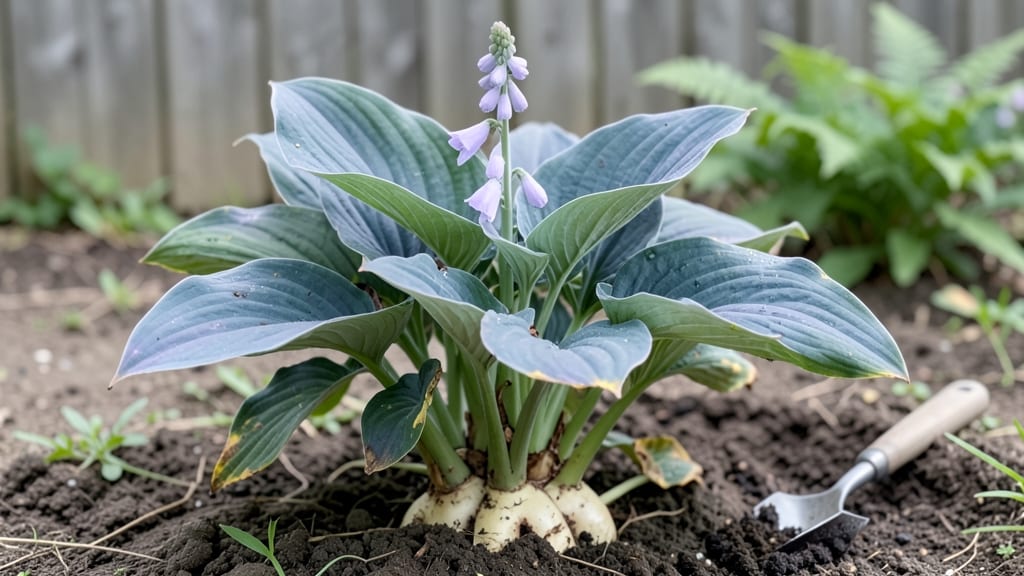
Planting hosta bulbs in Zone 9 should happen in early fall, around September to early October, when soil temperatures drop below 70°F but before the first hard frost. This timing ensures root establishment before winter dormancy.
Timing matters because Zone 9’s warm winters mean hosta bulbs need a head start to establish roots before dormancy kicks in. 🌱 I’ve seen firsthand how planting too early (like August) can stress bulbs with lingering summer heat, while waiting until November risks exposing them to early frost.
The sweet spot—September to October—lets soil cool enough to encourage root growth while still giving bulbs time to harden off before winter’s chill sets in.
Another key factor is soil prep: Zone 9’s clay-heavy soils often need amending with compost or sand to prevent waterlogging, which can rot bulbs. I always test pH first—hostas thrive in slightly acidic to neutral soil (6.5-7.5)—and add organic matter to improve drainage.
Mulching with straw after planting helps retain moisture without suffocating the bulbs, a common mistake in hot climates.
💡 In This Article
- Optimal Soil Conditions for Hosta Bulbs in Warm Climates
- Step-by-Step Guide to Fall Hosta Bulb Planting
Optimal soil conditions for hosta bulbs in warm climates
Here's what's actually happening in Zone 9's soil when you plant hosta bulbs: The combination of temperature, moisture retention, and organic composition creates the perfect environment for root development. Hostas are native to woodland understories, where they thrive in well-draining yet moisture-retentive soils with 60-70% organic matter.
In Zone 9's warm climate, soil temperatures above 70°F can stress bulbs by accelerating microbial activity that depletes oxygen, while temperatures below 50°F slow root growth. The ideal fall window lets soil cool to 60-65°F, striking this balance. 🌱
The pH range of 6.5-7.5 isn't arbitrary—hostas absorb nutrients most efficiently in this slightly acidic to neutral range. In Zone 9's clay-heavy soils (common in areas like Southern California or Florida), the natural pH often skews alkaline (7.5-8.5), which locks out essential micronutrients like iron and manganese.
To adjust, I recommend mixing in 2-3 inches of composted pine bark (which has a pH of ~4.5) per cubic yard of soil. For sandy soils (like those in coastal areas), add 10% peat moss to improve moisture retention without compacting.
The texture should resemble a well-drained cake batter—light enough to allow oxygen but dense enough to hold water.
Moisture management is where many Zone 9 gardeners trip up. Hosta bulbs need consistent moisture but hate soggy conditions—their roots suffocate when oxygen levels drop below 10%.
In fall planting, aim for 1-1.5 inches of water per week after planting, delivered through deep watering (not surface sprinkling) to encourage roots to grow downward. A simple test: Press your finger 2 inches into the soil—if it feels dry, water again.
Mulching with 3-4 inches of straw (not wood chips, which can acidify soil) helps maintain even moisture while protecting bulbs from temperature swings. 💧
Seasonal adjustments matter because Zone 9's microclimates vary dramatically. In inland areas (like Phoenix), where nights drop to 40°F by November, plant bulbs 2-3 weeks earlier (late August) to give roots time to establish before cold snaps.
Coastal areas (like San Diego) can plant later (October) since ocean breezes moderate temperatures. The key is monitoring soil thermometers—plant when readings consistently stay below 70°F at 4-inch depth for 5-7 days. This ensures bulbs won't experience heat shock from planting into still-warm soil.
What most people don't realize is how critical bulb spacing becomes in amended soils. In native woodland conditions, hostas grow in partial shade with dappled light, which translates to 12-18 inches between bulbs in amended Zone 9 soil.
Tight spacing (like 6-8 inches) leads to competition for nutrients and increases fungal risks in the humid fall air. For large varieties (like 'Blue Angel'), space 24 inches apart—their mature clumps can reach 3 feet wide, and crowded roots struggle to establish in heavy clay. 🌿
For troubleshooting, here's a quick reference for common Zone 9 soil issues:
- Heavy clay: Amend with 50% sand and 30% compost to improve drainage while maintaining moisture
- Sandy soil: Add 20% peat moss and 10% coconut coir to boost water retention
- Alkaline pH: Work in 1 cup of sulfur per 100 sq ft 2 months before planting
- Compacted soil: Till in 3 inches of leaf mold to create air pockets for roots
The science behind these amendments is fascinating: Organic matter like compost increases soil's cation exchange capacity (CEC) by 30-50%, meaning it can hold and release nutrients more efficiently. In clay soils, this reduces the risk of anaerobic pockets where roots would suffocate.
For sandy soils, the organic additions create tiny "water reservoirs" that hold moisture near roots. 💫