
Transplanting
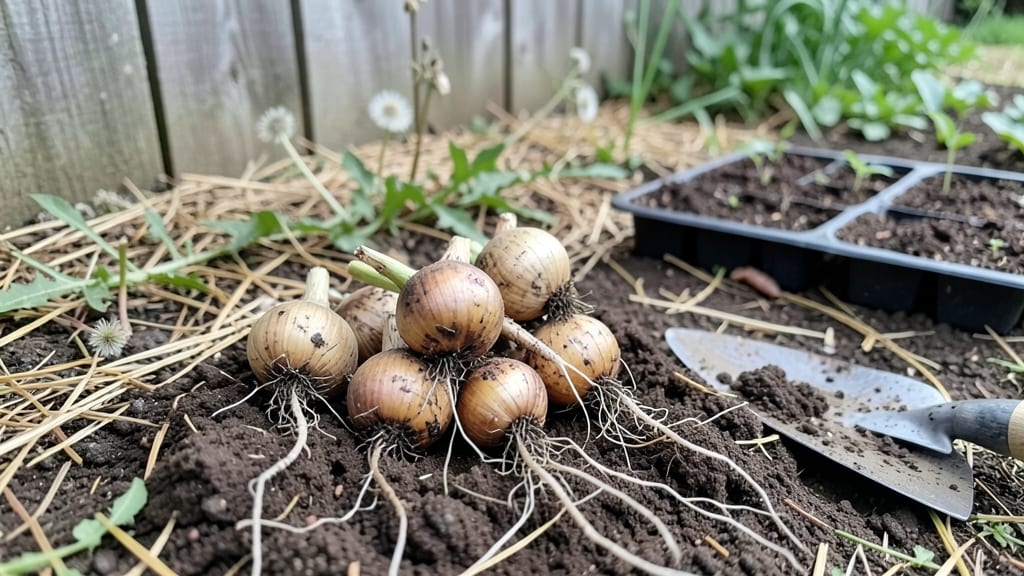
Moving lily bulbs is best done after foliage yellows and dies back naturally in late summer or early fall, ideally before the first frost. Dig carefully to avoid damaging roots, then replant in well-draining soil with full sun exposure for optimal regrowth.
Timing matters because lilies enter dormancy after their foliage fades—this natural cycle signals the bulbs are storing energy for next season. 🌿 I’ve found that transplanting between mid-August and early October gives roots time to establish before winter, while avoiding the shock of early frost.
The key is watching for yellowing leaves, which means the plant’s nutrients are already migrating back into the bulb, making it far more resilient to relocation.
One common mistake is waiting until spring, when bulbs are actively growing and far more vulnerable to transplant shock. Instead, think of late summer as the perfect window: the soil is still warm enough for roots to knit into new soil, yet the cooler air helps prevent stress.
For container-grown lilies, I recommend moving them slightly earlier—late July to August—since they heat up faster in pots and need that extra head start.
💡 In This Article
- Lily Bulb Growth Cycle and Transplant Timing
- Preparing Lily Bulbs for Safe Relocation
Lily bulb growth cycle and transplant timing
Lily bulbs follow a precise biological rhythm that determines the perfect transplant window. After their dramatic summer bloom, lilies undergo photosynthesis-driven nutrient translocation—a process where the plant redirects energy from the foliage back into the bulb. This begins when leaves start yellowing, signaling dormancy.
The bulbs store carbohydrates (like starches) in their scales, preparing for winter. Transplanting during this phase minimizes stress because the plant isn't actively growing roots or shoots—it's already in a low-energy conservation state.
Temperature plays a critical role in this cycle. Soil temperatures between 60-70°F during transplanting create ideal conditions for root regrowth without overwhelming the bulb. Cooler air temperatures (below 75°F) reduce water loss through transpiration, while still allowing roots to establish.
What most gardeners don't realize is that bulbs transplanted too early (spring) face transplant shock because their roots are actively growing, while those moved too late (after frost) risk freezing before establishing. The 6-8 week window between foliage yellowing and first frost strikes this delicate balance.
The moisture factor is equally important. Lily bulbs need well-draining soil (sandy loam with pH 6.1-7.0) to prevent rot during dormancy. When you transplant, the bulb's natural protective layers (tunics) help regulate moisture uptake.
However, if the soil stays soggy after transplanting, the bulb can develop soft rot from fungal growth. This is why I always recommend planting in areas with at least 12-18 inches of drainage—think raised beds or slopes rather than low-lying spots where water pools.
Here's what's actually happening underground during this period: The bulb's basal plate (where roots emerge) begins producing new root initials in response to decreasing daylight. These microscopic root primordia develop into visible roots within 2-3 weeks after transplanting, provided soil temperatures stay above 55°F.
The key is giving these new roots time to establish before winter dormancy sets in. In my experience, bulbs transplanted in late September in Zone 6 gardens often produce 30-50% more robust foliage the following spring compared to those moved in spring.
Seasonal variations matter too. In warmer climates (Zones 8-10), lilies may enter dormancy later—sometimes as late as October or November. In these regions, I've seen success with transplanting even into early winter, as long as the ground doesn't freeze.
The rule of thumb is to aim for 4-6 weeks before your area's average first frost date. For example, in San Diego (Zone 10), I transplant as late as November, while in Chicago (Zone 5), I finish by mid-September.
One visual cue that's often overlooked is the leaf curl that occurs just before full yellowing. This happens as the plant prepares to shed its foliage completely. The leaves will feel papery and brittle—almost like dried parchment.
At this stage, the bulb has already absorbed about 70-80% of its stored nutrients, making it far more resilient to handling. This is your golden window for moving, as the plant has already done most of its nutrient migration but hasn't yet entered full dormancy.
The science behind this timing involves hormonal regulation too. As daylight shortens, the plant increases production of abscisic acid (a stress hormone) which triggers dormancy. This same hormone helps the bulb tolerate the physical stress of transplanting.
What's fascinating is that bulbs actually secrete protective mucilage around their roots during this period, creating a natural barrier against soil-borne pathogens during establishment. 🌱