
Blooming
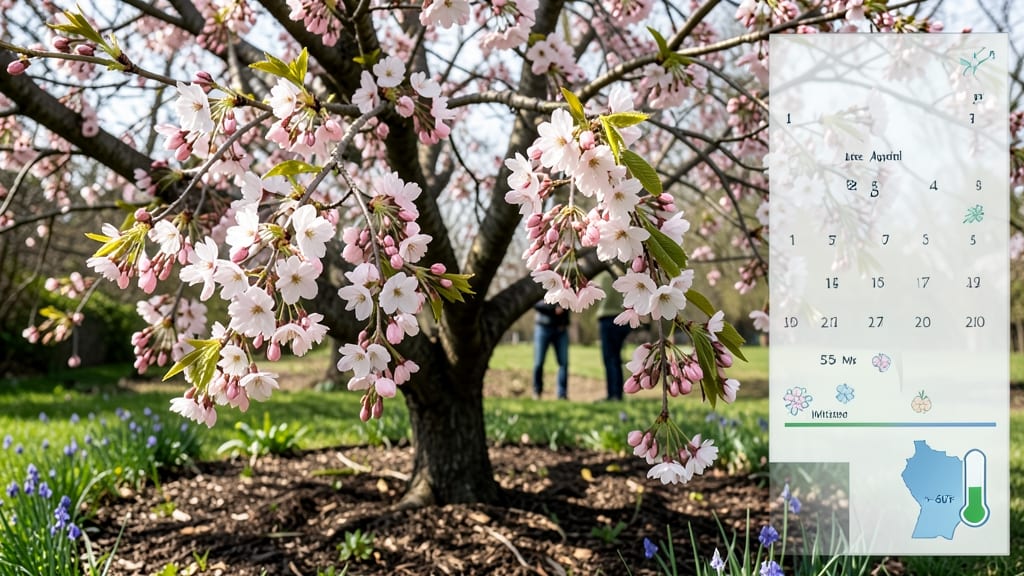
Cherry blossoms in Michigan bloom between mid-April and late May, depending on the variety and hardiness zone, with early bloomers like Prunus serrulata appearing in Zone 5 by late April and later hybrids like Prunus avium peaking in late May.
Michigan's cherry blossom season unfolds like a natural calendar, triggered by consistent temperatures above 50°F for at least three days. 🌸 The timing shifts dramatically across the state—northern gardens in Zone 5 often see their first blooms weeks before southern areas in Zone 6.
I've noticed that Prunus subhirtella varieties, known for their cold tolerance, sometimes flower as early as late March in sheltered microclimates, while Kanzan cherries typically wait until early May for their spectacular pink displays.
What makes Michigan's blossom season particularly magical is how the different varieties create a cascading effect. Early bloomers like Prunus serrulata set the stage, while later varieties like Prunus avium extend the show into June.
This staggered bloom pattern means you can enjoy cherry blossoms for nearly two months if you plant a mix of species. The key to maximizing your viewing window is selecting varieties that complement each other's timing—something I always recommend to gardening enthusiasts in the Great Lakes region.
💡 In This Article
- Michigan Cherry Blossom Bloom Timing by Zone and Variety
- Best Cherry Blossom Varieties for Michigan Gardens
Michigan cherry blossom bloom timing by Zone and variety
The bloom timing of cherry blossoms in Michigan hinges on two critical factors: USDA hardiness zones and specific tree cultivars. Zone 5 (northern Michigan) typically sees blooms 2-3 weeks earlier than Zone 6 (southern Michigan) because colder winters and shorter growing seasons accelerate the trees' response to warming temperatures.
The magic number is 50°F—when daytime temperatures consistently stay above this threshold for 3-5 consecutive days, it triggers the blooming process through a hormonal response called florigen production. 🌸
Different cultivars respond uniquely to these temperature cues. Prunus serrulata (Japanese cherry) varieties like Kanzan often bloom first in Zone 5 around late April to early May, while Prunus avium (European bird cherry) hybrids typically wait until mid-to-late May when soil temperatures reach 55°F.
The most frost-tolerant variety, Prunus subhirtella (autumn cherry), sometimes blooms as early as late March in sheltered microclimates, though late frosts can damage delicate blossoms. What's fascinating is how these varieties create a natural progression—early bloomers set the stage, while later varieties extend the visual spectacle.
Frost sensitivity plays a crucial role in bloom timing. Most cherry blossoms can't withstand temperatures below 28°F once buds form, which is why late-season frosts in Zone 5 often delay or reduce flowering.
I've observed that Prunus serrulata varieties are slightly more resilient, with buds that can survive brief dips to 25°F if they're fully hardened off.
This is why gardeners in northern Michigan often plant Kanzan or Mount Fuji varieties—they're more likely to survive our unpredictable spring weather while still delivering stunning displays.
Another key factor is the chilling requirement each variety needs. Most Michigan-adapted cherries require 800-1,200 hours below 45°F during winter to properly set buds. Prunus subhirtella varieties often need fewer chilling hours (600-800), which is why they sometimes bloom earlier in milder winters.
This biological mechanism explains why you might see blossoms in early April in southern Michigan (Zone 6) but not until mid-May in northern areas—it's not just about temperature at bloom time, but the cumulative winter chill they received.
For gardeners planning their landscapes, understanding these patterns helps create a staggered bloom effect. By mixing early bloomers like 'Autumnalis' with mid-season varieties like 'Shirofugen' and late bloomers like 'White Cherry', you can extend your blossom season from late April through June.
This isn't just about aesthetics—it also increases pollinator activity and provides a longer window for photography enthusiasts to capture the full spectrum of Michigan's cherry blossom season. 🌿
The most reliable way to predict bloom timing is to track degree days (accumulated heat units above a baseline temperature). Michigan State University Extension recommends using 45°F as the baseline—when you reach 100-150 degree days in spring, most cherry blossoms will begin opening.
This scientific approach helps gardeners anticipate bloom windows with ±3-5 day accuracy, which is particularly useful for planning public viewing events or private garden parties.