
Blooming
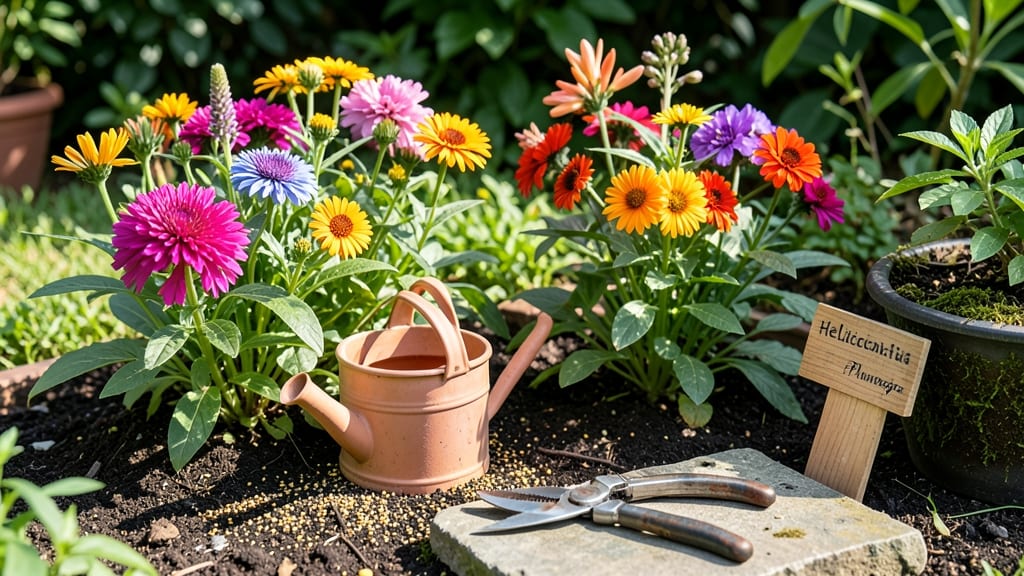
Perennial flowers that bloom all year require careful selection based on your climate, but hellebores, heleniums, and lavender deliver reliable color in cooler regions, while bougainvillea and salvias shine in warmer zones. Frost-free areas can even extend annuals like impatiens for seasonal blooms.
Finding perennials that bloom continuously is all about matching plants to your local climate. 🌸 In cooler zones (4-8), hellebores and heleniums handle winter chill beautifully, while warmer regions (9-11) thrive with bougainvillea and salvias that love heat.
The key is understanding your frost patterns—some perennials pause in extreme cold, while others slow down in scorching summers. I've seen gardeners in USDA Zone 7 combine hellebores for winter and salvias for summer to create year-round interest.
For true nonstop color, layering different blooming times (early spring, summer, fall) within the same zone works best.
💡 In This Article
- Climate Zones and Year-Round Blooming Perennials
- Top Perennial Flowers for Continuous Color by Region
Climate Zones and year-round blooming perennials
Temperature fluctuations are the biggest challenge for year-round blooming perennials. Most perennials enter dormancy during extreme cold or heat, but some have evolved to handle specific conditions.
For example, hellebores (Helleborus) thrive in USDA Zones 4-9 because their thick, waxy leaves and deep roots protect them from winter temperatures down to -20°F. Their blooms often appear in late winter or early spring when many gardens are still dormant.
In contrast, bougainvillea in Zones 9-11 loves heat and can bloom continuously when temperatures stay above 60°F.
The science behind this lies in photoperiodism—the plant's response to daylight length. Many perennials need a period of cold (vernalization) to trigger blooming, while others, like salvias, respond to consistent warmth.
Humidity also plays a role: Lavender in Zones 5-9 prefers dry climates, while impatiens (often treated as annuals) need high humidity to thrive in Zones 10-11. The key is selecting perennials that align with your local frost-free period—typically 120-365 days—to ensure continuous blooms without dormancy.
What most gardeners don't realize is that even perennials labeled as "year-round" may have seasonal slowdowns. For instance, heleniums (sneezeweed) bloom prolifically in summer but may rest in winter unless given winter protection like mulch.
In Zone 7, I've seen gardeners combine winter-blooming hellebores with summer-blooming salvias to create an overlapping effect. The trick is layering plants with staggered bloom times—like planting early spring crocuses alongside late summer coneflowers—to mask any gaps.
Extreme heat can also disrupt blooming cycles. Bougainvillea, for example, may drop flowers during 100°F+ heatwaves unless given afternoon shade. Similarly, lavender in Zone 9 might pause blooming if summers exceed 95°F without proper irrigation.
The solution? Choose native or adapted perennials—like Texas sage (Leucophyllum) in the Southwest—that naturally tolerate your region's heat spikes.
Here's a quick breakdown of how perennials adapt to climate extremes:
- Cold Hardy (Zones 4-8): Hellebores, heleniums, and Russian sage (Perovskia) store energy in roots to regrow after frost.
- Heat Tolerant (Zones 9-11): Bougainvillea and salvias have thick, leathery leaves to retain moisture during drought.
- Humidity Lovers (Zones 7-10): Impatiens and coleus thrive in 60-80% humidity, making them ideal for coastal or tropical climates.
For true year-round color, focus on perennials that match your last frost date and average winter lows. In Zone 5, for example, Christmas rose (Helleborus niger) blooms in December, while beebalm (Monarda) takes over in July.
The goal is to create a "bloom calendar" where one plant fades as another begins.