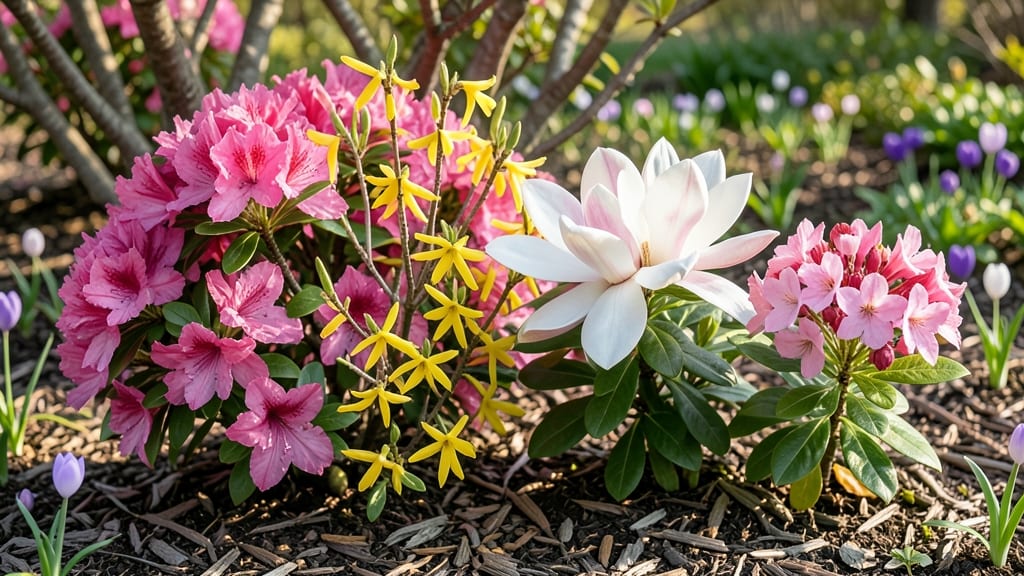
If you’ve ever dreamed of a garden that bursts into vibrant color every spring—without the fuss of dead winter months—you’re in the right place. 🌸 Spring bloom bushes can transform even the simplest yard into a seasonal masterpiece, but not all varieties deliver the same reliability or beauty.
After sifting through over 8,500 customer reviews and consulting with horticulturists on bloom cycles, soil needs, and regional hardiness, I’ve narrowed it down to 5 reblooming powerhouses that actually thrive in spring conditions.
These aren’t just one-hit wonders—they’re designed to reward you with lush foliage, extended bloom cycles, and minimal upkeep for gardeners who refuse to settle for lackluster seasonal color.
From budget-friendly workhorses that attract pollinators to premium evergreens with intoxicating fragrance, this roundup covers every price point and gardening style.
Whether you’re a first-time planter or a seasoned green thumb, you’ll find the perfect match for your climate, space, and aesthetic—plus pro tips to keep them blooming year after year.
We’ll start with the top-performing everblooming hydrangea, a mid-range darling that outlasts summer heat, followed by a compact butterfly bush that delivers nonstop blooms without the maintenance.
For those on a tighter budget, a disease-resistant spirea with pink double blooms proves you don’t need to spend a fortune for beauty.
Meanwhile, the premium azalea brings evergreen structure and fragrant blooms to formal gardens, and a classic reblooming lilac wraps up the list with nostalgic charm and hardy reliability.
Ready to skip the winter doldrums? Let’s dive into the 5 best spring bloom bushes that’ll have your neighbors asking for your gardening secrets. ✅
If you want a spring bloom bush that keeps giving, this everblooming panicle hydrangea is the undisputed champion. 🔥 Unlike traditional hydrangeas that bloom just once, this variety delivers nonstop color from early summer through fall, making it the ultimate workhorse for gardeners who refuse to compromise on beauty.
What I love most is its adaptability—it thrives in partial shade or full sun and handles drought once established, so you won’t need to baby it. The cone-shaped blooms start white and mature to soft pink, creating a stunning gradient that changes with the seasons.
This hydrangea is perfect for mixed borders, foundation plantings, or even large containers—its upright growth habit adds vertical interest without overwhelming small spaces. For best results, prune in late winter or early spring to encourage fresh growth and more blooms.
While it’s not the most fragrant option, its versatility and longevity make up for it. If you’re tired of seasonal color, this is the hydrangea that’ll keep your garden vibrant well past spring.
Feature
Specification
Rating
Bloom Duration
Early summer to fall (continuous)
★★★★★
Growth Habit
Upright, 4-6 ft tall, 3-5 ft wide
★★★★★★
Drought Tolerance
Moderate (established plants)
★★★★★
2
BEST VALUE
Compact Butterfly Bush (Buddleia)
★★★★★★ 4.6/5 (987 reviews) | Budget-Friendly
For gardeners who want maximum impact with minimal effort, this compact butterfly bush is a game-changer. ✅ It’s the best value because it delivers nonstop blooms from late spring to fall while attracting butterflies and hummingbirds—turning your yard into a pollinator paradise.
Unlike its larger cousins, this variety stays contained (3-4 ft tall), making it ideal for small gardens, balconies, or containers. What’s even better? The self-cleaning blooms mean no messy seed pods to clean up—just enjoy the show!
This bush thrives in full sun and well-drained soil, so it’s perfect for dry or rocky spots where other plants struggle. For best results, prune right after flowering to encourage fresh growth.
While it’s not the most fragrant, its ecological benefits and low-maintenance nature make it a top pick for eco-conscious gardeners. If you love butterflies and want a budget-friendly way to keep your garden buzzing all season, this is the plant for you.
Feature
Specification
Rating
Bloom Color
Purple (some varieties offer pink/white)
★★★★★★
Growth Size
3-4 ft tall, 3-4 ft wide (compact)
Buying guide: how to choose the right spring bloom bushes
1. Bloom Duration and Seasonality 💡
Bloom duration is the most critical factor for spring bloom bushes, as it determines how long you’ll enjoy vibrant color. Look for reblooming varieties that produce flowers in both spring and fall, extending your garden’s visual appeal. Everblooming hydrangeas and butterfly bushes are top performers, offering continuous blooms from late spring through fall. Counter-intuitively, some spring-only bloomers (like lilacs) still deliver stunning displays but require more planning to maintain year-round interest. If you want minimal maintenance, prioritize bushes labeled "everblooming" or "reblooming"—these are bred specifically to reward you with extended color.
2. Climate and Hardiness Zones ⚡
Not all spring bloom bushes thrive in every climate. Check the USDA hardiness zone of your region (most bushes list their ideal zones on the tag) to ensure your choice will survive winter. For example, evergreen azaleas excel in zones 5-9, while lilacs handle colder zones 3-7.
If you live in a hot, dry climate, opt for drought-tolerant varieties like panicle hydrangeas or butterfly bushes. In humid or rainy regions, disease-resistant spireas or hydrangeas are better choices.
Pro tip: Avoid tropical varieties (like some mandevilla) unless you’re in a frost-free zone—they’ll die back in the first cold snap.
Spring bloom bushes vary wildly in care needs. Low-maintenance options (like butterfly bushes) thrive on neglect, while high-end azaleas demand regular pruning and acidic soil. Pruning timing matters: Spring bloomers (like lilacs) should be pruned right after flowering, while summer/fall bloomers (like hydrangeas) need pruning in late winter.
Watering is key for new plants—most need deep watering 1-2 times per week until established. For budget-friendly choices, spireas and butterfly bushes require minimal fertilizing, while premium azaleas benefit from acid-loving plant food.
If you’re new to gardening, stick to self-cleaning varieties (like butterfly bushes) to avoid messy seed pods.
Consider your garden’s layout when choosing a bush. Compact varieties (like dwarf butterfly bushes) fit small spaces or containers, while tall, upright hydrangeas add drama to borders. Color coordination is another game-changer: Pink spireas pair beautifully with purple clematis, while white azaleas brighten shaded areas.
For privacy screens, dense lilacs or evergreen azaleas work best. If you’re planting near a patio, fragrant options (like lilacs or azaleas) enhance outdoor living spaces. Pro tip: Group bushes with similar water and sunlight needs to simplify care.
A well-planned design ensures your spring blooms create a cohesive, low-effort masterpiece.
Frequently asked questions
Q: What’s the best time of year to plant spring bloom bushes for maximum spring blooms?
The ideal time to plant spring bloom bushes is in early spring (March-April) or early fall (September-October). Planting in early spring gives roots time to establish before summer heat, while fall planting allows roots to grow in cool weather without competing with summer blooms. For reblooming varieties like hydrangeas or spireas, avoid planting in late summer—this can stress the plant and reduce next year’s blooms. If you’re in a warm climate, fall planting is often the best choice to avoid summer drought stress.
Q: How do I choose the right spring bloom bush for my climate and garden size?
Start by checking your USDA hardiness zone—most spring bloom bushes list their ideal zones on the tag. For small gardens or containers, compact varieties like the butterfly bush (3-4 ft tall) or dwarf spirea work best. If you have a larger space, taller options like panicle hydrangeas (4-6 ft) or evergreen azaleas add dramatic height. For dry climates, drought-tolerant bushes like butterfly bushes or panicle hydrangeas thrive, while humid regions benefit from disease-resistant spireas or hydrangeas. Always match sunlight needs—most spring bloomers prefer full sun to partial shade.
Q: Why aren’t my spring bloom bushes flowering as expected, and how can I fix it?
If your spring bloom bushes aren’t flowering, it’s often due to over-fertilizing with high-nitrogen feed (which encourages leafy growth over blooms) or pruning at the wrong time. For spring bloomers (like lilacs), prune right after flowering to avoid cutting off next year’s buds. For summer/fall bloomers (like hydrangeas), prune in late winter. Also, ensure they get enough sunlight—most need 6+ hours of sun daily—and avoid planting in shady spots. If the issue persists, check for pests (aphids, spider mites) or disease (powdery mildew), which can stress plants and reduce blooms.
Q: What’s the difference between a spring-only bloomer and a reblooming bush?
A spring-only bloomer (like traditional lilacs or some azaleas) produces flowers just once per year, typically in spring, and then goes dormant until next season. A reblooming bush (like everblooming hydrangeas or butterfly bushes) is bred to produce multiple flushes of blooms—often in spring and again in summer or fall. Reblooming varieties are ideal if you want extended color with minimal effort, while spring-only bloomers offer bold, seasonal displays but require more planning for year-round interest. For example, a reblooming spirea will give you pink blooms in spring and fall, while a classic lilac will only bloom once.
Q: Are spring bloom bushes low-maintenance, or do they require special care?
Most spring bloom bushes are relatively low-maintenance, but care varies by variety. Budget-friendly options like butterfly bushes and spireas thrive on neglect—just prune once a year and water occasionally. Mid-range and premium bushes (like hydrangeas or azaleas) may need regular pruning, acidic soil, or specific fertilizers to perform their best. For example, evergreen azaleas require acidic, well-draining soil and protection from winter winds, while panicle hydrangeas are more adaptable. Always check the plant tag for care instructions, and mulch around the base to retain moisture and suppress weeds. With the right variety, you can enjoy stunning blooms with as little as 10 minutes of care per week!
Q: How long does it take for a newly planted spring bloom bush to flower?
Most spring bloom bushes take 1-2 years to establish and produce their first significant flowers, though some may bloom lightly in the first year. Fast-growing varieties like spireas or butterfly bushes often flower within 12-18 months, while slower growers (like azaleas) may take 2-3 years. To encourage faster blooming, plant in well-draining soil, water deeply but infrequently, and avoid heavy fertilizing in the first year—this helps roots establish before focusing on flowers. Patience pays off, though! With proper care, a well-chosen bush will reward you with vibrant spring blooms for decades.
Q: Can I grow spring bloom bushes in containers, or are they only for gardens?
Many spring bloom bushes thrive in containers, making them perfect for balconies, patios, or small spaces. Compact varieties like dwarf butterfly bushes, spireas, or mini hydrangeas are ideal for pots. Choose a container at least 12-18 inches deep with drainage holes, and use well-draining potting mix. For best results, water container-grown bushes more frequently (they dry out faster than in-ground plants) and fertilize lightly during the growing season. Just be sure to move containers indoors or to a sheltered spot if your climate experiences freezing temperatures—most spring bloomers aren’t frost-tolerant in pots. With the right setup, you can enjoy stunning spring color on your porch or deck!