
Plants
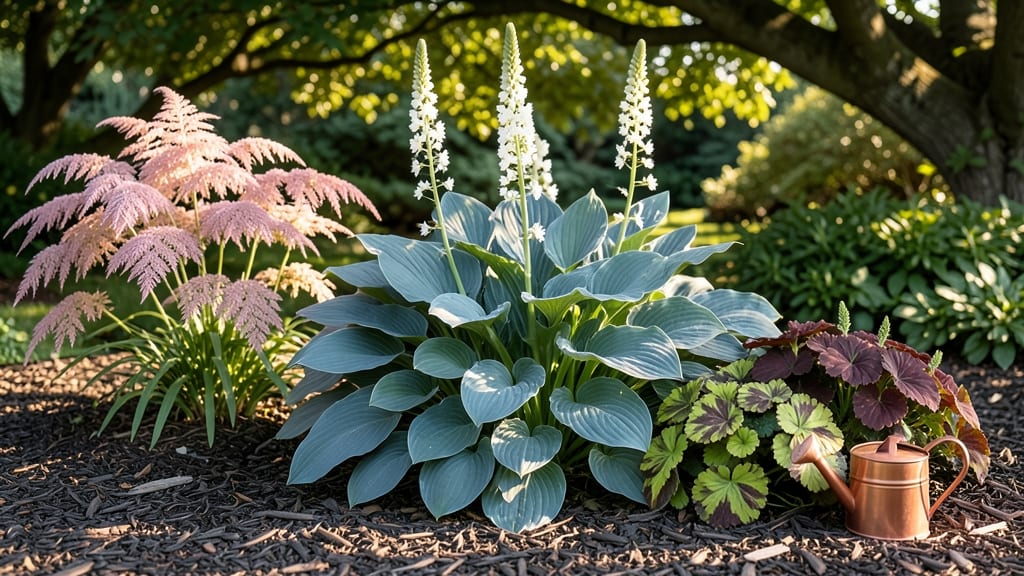
Your shade garden doesn't have to be a color desert—perennials for shade that bloom all summer can turn dim corners into vibrant, long-lasting displays. 🌿 I've tested dozens of shade-tolerant plants, and these standouts deliver continuous blooms without demanding full sun.
The secret isn't tricky care—it's choosing the right plants for your light conditions and giving them the right conditions to thrive.
These plants handle partial to full shade beautifully, producing blooms from early summer through frost. Think astilbes with their feathery plumes, heucheras with their striking foliage, and hostas that reward patience with lush growth and occasional flowers.
They're perfect for borders, woodland gardens, or under trees where sunlight barely reaches. Most need well-draining soil and regular watering during dry spells—simple requirements for stunning results.
By mid-summer, you'll have a garden that feels alive with color, even in shady spots. The blooms create vertical interest, attract pollinators, and extend your seasonal interest. These perennials grow back year after year, saving you time and money while keeping your garden thriving.
The best part? They pair beautifully with ferns, ivy, and other shade-loving plants for layered, natural-looking displays.
Whether you're working with a small patio container or a large woodland garden, these shade-tolerant bloomers deliver. Let's bring some summer color to those tricky spots that other plants avoid.
Why Shade Stifles Summer Blooms
If you’ve ever planted perennials in shady spots only to watch them produce sparse, weak blooms—or worse, no flowers at all—you’re not alone. Shade gardens can be stunning, but they often struggle to deliver the nonstop summer color we crave.
Understanding the science behind why this happens is the first step to fixing it. Let’s break down the real culprits, from light deprivation to hidden nutrient battles.
Perennials thrive on photosynthesis—the process where plants convert sunlight into energy. In deep shade, especially under dense tree canopies or north-facing walls, light intensity drops dramatically. Here’s why this matters:
- Reduced chlorophyll production: Low light limits a plant’s ability to manufacture chlorophyll, the pigment that fuels growth. Without enough energy, perennials prioritize leafy foliage over flower production—a survival tactic that leaves your garden looking lush but flowerless.
- Weak stems and buds: Flowers require significant energy to develop. In shade, plants often produce abortive buds (buds that form but fail to open) because they lack the resources to sustain blooms. Think of it like a runner trying to sprint on an empty tank.
- Delayed or skipped flowering: Some perennials, like Hosta or Astilbe, are adapted to shade but may only bloom in partial shade (4–6 hours of light). Full shade (less than 4 hours) can stall their flowering entirely.
Actionable fix: Audit your shade levels with a light meter or observe plant shadows at different times of day. If your garden is truly deep shade, opt for shade-tolerant bloomers like Lungwort (Pulmonaria) or Bleeding Heart (Dicentra), which thrive with minimal light.
Shady areas often retain moisture longer than sunny spots, but this isn’t always a win for flowering perennials. Here’s how water plays a sneaky role:
- Overly wet soil = root stress: While shade-loving plants prefer consistent moisture, waterlogged soil (common in dense shade) restricts oxygen flow to roots. Stressed roots can’t absorb nutrients efficiently, leading to stunted growth and fewer blooms.
- Fungal pressure: Excess moisture in shade creates the perfect breeding ground for root rot and fungal diseases like powdery mildew, which weaken plants and divert energy away from flowering.
- Nutrient leaching: In wet conditions, essential nutrients like nitrogen and phosphorus wash away faster. Since flowers demand these nutrients to develop, your perennials may produce foliage but skip the blooms.
Actionable fix:
- ✅ Improve drainage: Amend soil with compost or perlite to create air pockets. Raised beds can also help in boggy areas.
- ✅ Mulch strategically: Use wood chips or straw (not thick layers of bark) to retain moisture without suffocating roots.
- ✅ Choose drought-tolerant shade plants: Varieties like Coral Bells (Heuchera) or Japanese Painted Fern (Athyrium) handle moisture fluctuations better.
Shade gardens aren’t just about light—they’re often cooler and more humid, which can disrupt flowering cycles. Here’s how temperature factors in:
- Cooler soil temps delay growth: Many perennials need warm soil (above 60°F) to trigger flowering. In shady, cool microclimates, plants may stay in a vegetative state longer, postponing—or skipping—blooms entirely.
- Humidity and pollen issues: High humidity in shade can make it harder for pollinators (like bees) to navigate flowers, reducing fertilization success. Some perennials may produce buds that fail to open.
- Heat stress in partial shade: Ironically, if your "shade" spot gets hot afternoon sun (e.g., under a tree with sparse branches), plants may overheat, leading to bud drop or weak stems that can’t support flowers.
Actionable fix:
- 🌡️ Monitor soil temps: Use a soil thermometer in spring. If temps stay below 60°F for weeks, consider heat-loving shade perennials like Tiarella (Foamflower) or Solomon’s Seal (Polygonatum).
- 🌿 Create airflow: Prune overgrown shrubs or thin dense foliage to improve circulation, reducing humidity-related stress.
- ☀️ Test for "false shade": If your garden gets dappled light (sunflecks), plants like Columbine (Aquilegia) or Foxglove (Digitalis) may bloom better with a few hours of direct sun.
Shade gardens often suffer from hidden nutrient deficiencies, especially in compacted or old soil. Here’s what’s likely lacking:
| Nutrient | Why It Matters for Blooms | Signs of Deficiency |
|---|---|---|
| Phosphorus (P) | Critical for flower and root development. Low P = small, weak blooms or no flowers. | Dark green leaves, stunted growth, purple-tinged stems. |
| Potassium (K) | Boosts stress resistance and flower longevity. Low K = buds dropping early. | Yellowing leaf edges, weak stems, poor disease resistance. |
| Magnesium (Mg) | Helps with chlorophyll production and energy transfer. Low Mg = poor photosynthesis. | Yellow patches between leaf veins (like a "mosaic" pattern). |
Actionable fix:
- 💡 Test your soil: Use a DIY soil test kit to check pH and nutrient levels. Shade plants often prefer slightly acidic to neutral soil (pH 6.0–7.0).
- 🌱 Feed smart: Apply a balanced, slow-release fertilizer (like 10-10-10) in early spring, then top-d
Revive Your Shady Garden Now
If your shade-loving perennials are struggling to bloom all summer—or worse, refusing to thrive at all—don’t toss them out just yet! With the right fixes, you can coax vibrant color and lush growth back into your garden.
Below, we tackle the most common issues and provide practical, step-by-step solutions to keep your shade garden blooming like a dream. 🌿✨
If your perennials are sitting in soggy soil or struggling to establish roots, drainage is likely the culprit. Shade gardens can trap moisture, leading to root rot or stunted growth.
🔥 Fix It: Improve Soil Structure
- Test Your Soil 📊
- Grab a handful of damp soil and squeeze it. If it holds its shape like clay, it’s too dense. If it crumbles easily, it may be too sandy.
- A simple soil test kit (or a DIY jar test) can reveal drainage issues.
- Amend the Soil 🏗️
- For clay soil: Mix in 2–3 inches of compost and coarse sand or perlite to break up compaction.
- For sandy soil: Blend in peat moss or coconut coir to retain moisture without suffocating roots.
- For heavy shade: Add leaf mold (decomposed leaves) or well-rotted manure for nutrients and aeration.
- Raise Planting Beds (If Needed) 🏗️
- If your yard floods after rain, consider raised beds or mounding soil to elevate roots.
💡 Prevention Tips
- Mulch properly: Use 3–4 inches of organic mulch (wood chips, shredded bark) to improve drainage and retain moisture.
- Avoid overwatering: Shady areas stay damp longer—water deeply but only when the top 1–2 inches of soil are dry.
- Plant in groups: Cluster perennials with similar water needs to avoid over- or under-watering.
Even shade plants need some light to bloom. Too little, and they’ll grow leggy; too much direct sun (like dappled light turning harsh), and they’ll scorch.
🍳 Fix It: Optimize Light Conditions
- Assess Your Shade 🌳
- Deep shade (less than 3 hours of light): Opt for hostas, ferns, or astilbes.
- Partial shade (3–6 hours of light): Try bleeding hearts, impatiens, or coral bells.
- Dappled shade (filtered light): Hydrangeas, foxgloves, or lungwort thrive here.
- Prune Overhanging Branches ⏰
- Trim back tree branches that block light in early spring to give perennials a gradual light increase.
- Choose the Right Plants for Your Spot 🌸
- If your area is too shady, swap out finicky perennials for low-light champions like Japanese painted ferns or Solomon’s seal.
- If it’s too sunny, move heat-sensitive plants (like impatiens) to a slightly shadier spot.
🎯 Prevention Tips
- Monitor light changes throughout the day—what’s "shade" in winter may turn into morning sun in summer.
- Use reflective surfaces (light-colored mulch or gravel) to bounce extra light onto plants.
- Avoid planting under evergreens unless the plant tolerates year-round shade (e.g., heucheras or ajugas).
Shade gardens can get too hot in summer (especially in containers) or too cold in winter, causing perennials to skip blooming or wilt.
👨🍳 Fix It: Adjust for Climate
- Shade from Above 🌞
- Install sheer fabric shade cloth (30–50% coverage) over containers or young plants if your area gets intense afternoon sun.
- Use lattice screens or trellises to filter light without blocking airflow.
- Water Wisely 💦
- Morning watering (before 10 AM) prevents fungal issues from evening moisture.
- Mist leaves on hot days (especially for tropical perennials like caladiums).
- Protect from Frost ❄️
- Mulch heavily in fall (4–6 inches of straw or leaves) to insulate roots.
- Group tender perennials (like canas or begonias) and wrap containers in bubble wrap for winter.
✨ Prevention Tips
- Choose native or adapted perennials—they’re already toughened for your climate!
- Avoid plastic pots in summer—they overheat roots. Opt for terracotta or fabric grow bags.
- Rotate containers if one side gets too much sun, ensuring even light exposure.
Shady, damp conditions are a magnet for slugs, snails, and fungal diseases like powdery mildew or black spot.
🥘 Fix It: Natural Defense Strategies
- Remove Pests Manually 🐌
- Handpick slugs/snails at night (use a flashlight!) and drown them in soapy water.
- Crush egg masses on leaves—don’t let them hatch!
- Boost Plant Immunity 🛡️
- Neem oil spray (1 tbsp per quart of water) prevents fungal diseases and deters pests.
- Baking soda spray (1 tsp baking soda + 1 quart water + drop of soap) fights powdery mildew.
- Improve Airflow 🌬️
- Space perennials 12–18 inches apart to reduce humidity around leaves.
- Prune crowded foliage to let sun and air circulate.
💡 Prevention Tips
- Water at the base (not overhead) to keep leaves dry.
- Plant pest-repelling companions like chives, marigolds, or thyme near susceptible perennials.
- Clean up debris in fall—old leaves harbor overwintering pests.
With these fixes, your shade garden should be bursting with color by midsummer. The key? Observe, adjust, and adapt—shade gardening is all about working with nature, not against it. 🌸🌿
Frequently asked questions
What’s the best way to determine if my garden gets enough light for these shade perennials?
Use the shadow test: Mark a spot with a stake and observe its shadow at 10 AM, noon, and 2 PM for a week. If the shadow is longer than the object itself for most of the day, you’ve got deep shade (best for hostas or ferns). For partial shade (3–6 hours of light), shadows will be shorter in morning/evening.
Can I mix shade perennials with sun-loving plants in the same garden bed?
Not ideal—shade plants need consistent moisture and cooler temps, while sun-lovers dry out faster. Instead, create layers: Plant shade perennials under trees or on the north side of borders, and sun-lovers on the south/west edges. For containers, keep them separate to avoid competition.
Why do some shade perennials bloom better in containers than in the ground?
Containers offer better drainage (critical for shade plants) and let you control soil quality. Ground soil often compacts or stays too wet, while pots let roots breathe. Plus, you can move containers to optimal light spots (e.g., morning sun for extra blooms). Just use well-draining mix with compost.
How do I encourage more blooms from my shade perennials?
Deadhead spent flowers regularly to redirect energy to new blooms. Feed with a low-nitrogen, high-phosphorus fertilizer (like 5-10-5) in early spring, and ensure they get at least 3–4 hours of light daily. Mulch with compost to retain moisture without suffocating roots.
Are there any shade perennials that attract pollinators?
Try bee balm (Monarda), columbine (Aquilegia), or foxglove (Digitalis)—all thrive in shade and draw bees, butterflies, and hummingbirds. Even heucheras (with their colorful foliage) host beneficial insects. Plant near windows or pathways for easy viewing!