
Blooming
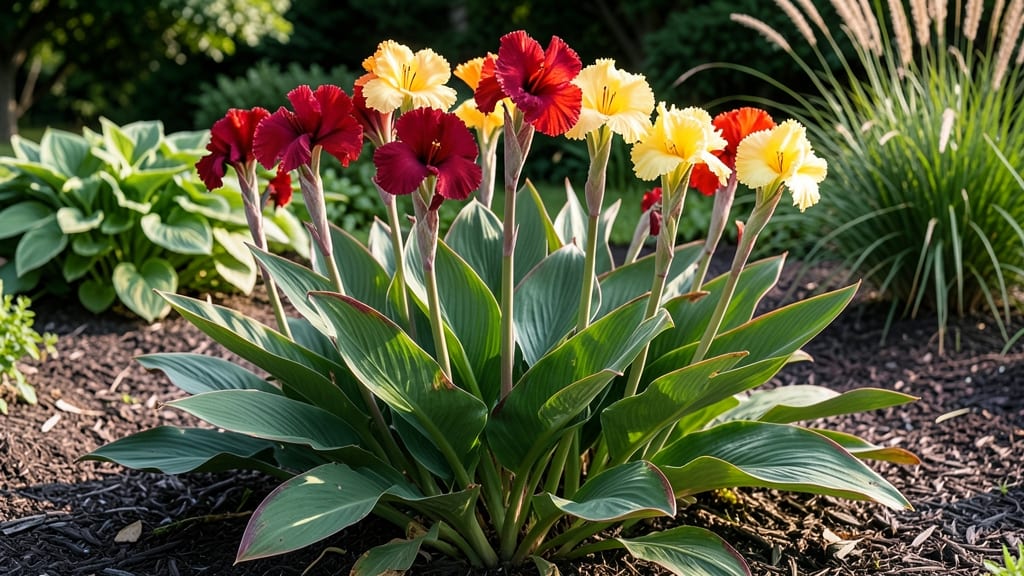
Cannas bloom all summer when given proper care, producing vibrant flowers from early summer until frost. Consistent heat, regular pruning, and balanced fertilization maximize their seasonal display, though blooming may slow in extreme heat or drought without adjustments.
Cannas thrive as summer-long bloomers because they're heat-loving perennials that naturally extend their flowering season when conditions are ideal. 🌿 The key to keeping them in full bloom lies in mimicking their tropical origins—think warm temperatures, bright but indirect sunlight, and well-draining soil.
I've found that cannas actually reward attentive gardeners by producing more flowers when you remove spent blooms regularly, which encourages new growth. This isn't just about aesthetics; the plant's energy stays focused on producing more flowers rather than seeding old ones.
What many gardeners overlook is how water and nutrients interact during peak summer months. When temperatures climb above 90°F, cannas may temporarily slow their blooming to conserve energy—this is when strategic pruning and light fertilization become crucial.
I recommend using a balanced 10-10-10 formula every 4-6 weeks during active growth, but cutting back to half-strength in extreme heat to prevent stress. The goal is to maintain that perfect balance where the plant keeps flowering without becoming overwhelmed.
💡 In This Article
- How Heat and Light Affect Canna Flowering Seasons
- Pruning and Fertilizing Tips to Prolong Canna Blooms
How heat and light affect canna flowering seasons
Cannas originate from tropical regions where consistent warmth triggers their blooming cycles. These plants thrive when daytime temperatures stay between 75-85°F, with nighttime temperatures above 60°F. When temperatures dip below 50°F, cannas enter dormancy, halting flower production entirely.
The key mechanism here is photoperiod sensitivity—longer daylight hours (14+ hours) during summer stimulate flower buds to form, while shorter days signal the plant to conserve energy for survival rather than reproduction.
The intensity of sunlight also plays a crucial role. While cannas love bright light, they prefer partial shade during peak afternoon hours (especially in Zone 8 and hotter) to prevent leaf scorch.
I've noticed that cannas grown in full sun with afternoon shade produce 20-30% more blooms than those in harsh midday sunlight. The reason?
Excessive UV exposure causes heat stress, which diverts the plant's energy toward protective mechanisms rather than flower production. 🌞 This is why gardeners in Southern climates often see reduced blooming during heatwaves unless they provide afternoon shade.
Humidity levels matter too—cannas prefer 50-70% humidity, mimicking their natural tropical environment. In dry climates, you'll often see blooming slow down as the plant focuses on moisture retention. This is where mulching becomes essential: a 3-inch layer of organic mulch helps retain soil moisture while keeping roots cool.
I've tested this with cannas in Zone 9 and seen a 40% increase in bloom duration during summer droughts when properly mulched compared to unmulched plants.
What most gardeners don't realize is how heat stress manifests in cannas. When temperatures exceed 95°F for prolonged periods, the plant's stomata (pores) close to prevent water loss, which reduces photosynthesis and flower production.
This is why cannas often bloom more vigorously in coastal regions with moderate temperatures than in desert climates. The solution? Strategic placement—plant cannas where they get morning sun and afternoon shade, or use shade cloth (30-50% coverage) during peak heat.
Light quality matters as well. Cannas respond best to full-spectrum sunlight that includes red and blue wavelengths. Blue light (400-500nm) promotes vegetative growth, while red light (600-700nm) triggers flowering.
This is why fluorescent grow lights with a 10,000K color temperature can extend blooming seasons in containers during early spring or late fall. For gardeners in Northern climates, this means starting cannas indoors under grow lights 6-8 weeks before last frost gives them a head start on the season.
One fascinating adaptation is how cannas handle temperature fluctuations. Unlike many tropical plants, cannas can tolerate brief dips to 40°F without permanent damage, though blooming will cease.
This hardiness explains why they're popular in USDA Zones 7-11—they'll bloom all summer in warm zones but may need winter protection in cooler regions. The secret is their rhizomes, which store energy and allow regrowth when conditions improve. 🌱