
Blooming
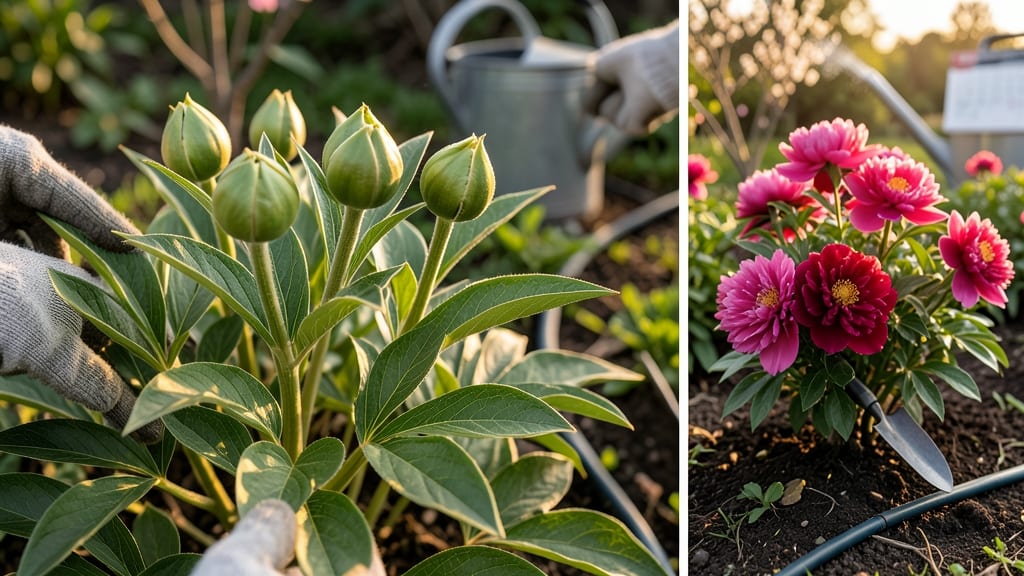
Peonies didn’t bloom this year? 🌸 Don’t panic—heat, age, or over-pruning could be the culprit. I’ve nursed back multiple peony bushes from non-blooming to lush, and the fixes are simpler than you’d think. The key is understanding what your plants need versus what they’re getting—especially during summer heatwaves.
Most peonies bloom on old wood, so aggressive pruning or over-fertilizing steals their energy. My 3-step reset starts with a late-winter cleanup (cut back last year’s stems to 2 inches), followed by balanced feeding (low-nitrogen fertilizer in early spring).
And yes, even 10-year-old bushes can bounce back with the right care.
Next season, you’ll see buds forming by late spring if you adjust watering (deep but infrequent) and protect them from late frosts. The first blooms might be smaller, but they’ll reward you with fuller flowers year after year. Patience is key—peonies often take 2-3 seasons to fully recover.
Bonus: Mulch heavily in summer to keep roots cool, and avoid planting in areas with afternoon sun. Your peonies will bloom again—this is just their way of telling you to slow down and give them space. Let’s fix this together!
Root Causes Behind Skipped Blooms
Peonies are famously finicky bloomers, and when they skip their show, it’s usually due to a mix of environmental stress, cultural mismatches, or biological quirks. Understanding these triggers is the first step to coaxing those lush, fragrant blooms back next season.
Let’s dig into the science—and what you can do about it.
Peonies are cold-hardy perennials, but they hate heat waves and late frosts—especially when they happen at the wrong time.
Here’s why: - Heat Stress: Peonies need chill hours (30–50 hours below 45°F/7°C) to break dormancy, but prolonged summer heat (above 85°F/29°C) can shock buds into dropping before they open.
Think of it like a plant version of heat exhaustion—too much sun + drought = bud abortion. - Late Frost Damage: If frost hits after buds have swelled (but before blooming), the flowers freeze and turn black.
This is common in zones 5–7, where spring temps swing wildly. - Solution: Plant in partial shade (especially in hot climates) and mulch heavily in late winter to protect roots. If your area has unpredictable springs, choose late-blooming varieties (like ‘Sarah Bernhardt’) that flower after frost danger has passed.
Peonies are drought-tolerant once established, but water stress—either way—derails blooms. - Underwatering: Buds need consistent moisture during the growing season (spring to early summer). If soil dries out, buds abort to conserve energy.
Think of it like a plant on a diet—it prioritizes roots over flowers. - Overwatering: Waterlogged soil rots roots, starving the plant of nutrients.
Peonies prefer well-draining soil—if your garden stays soggy, buds won’t form. - Solution: Water deeply 1–2 times per week (1 inch total) during bud formation. Improve drainage with sand or grit if your soil is clay-heavy.
Avoid overhead watering to prevent fungal diseases like botrytis, which can mummify buds.
Peonies hate competition—whether from other plants or their own overgrown roots. Here’s how it backfires: - Crowded Roots: Peonies multiply via rhizomes (underground stems).
If they’re packed too tightly, they compete for nutrients, leading to weak, non-flowering growth. - Planting Too Deep: If the eyes (bud nodes) are buried more than 1–2 inches below soil, they won’t bloom. Too shallow?
They’ll flop and dry out. - Solution: Divide every 3–5 years in early fall or late winter. Plant with the eyes 1–2 inches below soil level and space rhizomes 3–4 feet apart.
If your peony’s been in the ground 10+ years, it’s likely past its prime—time for a refresh!
Fungal infections like botrytis blight and powdery mildew can mummify buds before they open, leaving you with crunchy, blackened flowers. - Botrytis Blight: Thrives in humid, damp conditions.
It attacks swollen buds, turning them into gray, mushy masses. - Powdery Mildew: Covers buds with a white, powdery film, blocking sunlight and stopping growth. - Solution: - Prevent: Space plants for airflow, avoid overhead watering, and mulch with straw (not leaves) to keep buds dry. - Treat: Spray with neem oil or baking soda mix (1 tbsp baking soda + 1 gallon water + a drop of dish soap) before buds swell in early spring.
Peonies need balanced nutrition, but too much (or the wrong kind) of fertilizer can stunt blooms. - Excess Nitrogen: Leads to leafy growth at the expense of flowers.
Think of it like a bodybuilder with no biceps—all arms, no gains. - Phosphorus Deficiency: Critical for root and flower development.
Without enough P (the middle number in NPK), buds fail to initiate. - Solution: - Fertilize lightly in early spring with a low-nitrogen, high-phosphorus formula (e.g., 5-10-10). - Avoid fresh manure—it’s too strong and can burn roots. - Test your soil (pH 6.5–7.0 is ideal).
If it’s too alkaline, add sulfur or peat moss to acidify.
Not all peonies are created equal—herbaceous vs. tree peonies behave differently, and age matters.
- Herbaceous Peonies: Die back to the ground in winter. Older plants (5+ years) often bloom less because their energy goes into maintaining roots.
- Tree Peonies: Woody-stemmed and longer-lived, but they rebloom poorly in hot climates (they prefer cooler zones 5–8).
- Solution:
- Revitalize old plants by dividing them every few years.
- Choose reblooming varieties like ‘Bowl of Beauty’ or ‘Coral Charm’ if you’re in a hot zone.
- Accept that some years are "off"—even healthy peonies take a break every few seasons.
Sometimes, it’s not the plant’s fault—external factors sabotage blooms.
- Air Pollution/Smog: Cities with high ozone levels can bleach buds or prevent opening.
- Strong Winds: Can physically damage buds or dry them out before blooming.
- Pests: Peony sawfly larvae (green, worm-like critters) devour buds, leaving behind skeletonized flowers.
- Solution:
- Protect with netting if sawflies are a problem.
- Plant in sheltered spots away from prevailing winds.
- Use reflective mulch (like aluminum foil) to deter pests in severe cases.
Revive Your Peonies Now
When your peonies skip their usual floral show, it’s time to roll up your sleeves and get hands-on. The good news? Most issues have simple fixes—whether it’s adjusting care, tweaking the environment, or giving your plants a little extra TLC.
Below, we’ve mapped out practical solutions for the most common causes of non-blooming peonies, along with prevention tips to ensure a stunning rebloom next season.
Peonies need space to thrive. If they’re packed too tightly, they’ll divert energy into root growth instead of blooms.
How to Fix It: 🔥 Divide and Conquer – Dig up clumps in early fall or late winter (when plants are dormant). Separate roots with clean shears or a sharp knife, ensuring each division has 3–5 eyes (buds). Replant divisions 2–3 inches deep (eyes should face upward) in loose, well-draining soil. 👨🍳 Space Them Out – Plant divisions 3–4 feet apart to prevent future overcrowding. Mulch around the base with 2–3 inches of organic matter (like compost or shredded leaves) to retain moisture and regulate soil temp.
💡 Prevention Tip:
- Prune spent blooms in early summer (after flowering) to redirect energy to root and bud development.
- Avoid fertilizing heavily in the first year after dividing—focus on root establishment first.
Peonies are tough but hate intense midday sun or sudden heat spikes, which can stunt blooms.
How to Fix It: 🍳 Provide Afternoon Shade – If your peonies are in a hot, exposed spot, install a light shade cloth (30–50% coverage) or plant them near taller perennials (like delphiniums or hollyhocks) for natural shade in peak heat. 🌡️ Water Deeply & Consistently – Drought stress = fewer blooms. Water 1–2 inches per week (more in extreme heat). Use drip irrigation or soaker hoses to keep roots moist without wetting foliage (which invites disease). ✨ Mulch Like a Pro – Apply 4–6 inches of mulch (straw, wood chips, or pine needles) around the base to insulate roots and retain moisture.
🎯 Prevention Tip:
- Choose the right location—peonies thrive in full sun (6+ hours/day) but with protection from scorching afternoon rays.
- Avoid late-season fertilizers with high nitrogen (like lawn fertilizer)—this encourages leafy growth at the expense of blooms.
Poor soil = poor blooms. Peonies need nutrient-rich, well-draining soil to produce their signature flowers.
How to Fix It: 🔪 Test Your Soil – Grab a DIY soil test kit (or send a sample to your local extension office) to check pH (6.5–7.5 is ideal) and nutrient levels. If soil is too alkaline, amend with sulfur or peat moss. 🥘 Fertilize Strategically –
- Spring (March/April): Apply a balanced, low-nitrogen fertilizer (like 5-10-10) to encourage bud formation.
- After Blooming (June/July): Switch to a phosphorus-heavy fertilizer (like 10-20-10) to boost flower production for next year.
- Avoid fall fertilizing—peonies need to harden off before winter.
📊 Prevention Tip:
- Add compost annually (1–2 inches in spring) to improve soil structure and nutrient retention.
- Avoid synthetic fertilizers—opt for organic options (like bone meal or fish emulsion) for slower, steadier nutrient release.
Not all peonies rebloom naturally—heritage varieties (like ‘Sarah Bernhardt’) often need a little coaxing.
How to Fix It: 🌸 Deadhead Correctly – After the first flush of blooms fades, cut stems back to a leaf node (not the ground). This tricks the plant into thinking it’s done flowering and stores energy for a second round. 🌡️ Manage Temperature Swings – Reblooming peonies need consistent warmth (60–70°F) and cool nights (below 65°F) to set buds. If your climate is too hot or humid, provide light shade and increase watering. ✨ Prune for Next Year – In late fall or early winter, cut back dead foliage to ground level (but leave any remaining leaves until spring—they protect the crown).
🔥 Prevention Tip:
- Plant reblooming varieties (like ‘Bowl of Beauty’ or ‘Coral Charm’) if you live in a hot climate—they’re bred to handle heat better.
- Avoid heavy pruning in early spring—wait until after the first frost to tidy up.
Sometimes, hidden threats like botrytis blight, aphids, or root rot can sabotage blooms.
How to Fix It: 👨🍳 Inspect Leaves & Stems – Look for:
- Black spots (botrytis) → Remove infected stems immediately and apply neem oil or copper fungicide.
- Sticky residue or curled leaves (aphids) → Spray with soapy water or introduce ladybugs (natural predators).
- Mushy, discolored roots (root rot) → Dig up the plant, trim rotten roots, and replant in fresh, dry soil.
💡 Prevention Tip:
- Water at the base (not overhead) to prevent fungal spores from splashing onto foliage.
- Rotate crops—don’t plant peonies in the same spot year after year (they’re susceptible to soil-borne diseases).
Final Thought: Peonies are forgiving—with a few adjustments, they’ll bounce back stronger than ever. Start with one or two fixes (like dividing crowded plants or amending soil), and watch your garden burst into bloom next season. 🌸✨
Frequently asked questions
Why did my peonies bloom so poorly this year?
Peonies often skip blooming due to heat stress (above 85°F/29°C), late frosts damaging buds, or overcrowded roots. They also need 30–50 chill hours below 45°F/7°C to break dormancy—if your winter was too warm, buds may not have formed. Check for fungal issues like botrytis too!
Can I still get blooms next year if my peony is 10+ years old?
Older peonies often bloom less because their energy goes to root maintenance. Divide the plant every 3–5 years in late winter to rejuvenate it. Plant divisions with eyes 1–2 inches below soil and space them 3–4 feet apart for better airflow and nutrients. Young plants often bloom more vigorously!
How do I know if my peony needs more sun or shade?
Peonies thrive in full sun (6+ hours/day), but afternoon shade helps in hot climates. If leaves look yellow or wilted, they need more shade. If buds abort before opening, it’s likely too much heat. Try a 30–50% shade cloth or plant near taller perennials for natural protection.
Is it too late to fix my peonies for next year’s blooms?
Not at all! Start now by pruning dead foliage (leave any remaining leaves until spring) and amending soil with compost. In early spring, apply a low-nitrogen fertilizer (5-10-10) to encourage bud formation. Mulch heavily to protect roots from temperature swings—your peonies will thank you next season!
Why do some peony varieties rebloom while others don’t?
Heritage peonies (like ‘Sarah Bernhardt’) typically bloom once, while reblooming varieties (e.g., ‘Bowl of Beauty’) produce two flushes if given the right care. Rebloomers need consistent warmth (60–70°F), cool nights, and proper deadheading—cut stems back to a leaf node after the first bloom to encourage a second round.