
Flowers
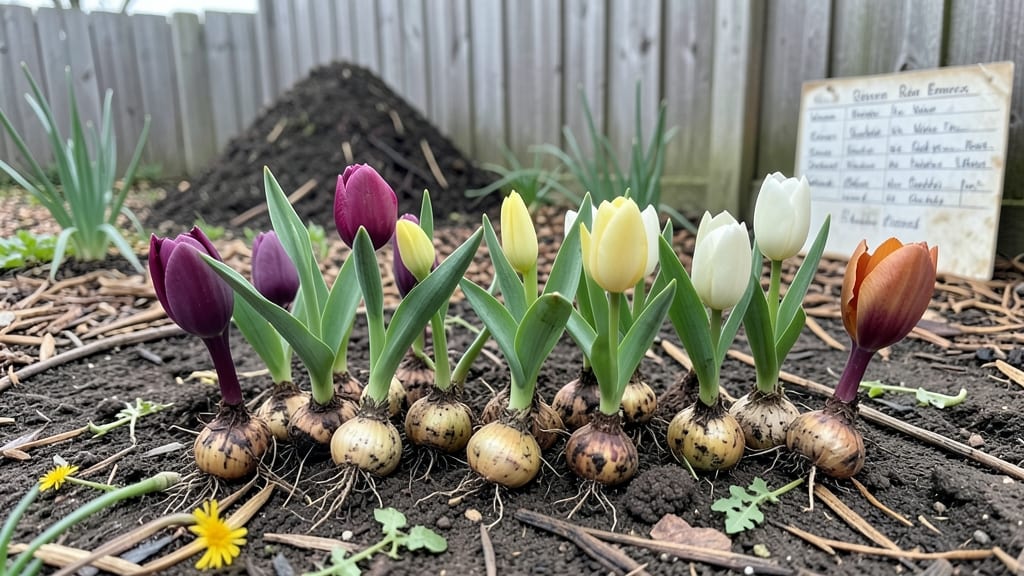
Identifying flower bulbs before planting can turn a guesswork garden into a showstopper 🌷 — and skipping this step often means throwing money away on the wrong varieties.
Picture this: You’ve just dug up a batch of bulbs, but half turn out to be the wrong type. Maybe those "tulips" you planted are actually daffodils, or those purple blooms you expected are alliums instead.
The good news? A few simple tricks—like checking bulb shape, skin texture, and even the smell—can save you from costly mistakes.
This guide covers the 10 most common flower bulbs, their seasonal blooms, and the visual cues that make identification foolproof. Whether you're planting in Zone 6a this fall or prepping for spring, you’ll learn how to spot the differences—and why timing matters.
From round daffodil bulbs to flat alliums, we’ll break down the key traits so you can confidently match bulbs to your garden plan. Ready to dig in?
How to identify flower bulbs by shape and size before planting
Identifying flower bulbs before planting is like solving a gardening puzzle—each shape and size holds clues about the blooms they’ll produce. I’ve made the mistake of planting daffodils where I wanted tulips, only to discover my error when the wrong flowers popped up!
The key lies in understanding bulb shapes, which fall into three main categories: round, egg-shaped, and flat. Let’s break down how to spot them like a pro.
Start by examining the bulb’s base. Round bulbs, like tulips and hyacinths, have a symmetrical, onion-like structure. Egg-shaped bulbs, such as daffodils, taper to a point at the bottom. Flat bulbs, like crocuses, are squat and disc-like.
These differences aren’t just fun facts—they directly impact planting depth and bloom timing. For example, flat bulbs need shallower planting than their round counterparts.
🌱 comparison table
| Bulb Type | Shape | Size (Diameter) | Common Flowers | Planting Depth | Bloom Season |
|---|---|---|---|---|---|
| Round | Symmetrical, layered | 1-3 inches | Tulips, Hyacinths, Daffodils | 6-8 inches deep | Spring |
| Egg-Shaped | Tapered, pointed base | 2-4 inches | Daffodils, Alliums | 4-6 inches deep | Spring/Early Summer |
| Flat | Disc-like, squat | 0.5-1.5 inches | Crocuses, Snowdrops | 2-3 inches deep | Early Spring |
| Rhizome | Horizontal, flat | 1-3 inches long | Bearded Irises | Surface-level, tip up | Late Spring |
| Tuber | Knobby, uneven | 1.5-3 inches | Dahlias, Caladiums | 4-6 inches deep | Summer/Fall |
Now that you’ve got the shapes down, let’s talk size. A 1-inch diameter bulb, like a crocus, will produce a tiny but cheerful bloom, while a 3-inch daffodil bulb can shoot up to 2 feet tall. Pay attention to the bulb’s weight too—heavier bulbs often indicate larger flowers.
For instance, a hyacinth bulb (round and dense) will give you a fragrant, clustered bloom, whereas a lighter grape hyacinth (smaller and round) will produce delicate, bell-shaped flowers.
One of my biggest mistakes? Ignoring the neck of the bulb. The pointed end (the neck) should always face upward when planting. This is especially critical for egg-shaped bulbs, like daffodils, where the neck is more pronounced.
Planting them upside down won’t kill the bulb, but it can delay blooming or produce malformed flowers. Pro tip: If you’re unsure, look for the smaller root end—that’s the bottom!
Don’t overlook the skin texture either. Smooth, papery skins are common in tulips and hyacinths
Seasonal flower bulb identification chart by color and bloom time
Planning your garden by color and bloom time makes seasonal transitions seamless. White blooms like snowdrops often arrive earliest, while red tulips may peak later. This chart organizes bulbs by their signature hues and planting windows—so you can mix purple hyacinths with yellow daffodils for a layered spring display.
Whether you're prepping for fall planting or extending blooms into summer, knowing these patterns helps you avoid gaps in your garden's timeline.
Each color family has distinct seasonal cues. For example, white alliums bloom in late spring, while yellow rain lilies wait for summer heat. By grouping bulbs this way, you can create succession planting plans that keep your garden vibrant from March through June.
Below, we’ve broken down the most popular bulbs by their bloom color, planting season, and peak months—so you can visualize your garden’s progression before the first shovel hits the soil.
Pro Tip: Use this chart to map out your garden layout by color blocks. For instance, plant white daffodils near purple grape hyacinths to create a soft contrast. Or, place red tulips in the foreground with yellow jonquils in the back for depth. The key is to align bloom times so your garden never looks bare.
🌷