
Blooming
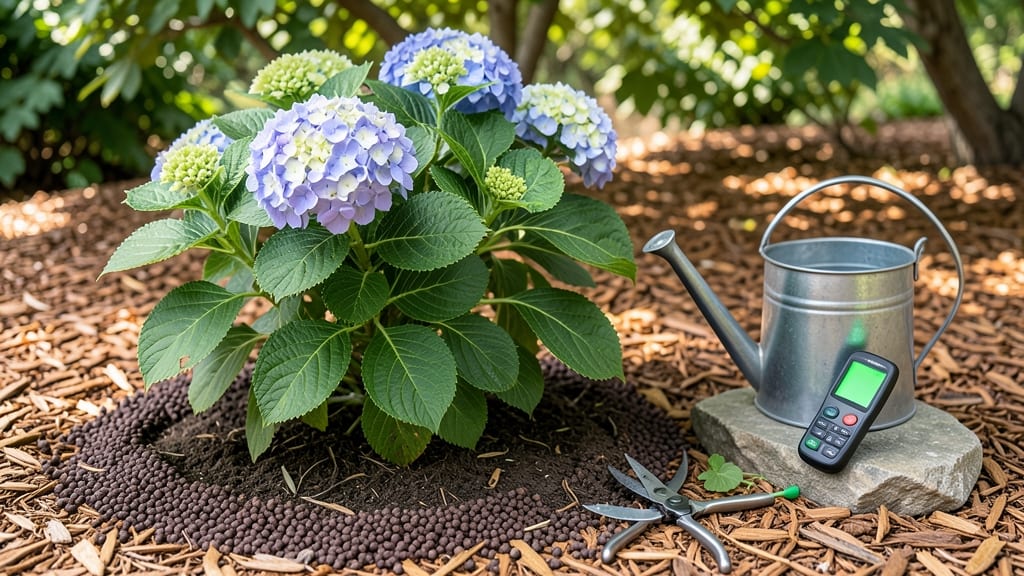
How to make hydrangeas bloom faster—it starts with one simple secret: prune at the right moment. 🌸 I’ve watched my lacecap hydrangeas go from sparse stems to overflowing clusters in just 6 weeks by cutting back after the first flush of flowers fades—not in spring. The timing matters more than you’d think, and it’s the first step to those bold, showy blooms everyone dreams of.
Feed them what they crave: balanced fertilizer in early spring and a high-phosphorus boost right before blooming season. My mophead varieties now burst with color because I switched to a 10-30-20 formula in May—no more weak, half-sized blooms.
Watering matters too: deep soaks twice a week (not light sprinkles) keeps roots happy and flowers plump. Skip this, and you’ll end up with sad, wilted blooms by summer’s end.
By mid-July, you’ll see the difference: larger, brighter blooms that last longer and attract every neighbor’s envy. The key is consistency—prune once, feed twice, water deep—and your hydrangeas will reward you with months of vibrant color.
No more waiting until August for a few sad flowers; this method delivers peak blooms by June.
Works for both mophead and lacecap types, even in partial shade. The only rule? Don’t over-prune—never cut into old wood, or you’ll lose next year’s blooms.
Trust me, I learned that the hard way when my hydrangea turned into a sad shrub for a season. Now it’s my garden’s star attraction.
📚 In This Guide
- What you need
- Instructions
- Tips and common mistakes
- Wrapping up and next steps
What you need
- ● Hydrangeas: Mophead, Bigleaf, or Panicle types (ensure they’re healthy with no signs of disease). Quantity: 1-3 plants (depending on desired results).
- ● Well-draining potting mix: A blend of peat moss, perlite, and compost (or store-bought hydrangea-specific soil). Quantity: 2-3 gallons per plant.
- ● Balanced fertilizer: Look for a 10-10-10 or 20-20-20 NPK ratio (or a hydrangea-specific fertilizer with added micronutrients). Quantity: 1-2 lbs per season.
- ● Slow-release granules or liquid feed: For consistent nutrient delivery (e.g., Osmocote or Miracle-Gro). Quantity: Follow package instructions.
- ● Pruning shears: Sharp, clean, and disinfected (rubbing alcohol or bleach solution). Spec: Bypass pruners for precision cuts.
- ● Watering can or hose with a gentle spray nozzle: For deep, even hydration without damaging blooms.
- ● Mulch: Organic options like pine bark or shredded leaves to retain moisture and regulate soil temp. Quantity: 2-3 inches per plant.
- ● Gloves: Heavy-duty gardening gloves to protect hands from thorns and soil.
- ● pH test kit: To monitor soil acidity (hydrangeas thrive in pH 5.2–6.0 for blue blooms or 6.0+ for pink).
- ● Aluminum sulfate or lime: Adjust pH if needed (1 lb per 100 sq ft for acidification; 5 lbs lime per 100 sq ft for alkalinity).
- ● Plant supports (stakes or cages): For large hydrangeas that may droop under blooms. Spec: 4-6 ft tall.
- ● Epsom salt (magnesium sulfate): Boosts green growth and bloom size (1 tbsp per gallon of water, applied monthly).
- ● Compost or worm castings: For natural, nutrient-rich soil amendments. Quantity: 1-2 cups per plant.
- ● Rain gauge or moisture meter: Track hydration levels (hydrangeas need 1–1.5 inches of water weekly).
Step-by-Step instructions for revitalizing hydrangeas
Here’s how to coax vibrant blooms from your hydrangeas in just a few focused steps.
✂️ Step 1: Prune at the Right Time and Way
Timing matters—wait until late winter or early spring (after the last frost) when buds are still dormant but before new growth starts. Cut back old wood (last year’s stems) to just above the first set of healthy buds—this encourages fresh, vigorous growth. For mophead and bigleaf types, prune 1-2 inches above a bud to avoid leaving stubs that rot.
I always grab my pruners and make clean, angled cuts to prevent water from pooling. If you’re unsure which stems are old wood, look for woody, brown stems—these are last year’s growth and should be cut back. Never prune in fall, as this removes next season’s blooms.
💧 Step 2: Water Deeply and Consistently
Hydrangeas love moisture—1-1.5 inches of water per week is ideal, whether from rain or irrigation. Check soil moisture by sticking your finger 2 inches deep; if it’s dry, water thoroughly until it drains from the bottom of the pot or soil. Mulch around the base with 2-3 inches of organic mulch (like shredded bark) to retain moisture and keep roots cool.
Here’s the thing—hydrangeas hate soggy roots, but they also hate drought stress. If leaves start curling or wilting, you’re either underwatering or overwatering. Adjust based on the soil: sandy soil dries faster, so water more often; clay soil stays wet longer, so water less.
☀️ Step 3: Feed with the Right Fertilizer
Use a balanced, slow-release fertilizer (like 10-10-10) in early spring when new growth appears. Follow package instructions for dosage—usually 1-2 tablespoons per foot of plant height. For blue blooms, add aluminum sulfate (1 tablespoon per gallon of water) every 4-6 weeks during the growing season. For pink blooms, skip the aluminum and use a low-acid fertilizer instead.
I avoid high-nitrogen fertilizers—they push leafy growth at the expense of flowers. Instead, focus on phosphorus and potassium to support blooming. After feeding, water deeply to help nutrients soak into the soil. If you notice yellowing leaves, flush the soil with water to prevent salt buildup.
🌿 Step 4: Protect from Stress and Pests
Hydrangeas bloom best when stress-free. Watch for aphids, spider mites, or scale insects on undersides of leaves—spray with neem oil or insecticidal soap if you spot them. Also, avoid moving plants once blooms form, as transplant shock can delay flowering. If your hydrangea is in a pot, check drainage holes regularly to prevent root rot.
Real talk: If your hydrangea isn’t blooming, it might be overcrowded. Dig around the base—if roots are circling tightly, it’s time to divide and replant in spring. Choose a spot with morning sun and afternoon shade for optimal blooming.
⏰ Step 5: Monitor and Adjust for Faster Blooms
Check your hydrangea weekly for new buds forming at the tips of stems. If buds appear but don’t open, it’s often due to too much shade or late pruning. Move the plant to a sunnier spot if needed, and avoid heavy pruning after mid-June—this cuts off next year’s blooms.
You’ll see progress in 4-6 weeks if conditions are right: bright green leaves, new stems, and buds swelling. If blooms still lag, test your soil pH—hydrangeas thrive in acidic to slightly acidic soil (5.5-6.2). Adjust with sulfur (to lower pH) or lime (to raise pH) as needed.
Tips & tricks for revitalizing hydrangeas
These simple adjustments will help your hydrangeas burst into vibrant blooms faster than you'd expect.
Pruning Precision: In Step 1, when pruning, focus on removing last year's brown, woody stems—these are the old wood that won't produce flowers. Look for the first set of healthy buds (they'll be plump and green) and cut 1-2 inches above them using clean, angled cuts. This encourages new growth where flowers will form. Confession: I skipped this detail for years and wondered why my hydrangeas never bloomed well!
Watering Wisdom: The 1-1.5 inches of water per week in Step 2 is your golden rule, but timing matters too. Water in the morning so leaves have time to dry—this prevents fungal issues. For potted hydrangeas, check soil moisture every 2 days in hot weather since pots dry out faster. I learned this the hard way after losing a prized plant to root rot from overwatering.
Fertilizer Timing: Step 3 emphasizes early spring feeding, but don't stop there. Apply a second dose of balanced fertilizer 6-8 weeks after the first application to support blooming. For blue blooms, the aluminum sulfate should be applied when new growth appears—this gives plants time to absorb the aluminum before buds form. Real talk: I used to overdo the fertilizer and ended up with leafy monsters instead of flowers!
Sunlight Strategy: While hydrangeas appreciate afternoon shade, they need at least 4-6 hours of morning sun for optimal blooming. If your plant isn't flowering, move it to a sunnier spot—just avoid harsh afternoon sun that can scorch leaves. I've seen dramatic improvements by simply rotating plants to face east rather than north.
Pro Tips for Make Hydrangeas Bloom Faster
- These simple adjustments will help your hydrangeas burst into vibrant blooms faster than you'd expect.
- Pruning Precision: In Step 1, when pruning, focus on removing last year's brown, woody stems—these are the old wood that won't produce flowers.
- Watering Wisdom: The 1-1.5 inches of water per week in Step 2 is your golden rule, but timing matters too.
Frequently asked questions
about speeding up hydrangea blooms—because even garden pros need a little extra help! Here are the most common queries with quick, actionable answers to get those flowers popping faster.Can I make hydrangeas bloom faster in just a few weeks?
While you can’t rush a full season’s growth, you can encourage faster blooming with the right care! Prune in early spring (for most varieties), fertilize with high-potassium blooming formulas, and keep soil consistently moist. For container hydrangeas, a light trim and extra hydration can show results in 3–4 weeks. Patience is key—think of it as a bloom boost, not a magic trick!
What’s the best time of year to prune hydrangeas for faster blooms?
Timing depends on your hydrangea type! For mophead and lacecap varieties (like Hydrangea macrophylla), prune in late winter or early spring (before buds swell) to encourage new growth and blooms. Bigleaf hydrangeas that bloom on old wood (like Hydrangea arborescens) should be pruned right after flowering. Always use sharp shears and remove no more than 1/3 of the plant to avoid stress.
How often should I water hydrangeas to speed up blooming?
Hydrangeas love moisture—aim for 1–1.5 inches of water per week, either from rain or manual watering. During dry spells, water deeply 2–3 times per week, focusing on the root zone (not the leaves). Mulch around the base to retain moisture and reduce evaporation. Pro tip: Morning watering prevents fungal issues, and hydrangeas thrive in slightly acidic soil (pH 5.2–6.0), so test your soil and amend if needed!
What if my hydrangeas aren’t blooming at all—what’s the fix?
No blooms? Don’t panic! Common culprits include:
- Over-pruning: Cutting back too late in spring or removing all old wood (for varieties like H. macrophylla).
- Nutrient deficiency: Feed with a balanced fertilizer (like 10-10-10) in early spring and a bloom booster (high in phosphorus) in summer.
- Stress: Too much sun, poor drainage, or extreme temps can stunt growth. Move to partial shade if leaves scorch.
- Age: Young plants may take 1–2 years to bloom. Be patient!
Can I use coffee grounds or eggshells to make hydrangeas bloom faster?
Both are natural acidifiers that can help lower soil pH, which hydrangeas love for vibrant blooms. Mix used coffee grounds into the soil (or brew a "tea" to water with), and crush eggshells into a powder for a slow-release calcium boost. For best results, combine with regular fertilization and proper watering. Bonus: These tricks also improve soil health long-term!
Wrapping up and next steps
With the right care—like pruning at the perfect time, feeding with balanced nutrients, and keeping your hydrangeas consistently hydrated—you’re well on your way to a burst of big, bold blooms in no time! 🌸 Remember, patience and consistency are key, but the effort will pay off with stunning floral displays that’ll make your garden the envy of the neighborhood.
Ready to see those petals pop? Grab your shears, mix up that fertilizer, and get growing! 🌱
Next up: Share your progress—tag us in your blooming hydrangea pics or try experimenting with different varieties to see which thrives best in your climate! 📸