
Planting
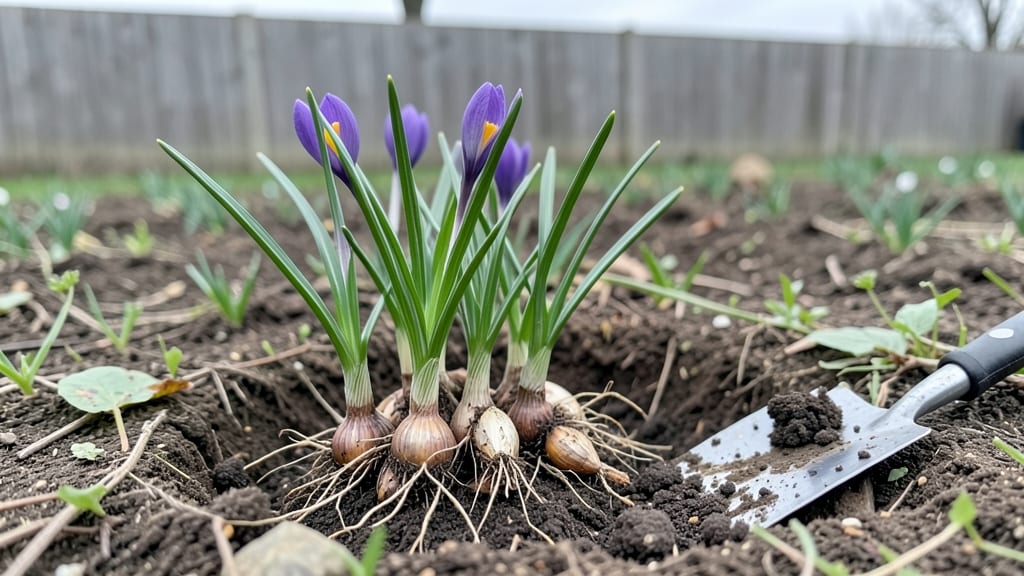
Planting crocus bulbs requires a depth equal to three times their height, typically 3 to 4 inches deep, in well-draining soil with a slight slope for water runoff to prevent rot and ensure vibrant spring blooms.
Crocus bulbs thrive when planted at the right depth because it balances moisture exposure and temperature regulation—too shallow and they’ll dry out, too deep and they may rot before sprouting. 🌱 I’ve found that most gardeners overlook soil drainage, which is just as critical as depth; adding a layer of sand or gravel beneath the bulbs helps prevent waterlogging, especially in clay-heavy soils.
Another key factor is timing—planting in fall when soil temperatures drop below 60°F mimics their natural dormancy cycle, ensuring strong root establishment before winter. For container gardens, use well-draining mixes like perlite and peat, and avoid compacted soil that suffocates roots.
💡 In This Article
- Crocus Bulb Depth Science: Why Proper Planting Matters
- Step-by-Step Crocus Bulb Planting Guide for Beginners
Crocus bulb depth science: why proper planting matters
Crocus bulbs rely on precise planting depth to regulate moisture absorption and temperature exposure—critical factors for their survival and bloom cycle.
When planted at the correct depth (typically 3-4 inches), the bulb's basal plate (where roots emerge) remains in a stable, moisture-controlled environment while the shoot tip stays protected from extreme cold or drying winds.
This balance triggers dormancy in fall and primes the bulb for spring growth when soil temperatures rise above 50°F.
The science behind this involves the bulb's natural stratification needs. Crocus bulbs require a period of cold exposure (around 4-8 weeks below 40°F) to break dormancy—a process called vernalization. Planting too shallow exposes the bulb to rapid temperature fluctuations, while over-deep planting traps excess moisture, causing rot.
The ideal depth ensures the bulb's top remains just below the soil surface, allowing light penetration for future foliage growth while keeping the bulb's core insulated.
Moisture dynamics play a starring role here. Crocus bulbs store nutrients in their fleshy tunics, but too much water accelerates decomposition. The 3x height rule creates a micro-environment where water drains efficiently through the surrounding soil, preventing waterlogging.
In heavy clay soils, adding 1-2 inches of coarse sand beneath the planting hole mimics natural well-draining conditions found in their Mediterranean native habitats.
Seasonal soil temperature variations also influence depth requirements. In colder climates, planting 1 inch deeper provides extra insulation, while warmer regions benefit from shallower planting (2-3 inches) to prevent overheating.
The bulb's natural insulation properties (from its papery tunic) work best when paired with proper depth—think of it like a thermos effect where the soil acts as the insulating medium.
What most gardeners don't realize is how depth affects bloom timing. Bulbs planted too deep may produce smaller, later flowers because the shoot tip struggles to penetrate compacted soil layers. Conversely, shallow planting can lead to premature sprouting in winter, which gets damaged by frost.
The sweet spot creates a 2-3 week buffer between soil warming and shoot emergence, ensuring vibrant blooms appear when spring arrives.
For container growers, this translates to using pots with drainage holes and a well-aerated mix. The 3x height rule still applies, but containers dry out faster—so watering becomes even more critical.
I've seen crocus bulbs in containers bloom 2-3 weeks earlier than ground-planted ones because the container's edge warms faster in spring, demonstrating how microclimates interact with planting depth.