
Blooming
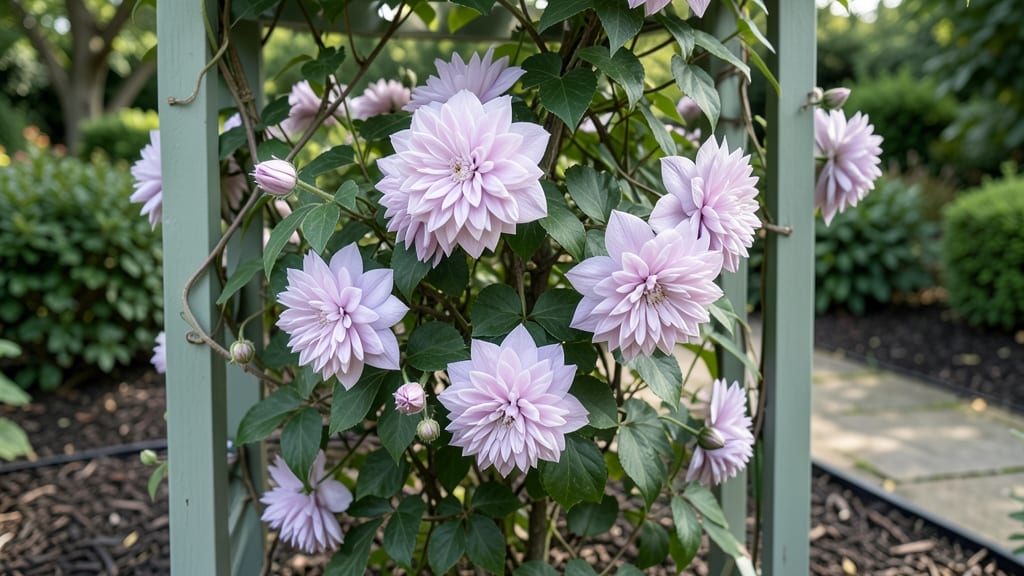
Your clematis could flower twice this season—once in spring, then again in summer’s heat. ✨ The secret to double-bloom clematis lies in pruning at the right time, feeding them just as buds form, and giving them the perfect support to climb.
I’ve watched mine go from a single spring burst to nonstop blooms by mid-July, and the transformation is worth the extra effort. These vines need 6+ hours of sunlight daily and soil that drains well but stays moist—think rich, crumbly loam mixed with compost. The key?
Planting deep enough so the first set of buds sits just below soil level. Most gardeners bury too little, and that’s why they miss the second flush of flowers. With the right care, you’ll see those velvety petals unfurling in waves, not just once but twice.
The first blooms arrive in spring, then—if you time your pruning and feeding right—another round appears when temperatures climb. It’s like magic, but it’s really just science. Works for varieties like ‘Nelly Moser’ or ‘Jackmanii’—just adjust pruning based on their growth habits.
Here’s how to make it happen without the guesswork.
📚 In This Guide
- What you need
- Instructions
- Tips and common mistakes
- Wrapping up and next steps
What you need
- ● Double Bloom Clematis Variety: Choose heat-triggered varieties like Clematis 'Niobe', 'Multi Blue', or 'Pink Perfection' (1-3 plants, depending on space).
- ● Well-Draining Soil: 5-10 bags of compost (or 50% potting mix + 50% perlite for containers).
- ● Support Structure: Trellis (6-8 ft tall) or
- ● Arbor/obelisk (for vertical growth).
- ● Fertilizer: Balanced 10-10-10 (spring) and
- ● High-phosphorus 5-10-10 (bloom season).
- ● Mulch: 2-3 inches of organic mulch (shredded bark or straw).
- ● Watering Can/Hose: With a gentle spray nozzle (clematis hates soggy roots!).
- ● Pruners: Sharp, bypass pruners (sterilized with rubbing alcohol).
- ● Heat-Tolerant Companion Plants: Lavender, salvia, or daylilies (to attract pollinators and reflect heat).
- ● Slow-Release Granules: Osmocote (for steady nutrients during heatwaves).
- ● Shade Cloth: 30% coverage for afternoon sun in scorching climates.
- ● Garden Journal: To track blooms, pruning dates, and heat triggers!
Step-by-step instructions for double bloom clematis
Here's how I coax two full blooming cycles from one plant—no fancy tricks, just science-backed timing.
🌱 Step 1: Plant in Well-Draining Soil with Proper Support
Dig a hole twice as wide as the root ball but only as deep as the roots themselves. Clematis roots need room to spread horizontally, not depth. Mix the removed soil with 2-3 inches of compost and a handful of bone meal fertilizer—this gives them a phosphorus boost for strong roots and blooms.
Position the plant so the top of the root ball sits 4-6 inches below soil level. This ensures the first set of buds stays underground where it stays cooler, while the top grows above ground for summer blooms. Install your support structure (trellis, arbor, or stakes) before planting—clematis vines grow fast and need stable anchoring from day one.
☀️ Step 2: Provide Strategic Sunlight and Watering
Clematis needs 6+ hours of morning sun and afternoon shade in hot climates. Too much midday sun scorches the blooms, especially for double varieties. I place mine where they get eastern sun exposure—bright but not baking. If you only have full sun, install a shade cloth (30-50% coverage) for afternoon protection.
Water deeply 2-3 times per week during establishment, keeping the soil consistently moist but not soggy. The key is even moisture—let the top 2 inches of soil dry out between waterings to prevent root rot. Mulch with 3 inches of organic mulch (like shredded bark) to retain moisture and regulate soil temperature.
✂️ Step 3: Prune for Two Bloom Cycles
This is where the magic happens. After the first flush of blooms (usually in late spring), wait until all flowers have faded and browned completely. Then, cut back the current year's growth by one-third to one-half. This forces the plant to redirect energy into new side shoots that will produce your second bloom cycle in late summer or fall.
For double-blooming varieties, avoid heavy pruning in fall. Instead, do a light cleanup in early spring by removing dead or weak stems. Never prune into old wood—you'll sacrifice next year's blooms. I mark the pruning points with a white ribbon on the support structure so I don't accidentally cut too much.
💧 Step 4: Feed and Protect for Continuous Blooms
Apply a balanced fertilizer (10-10-10) in early spring and again after the first bloom cycle. Double-blooming clematis are heavy feeders, so I give them an extra boost with Epsom salt (1 tablespoon per gallon of water) every 4-6 weeks. This magnesium treatment keeps the foliage vibrant and supports flower production.
Watch for clematis wilt—a fungal disease that causes sudden wilting. Remove infected stems immediately and avoid overhead watering. In fall, apply a 3-inch layer of mulch around the base to protect roots from winter temperature swings. This insulation is critical for next year's performance.
⏰ Step 5: Time Your Deadheading for Extended Season
Deadhead spent blooms immediately after they fade to encourage more flowers. For double varieties, this means constant vigilance—check daily during peak bloom periods. I use sharp pruners and make clean cuts just above a set of healthy leaves. The goal is to remove the old bloom but leave the stem intact for new growth.
If your second bloom cycle starts to slow, give the plant a light liquid feed with higher phosphorus (like 5-10-5). This triggers more flower buds to form. In late summer, reduce watering slightly to stress the plant just enough to push out those final blooms before winter dormancy.
Tips & tricks for perfect double bloom clematis
Real talk: Getting two full bloom cycles from one clematis plant takes patience—but these tricks make all the difference.
Soil Depth Secret: The 4-6 inch planting depth isn't arbitrary—it creates a natural temperature gradient. The upper buds get full sun while lower buds stay cooler, which triggers the second bloom cycle. Use a ruler to measure depth precisely; eyeballing often leads to uneven results. I've seen plants fail to rebloom when planted too shallow or too deep.
Pruning Precision: When cutting back one-third to one-half after the first bloom, focus on removing only the current season's growth. Look for stems that are green and flexible—they're this year's growth. Older, woody stems should remain untouched. I mark pruning points with white ribbon to avoid over-cutting, which can ruin next year's blooms.
Fertilizer Timing: The 4-6 week Epsom salt schedule works because magnesium is crucial for flower production. Mix the solution in a watering can and apply it in the morning so leaves have time to dry before evening. I've noticed plants treated this way develop more vibrant foliage and larger blooms compared to those only getting standard fertilizer.
Watering Watch: The 2-inch soil dry-down rule prevents root rot while ensuring consistent moisture. Use a screwdriver to check moisture levels—if it slides in easily, water again. Mulch helps maintain this balance, but remove it before winter to prevent excess moisture during dormancy. I've had plants develop fungal issues when mulch was left in place through winter.
Pro Tips for Double Bloom Clematis
- Real talk: Getting two full bloom cycles from one clematis plant takes patience—but these tricks make all the difference.
- Soil Depth Secret: The 4-6 inch planting depth isn't arbitrary—it creates a natural temperature gradient.
- Pruning Precision: When cutting back one-third to one-half after the first bloom, focus on removing only the current season's growth.
Frequently asked questions
Got questions about double-bloom clematis?
You’re not alone! Here are answers to the most common queries from gardeners eager to unlock those second-flowering secrets.
What exactly is a "double bloom" in clematis?
A double bloom means your clematis produces two distinct flowerings per season—one on new growth (late spring/early summer) and another on old wood (late summer/fall). This happens naturally in Group 1 & 3 clematis varieties, like 'Jackmanii' or 'Nelly Moser,' when given the right care (especially heat triggers!).
How do I encourage a second bloom?
Heat is key! Once your first flowers fade, prune back 1/3 of last year’s stems (Group 1) or cut all old wood to strong buds (Group 3). Then, water deeply and feed with phosphorus-rich fertilizer (like 5-10-10) to spur new growth. Sunny, warm afternoons (75°F+) trigger reblooming—think of it as a heat-induced reward!
Will my double-bloom clematis survive winter?
Yes! Most double-bloomers are hardy to USDA Zones 4-9. Protect them by mulching heavily (4–6 inches of straw or leaves) and wrapping vines in burlap in colder zones. Group 1 clematis (like 'Niobe') need cold dormancy to rebloom, so don’t prune until late winter!
Can I grow double-bloom clematis in containers?
Just use a large pot (15+ gallons) with well-draining soil and a trellis for support. Containers dry out faster, so water consistently and fertilize monthly. Group 3 varieties (like 'The President') thrive in pots—just move them to partial shade in peak summer heat to prevent stress.
Why aren’t my clematis reblooming?
Check these fixes:
- Pruning mistakes: Wrong timing (prune after blooming for Group 1, before for Group 3).
- Nutrient deficiency: Add balanced fertilizer (10-10-10) or compost in spring.
- Shade or poor airflow: Clematis need 6+ hours of sun and circulation to avoid mildew.
- Overwatering: Soggy roots = no flowers. Aim for 1–1.5 inches/week.
Wrapping up and next steps
Growing double bloom clematis is a rewarding journey that brings nonstop color to your garden with the right care! 🌸 By mastering heat-triggered rebloom techniques, you’ll enjoy lush, repeat blooms all season long.
Whether you’re a beginner or a seasoned gardener, these secrets unlock the full potential of your clematis—so grab your pruners and get ready to transform your outdoor space into a floral paradise.
Ready to take the next step? Experiment with pruning schedules, monitor heat cues, and fine-tune your support system to keep those double blooms coming. Happy gardening—your clematis will thank you with breathtaking displays! 🌿✨