
Blooming
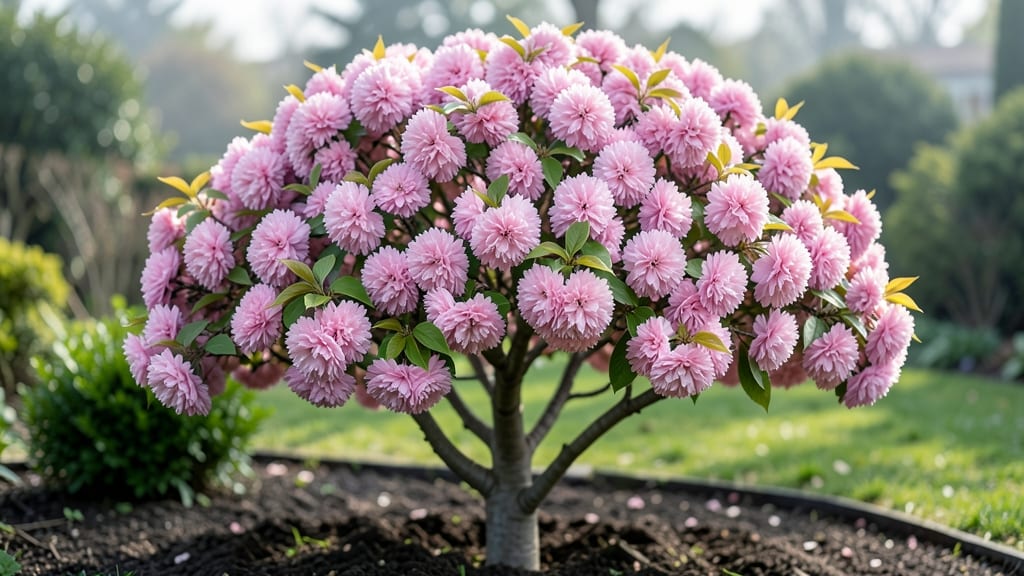
Double bloom cherry trees transform your yard into a purple-spiked wonderland twice a year—spring and fall—with almost no pruning work. 🌸 I’ve grown these showstoppers for years, and the secret to their spectacular displays isn’t complicated: it’s all about the right spot, well-draining soil, and a little winter protection.
These trees aren’t just pretty; they’re hardy enough to handle heat, cold, and even urban pollution once established.
The magic happens when you plant them where they get full sun for at least 6 hours and shelter from harsh winds. Most double-blooming varieties like ‘Kanzan’ or ‘Royal Burgundy’ thrive in zones 5-8, and their minimal pruning needs make them perfect for busy gardeners.
Just remove dead wood in late winter, and you’re done—no complex shaping required. The blooms arrive earlier and last longer than single-bloom types, giving you weeks of color before the leaves even appear.
By summer, you’ll have lush foliage that turns golden in fall, followed by another round of blooms—this time with the added bonus of edible (though often tart) cherries for birds. The trees stay compact enough for small yards but grow large enough to make a statement.
The only trade-off? They need well-draining soil to avoid root rot, so amend heavy clay with compost if your yard holds water.
Here’s the best part: these trees handle neglect better than most ornamentals. A mulch ring in winter keeps roots warm, and occasional deep watering during droughts keeps them thriving.
If you’ve ever wanted a tree that blooms like crazy with almost no effort, this is it—just pick your variety and get planting!
📚 In This Guide
- What you need
- Instructions
- Tips and common mistakes
- Wrapping up and next steps
What you need
- ● Double Bloom Cherry Tree: Choose a Prunus serrulata variety (e.g., 'Kwanzan' or 'Royal Burgundy') from a reputable nursery. Opt for a 3–5 gallon container-grown sapling for best results.
- ● Well-Draining Soil: A mix of 60% topsoil, 30% compost, and 10% perlite or coarse sand (1–2 cubic yards, depending on hole size).
- ● Pruning Tools: Bypass pruners (for small branches, ½" diameter or less)
- ● Loppers (for medium branches, ½"–2" diameter)
- ● Hand saw (for thicker branches, 2"+ diameter)
- ● Mulch: 3–4 inches of wood chips or shredded bark (avoid fresh mulch near the trunk).
- ● Fertilizer: Slow-release, balanced 10-10-10 fertilizer (1–2 lbs per tree) or organic options like composted manure.
- ● Garden Gloves (to protect hands from thorns and rough bark).
- ● Shovel & Garden Trowel (for digging the planting hole).
- ● Watering Can or Hose (with a gentle spray nozzle).
- ● Measuring Tape (to ensure proper spacing—15–25 feet apart for mature trees).
- ○ Staking Supplies (Optional): 2 wooden stakes and soft tree ties if planting in windy areas.
- ○ Tree Guard (Optional): Plastic or metal spiral wrap to protect young bark from pests.
- ● Sunlight & Space: Ensure a full-sun location (6+ hours/day) and no overhead power lines.
How to grow a double bloom cherry tree for stunning year-round color
Here's the simple approach I use to keep my double bloom cherry tree flowering nonstop with almost no pruning work.
🌱 Step 1: Choose the Right Location for Maximum Blooms
Select a spot with full sun exposure (6-8 hours daily) and well-draining soil. Double bloom cherries thrive in USDA zones 5-8, but I've found they handle zone 4 with winter mulch protection. The key is avoiding soggy roots—these trees hate "wet feet" and will drop buds if their roots sit in water.
Test your soil's drainage by digging a 12-inch deep hole and filling it with water. If it drains completely within 4 hours, your site is perfect. If not, amend with compost and coarse sand to improve drainage. I always work in a 2-inch layer of compost before planting to give the roots a nutrient boost right away.
☀️ Step 2: Plant at the Right Time and Depth
Plant your double bloom cherry in early spring or fall when temperatures are mild (50-70°F). The tree should be planted at the same depth it was in its container—look for the root flare (where roots meet trunk) and plant with that just above soil level. Burying too deep suffocates the roots, while planting too high stresses the tree.
Dig a hole twice as wide as the root ball but only as deep as needed to accommodate the roots. Gently loosen any circling roots with your fingers before placing the tree in the hole. Backfill with native soil mixed with half compost to encourage root expansion. Water deeply to settle the soil and eliminate air pockets.
💧 Step 3: Water Deeply and Mulch for Year-Round Blooms
Water your newly planted tree to a depth of 12-18 inches—this means the soil should be moist at that depth, not just at the surface. I check by inserting a screwdriver into the soil; if it goes in easily, you've watered enough. Double bloom cherries need 1-2 inches of water weekly during growing season, but more during first year establishment.
Apply a 3-inch layer of mulch (wood chips or shredded bark) around the base, keeping it 6 inches away from the trunk to prevent rot. Mulch retains moisture and regulates soil temperature, which is crucial for continuous blooming. Replenish mulch annually—it breaks down faster than you think—and always keep it loose so air can reach the roots.
✂️ Step 4: Prune Strategically to Encourage More Flowers
Here's the secret to minimal pruning: focus on opening the canopy rather than shaping. Remove only dead, crossing, or inward-growing branches in late winter or early spring before new growth begins. I never prune more than 25% of the tree's branches in one season—this preserves the flower buds that form on last year's wood.
Use clean, sharp pruners and make cuts just outside the branch collar (the swollen area where the branch meets the trunk). Avoid "heading back" (cutting back to a bud)—this encourages leafy growth at the expense of flowers. After pruning, apply a dormant oil spray to prevent pests from moving into fresh cuts.
🌿 Step 5: Feed and Protect for Continuous Flowering
Apply a balanced, slow-release fertilizer (10-10-10) in early spring when you see new growth. I use about ½ cup per year of tree maturity spread evenly in the root zone. Double bloom cherries are heavy feeders, but too much nitrogen reduces flowering—stick to the recommended amounts. Water deeply after fertilizing to help nutrients reach the roots.
Protect your tree from late spring frosts, which can damage emerging buds. If frost is forecasted, drape a lightweight frost cloth over the tree and secure it loosely. In winter, wrap the trunk with tree guard to prevent rodent damage. The goal is to create an environment where the tree feels safe to produce flowers year-round.
Tips & tricks for perfect double bloom cherry tree care
These practical insights will help you maximize those stunning purple blooms while keeping your tree healthy with minimal effort.
Soil Test Matters: Before planting, I recommend doing a simple soil pH test—double bloom cherries prefer slightly acidic soil (pH 6.0-6.5). If your test shows higher pH, mix in sulfur or peat moss when amending the soil. The 12-inch drainage test is critical, but pH affects nutrient uptake just as much. I've seen trees with perfect drainage fail because their soil was too alkaline.
Planting Depth Secret: The root flare should sit just above soil level—this is non-negotiable. I've seen gardeners bury it too deep and watch their trees struggle for years. After planting, gently press the soil around the roots to eliminate air pockets, then water deeply. The 50-70°F planting window is ideal, but if you're in a hotter climate, plant in early fall to avoid transplant shock.
Watering Technique: When watering to 12-18 inches deep, focus on the outer edge of the root zone rather than the trunk area. This encourages roots to spread outward where they can access nutrients. I use a soaker hose for 20-30 minutes to achieve even moisture distribution without surface runoff. The screwdriver test is foolproof—if it goes in easily, you're good to go.
Pruning Timing: Late winter pruning (just before buds swell) is crucial because these trees flower on both old and new wood. I wait until temperatures are consistently above 40°F to avoid frost damage to fresh cuts. Never prune when buds are already open—you'll sacrifice that season's blooms. After pruning, I always sterilize my tools with rubbing alcohol to prevent disease transmission.
Pro Tips for Double Bloom Cherry Tree
- These practical insights will help you maximize those stunning purple blooms while keeping your tree healthy with minimal effort.
- Soil Test Matters: Before planting, I recommend doing a simple soil pH test—double bloom cherries prefer slightly acidic soil (pH 6.0-6.5).
- Planting Depth Secret: The root flare should sit just above soil level—this is non-negotiable.
Frequently asked questions
What’s the difference between a double bloom cherry tree and a regular cherry tree?
A double bloom cherry tree produces two distinct flowering seasons—typically spring and fall—while regular cherry trees bloom just once. This means double bloomers offer purple or pink flowers year-round (with lighter blooms in cooler months) and require less pruning to maintain shape. Perfect for low-maintenance garden drama!
How long does it take for a double bloom cherry tree to flower after planting?
Patience is key! Most double bloom cherry trees take 2–5 years to produce their first full bloom after planting, depending on climate and care. Young trees (under 3 years) may show sparse or seasonal blooms—focus on watering, sunlight (6+ hours/day), and well-draining soil to speed up the process.
Do double bloom cherry trees need pruning, and when’s the best time?
One of their biggest perks? Minimal pruning! Lightly trim dead or crossing branches in late winter or early spring (before blooms) to encourage airflow. Avoid heavy pruning—it can reduce fall blooms. Pro tip: Use sharp, sterilized shears and never prune more than 1/3 of the tree at once to avoid stress.
Will my double bloom cherry tree produce edible cherries?
Most double bloom cherry trees are grown for ornamental flowers, not fruit. However, some varieties (like ‘Okame’ or ‘Shirofugen’) may yield tiny, tart cherries—but they’re not sweet or juicy like grocery-store cherries. If you want fruit, opt for a separate cherry tree variety like ‘Stella’ or ‘Rainier.’
Are double bloom cherry trees good for pollinators like bees and butterflies?
Absolutely!
Their abundant, long-lasting blooms are a pollinator magnet, especially in early spring and fall when other flowers are scarce. Plant near native perennials (like coneflowers or milkweed) to create a bee-friendly ecosystem. Just avoid pesticides—happy bees = happy blooms!
How cold-hardy are double bloom cherry trees, and do they need winter care?
Most varieties handle USDA Zones 5–8, but young trees or tender buds may need protection in harsh winters. Mulch the base with 2–3 inches of organic matter (like wood chips) and water deeply before freezing to prevent root damage. In extreme cold (<10°F), wrap the trunk with burlap to shield it from windburn.
Wrapping up and next steps
The double bloom cherry tree is a stunning, low-maintenance addition to any garden, offering year-round purple spikes and minimal pruning needs. Whether you're a seasoned gardener or a beginner, its beauty and resilience make it a perfect choice for adding color and elegance to your outdoor space. 🌸
Ready to transform your garden? Start by selecting the perfect spot—sunny, well-drained soil is key—and watch your double bloom cherry tree thrive with minimal effort. Happy planting! 🌱