
Blooming
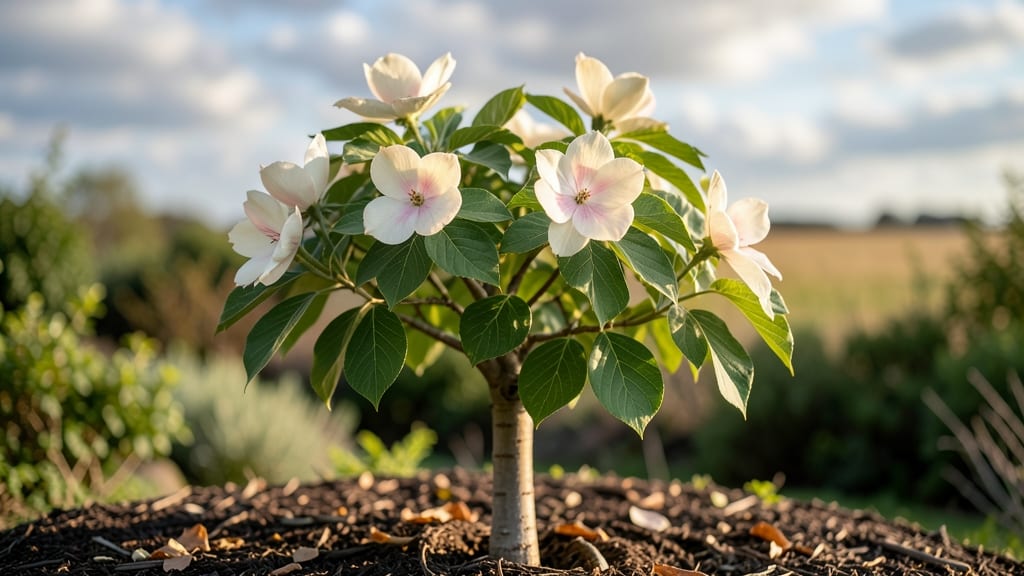
The meaning of dogwood blooms centers on purity, hope, and enduring love, deeply tied to spring renewal and spiritual awakening in Christian traditions, while also symbolizing strength and resilience in Native American heritage.
The dogwood's delicate white and pink flowers carry layers of meaning that transcend cultures.
In Christian symbolism, they're linked to Easter—some traditions claim the dogwood's crown of thorns-like branches represent Christ's crown, while its blossoms signify resurrection. 🌸 Native American tribes, meanwhile, revered the tree for its hardy wood and saw its flowers as emblems of protection and perseverance, often using them in healing rituals.
What's fascinating is how these meanings blend in modern contexts, from wedding bouquets (for pure love) to memorial gardens (for enduring remembrance).
Beyond their spiritual weight, dogwoods thrive in garden settings, making them perfect for intentional landscaping.
Their early spring blooms announce renewal, while their autumn foliage adds seasonal contrast. 🌿 I've seen dogwoods paired with azaleas for a soft, romantic garden theme or with ferns for a woodland sanctuary vibe—each combination tells a story.
The key is understanding which meanings you want to highlight: a lone dogwood might evoke solitude and reflection, while clusters celebrate community and shared hope.
💡 In This Article
- Dogwood Flower Symbolism Across Cultures and History
- How to Incorporate Dogwood Blooms in Garden Symbolism
Dogwood flower symbolism across cultures and history
The dogwood's deep-rooted symbolism in Christianity stems from its physical resemblance to the cross.
The tree's four-petaled flowers align with the four Gospels, while its straight trunk and branches form a natural crucifix shape when viewed from above. 🌸 During Easter, many churches incorporate dogwood branches in decorations to visually represent Christ's sacrifice and resurrection.
This connection was cemented in the 19th century when American clergyman Dr. William W. Hiles wrote in his 1838 book "The Dogwood Tree" that the tree's thorny branches symbolized Christ's crown of thorns—a belief still held by many religious communities today.
Native American tribes, particularly those in the southeastern United States, viewed the dogwood differently. The Cherokee called it "the tree of life" and used its bark for medicinal purposes, including treating fevers and skin conditions.
The Creek tribe considered the dogwood sacred, believing its flowers represented the tears of a maiden who died of a broken heart—thus linking it to themes of enduring love and sorrow. 💫 Archaeological evidence shows dogwood wood was used to craft tools and weapons, demonstrating its practical value while simultaneously holding spiritual significance.
The tree's ability to thrive in harsh conditions further reinforced its symbolism of resilience in Native traditions.
In global folklore, dogwoods appear as symbols of protection and good fortune. Japanese culture associates them with the Shinto deity Amaterasu, goddess of the sun, due to their bright spring blooms that seem to "awaken" the landscape.
European herbalists in the Middle Ages believed dogwood bark could cure everything from snakebites to melancholy—a belief that persisted until the 18th century. 🌿 What's particularly striking is how these diverse cultural interpretations all center on the tree's dual nature: its delicate flowers contrasting with its sturdy wood, much like how its meanings balance both fragility and strength across civilizations.
Literary references further cement the dogwood's symbolic power. In Mary Elizabeth Braddon's 1861 novel "Lady Audley's Secret," the tree appears as a motif for hidden truths and moral complexity.
Meanwhile, Southern Gothic writers like Flannery O'Connor frequently used dogwood imagery to represent the tension between beauty and darkness in human nature. The tree's presence in these works shows how its symbolism evolves while maintaining core themes of transformation and duality.
Scientifically, the dogwood's symbolism is tied to its biological characteristics. The tree's early spring blooms (typically appearing in March-April in temperate climates) make it a harbinger of renewal—a perfect metaphor for hope and new beginnings.
Its small, white to pink flowers contain four petals and four sepals, creating a symmetrical pattern that has fascinated botanists and artists alike for centuries. 🌸 This natural symmetry has led to its frequent use in heraldry and coat-of-arms designs, particularly in regions where dogwoods grow natively, such as the southeastern United States.
What most people don't realize is how the dogwood's ecological role enhances its symbolic meaning. The tree's flowers provide early-season nectar for pollinators like bees and hummingbirds, making it a keystone species in its ecosystem.
This interconnectedness with nature reinforces its symbolism of harmony and balance—qualities that resonate across cultural boundaries. Whether viewed through a religious lens, a Native American spiritual framework, or a scientific perspective, the dogwood's meaning remains remarkably consistent: a bridge between the physical and spiritual worlds.