
Blooming
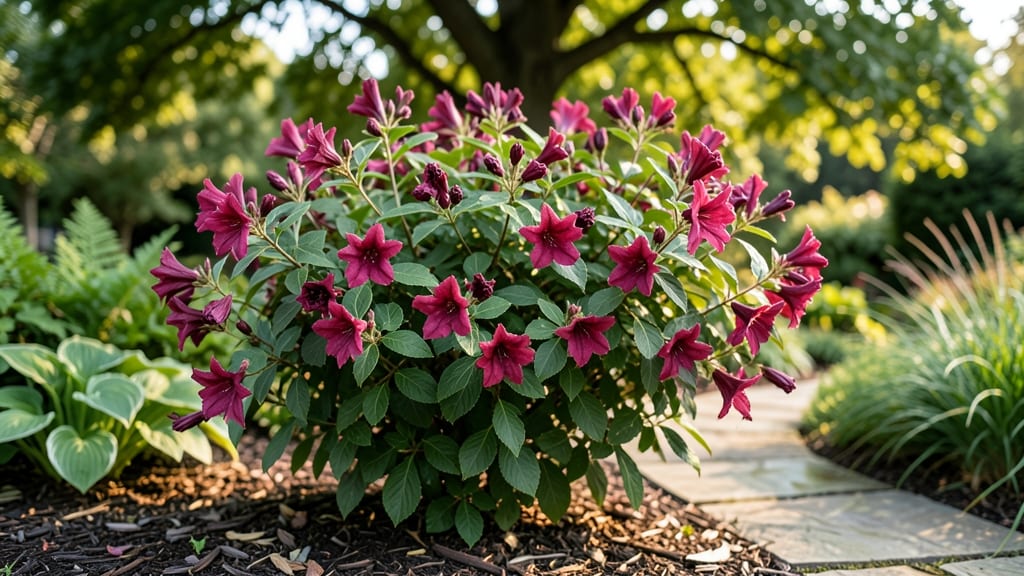
Weigela can bloom all summer—but it takes the right variety and care. 🌸 The trick lies in choosing reblooming cultivars like 'Wine & Roses' or 'Midnight Wine,' which push purple spikes from spring through fall with proper pruning and summer feeding.
Most weigelas put on one big show in late spring, then fade by July—but these heat-triggered types keep producing with a little encouragement.
The secret to extended blooms starts with pruning: cut back old wood in early spring to stimulate fresh growth, then deadhead spent flowers throughout summer. Feed with balanced fertilizer every 6 weeks, and keep the plant well-watered during dry spells.
My 'Alexandra' weigela now blooms from May through October, and it's all about timing those cuts right after the first flush of flowers.
You'll end up with a bush covered in cascading blooms from early summer until frost, drawing hummingbirds and butterflies all season. The flowers stay vibrant longer too, since rebloomers focus energy on new growth rather than seed production. Just avoid heavy pruning after midsummer—it cuts off next year's blooms.
Works best in full sun to partial shade, and thrives in zones 4-8. For cooler climates, choose varieties bred for heat tolerance like 'Carpet Dweller' or 'Victoria.' The key is matching the right plant to your summer heat levels—then letting it shine.
📚 In This Guide
- What you need
- Instructions
- Tips and common mistakes
- Wrapping up and next steps
What you need
- ● Weigela plant: Choose a reblooming variety like 'Wine & Roses' or 'Midnight Wine' (ensure it’s healthy, with 2–3 years of growth).
- ● Well-draining potting mix: 5–10 gallons (depending on pot size), blended with 30% perlite or sand for aeration.
- ● Slow-release fertilizer: 10–20 lbs of balanced 10-10-10 or organic compost (like worm castings).
- ● Pruning shears: Bypass pruners (sharp, sterilized) for clean cuts.
- ● Watering can or hose: With a gentle spray nozzle (to avoid damaging blooms).
- ● Mulch: 2–3 inches of organic mulch (e.g., shredded bark or pine straw).
- ● Heat-tolerant location: 6+ hours of sunlight (partial shade in scorching climates).
- ● Liquid bloom booster: Fish emulsion or phosphorus-rich fertilizer (e.g., 5-10-10) for mid-summer feedings.
- ● Shade cloth: 30–50% coverage for afternoon sun protection in hot zones.
- ● Moisture meter: To monitor soil 1–2 inches deep (keep at 60–70% humidity).
- ● Epsom salt: 1 tbsp per gallon of water (monthly spray for magnesium boost).
- ● Support stake: For leggy varieties (e.g., 3–4 ft bamboo stakes).
How to encourage weigela’s year-round purple bloom spikes
Here’s how to coax your weigela into continuous flowering—no fancy tricks, just smart care.
🌿 Step 1: Prune for New Growth in Early Spring
Cut back last year’s stems by about one-third when you see fresh 2-inch green shoots emerging. This removes old wood and signals the plant to focus energy on new growth, which is where next season’s blooms form. I like to prune just above a leaf bud that faces outward—this keeps the plant bushy and open for airflow.
Use clean, sharp pruners to make 45-degree cuts above the bud. Avoid cutting into the center of the plant, as this creates a dense, shaded interior that discourages blooms. If your weigela is leggy, trim back even more—older stems produce fewer flowers, so you’re actually helping the plant.
☀️ Step 2: Provide Full Sun and Consistent Water
Weigela thrives in 6+ hours of direct sun daily, but it also needs even moisture to keep blooming. Water deeply once a week during dry spells, letting the soil dry out 2-3 inches down between waterings. You’ll know it’s time when the top layer feels dry to the touch but the roots stay hydrated.
Mulch around the base with 2-3 inches of organic mulch (like shredded bark) to retain moisture and regulate soil temperature. In hot climates, this prevents the roots from overheating, which can stress the plant and reduce flowering. A happy root system equals happy blooms.
💧 Step 3: Feed with Balanced Fertilizer After Blooming
Once the first flush of flowers fades, apply a balanced 10-10-10 fertilizer (or slow-release granules) to encourage reblooming. I scatter the granules around the drip line and water them in—this feeds the roots without burning the plant. Over-fertilizing with high nitrogen can lead to leafy growth at the expense of flowers, so follow the package rates.
For a second bloom in late summer, give the plant another light feeding in early July. This timing mimics nature’s cue for a fall rebloom. If your weigela is already flowering heavily, skip this step—too much fertilizer late in the season can lead to weak, late-season growth that won’t survive winter.
✂️ Step 4: Light Pruning in Late Summer for Fall Blooms
In mid-August, do a quick trim to remove any dead or crossing branches. This improves airflow and redirects energy to new buds forming for a fall display. Focus on shaping rather than heavy pruning—weigela blooms on both old and new wood, so you don’t want to cut back too aggressively.
Watch for new growth at the tips of branches—these are your clues that the plant is prepping for another round of flowers. If your weigela is in a cooler climate, this late pruning helps harden off the stems for winter. In warmer zones, it keeps the plant active longer into fall.
⏰ Step 5: Winter Prep for Next Season’s Blooms
Before the first frost, apply a 2-inch layer of mulch around the base to insulate the roots. Weigela is cold-hardy, but protecting the soil helps the plant wake up stronger in spring. In areas with harsh winters, you can also wrap young plants in burlap for extra protection.
Resist the urge to prune in winter—wait until you see those pinkish buds in early spring. Pruning too early can remove next year’s flower buds before they form. Think of winter as a reset period; your weigela is storing energy underground for another spectacular summer of purple spikes.
Tips & tricks for encouraging weigela’s year-round purple blooms
Here’s how to troubleshoot the most common pitfalls—and get that continuous flowering you’re dreaming of.
Pruning Precision: When you’re cutting back those one-third stems in Step 1, look for the small pink buds hidden in the leaf axils. These are next year’s flower buds! Prune just above these buds to preserve them. I’ve seen gardeners accidentally remove these by cutting too high—don’t make that mistake. Also, use a 10-inch bypass pruner for clean cuts; dull blades crush stems, inviting disease.
Sunlight Strategy: The 6+ hours of direct sun in Step 2 is non-negotiable, but here’s the trick: if your weigela gets afternoon shade, move it to a sunnier spot now. Plants adjust slowly, and sudden shade can cause bud drop. I’ve had to relocate mine twice—once to a south-facing window and once to a full-sun patio—before I got the timing right. Morning sun is great, but afternoon rays are what trigger those heat-sensitive reblooms.
Fertilizer Timing: The early July feeding in Step 3 is your secret weapon for fall blooms, but don’t overdo it. I’ve seen weigelas turn into leafy monsters when gardeners use too much nitrogen. Stick to the 10-10-10 ratio and apply only half the recommended dose if your plant looks vigorous. For a natural boost, try a compost tea instead—it feeds the soil microbes that help roots absorb nutrients.
Winter Protection: That 2-inch mulch layer in Step 5 isn’t just for insulation—it’s also a moisture barrier. In wet winters, soggy roots can rot. I’ve had to dig up plants before to check, and the difference between a mulched and unmulched root system is staggering. For extra protection in Zone 5 or colder, add a thick layer of straw over the mulch—it traps heat and prevents freeze-thaw cycles that damage roots.
Pro Tips for Does Weigela Bloom All Summer
- Here’s how to troubleshoot the most common pitfalls—and get that continuous flowering you’re dreaming of.
- Pruning Precision: When you’re cutting back those one-third stems in Step 1, look for the small pink buds hidden in the leaf axils.
- Sunlight Strategy: The 6+ hours of direct sun in Step 2 is non-negotiable, but here’s the trick: if your weigela gets afternoon shade, move it to a sunnier spot now.
Frequently asked questions
about Weigela’s blooming habits—because every gardener deserves a little clarity!Does Weigela bloom all summer long?
Not always! While Weigela can rebloom throughout summer, its second flush depends on heat and pruning. Early spring blooms are the most reliable; summer blooms often appear after a hot spell or if you prune after the first flowers fade. Think of it as a bonus show!
Why did my Weigela stop blooming mid-summer?
Summer slumps happen—usually due to stress (drought, heat, or overcrowded roots). Weigela may also pause blooming if it’s over-fertilized with high nitrogen (focus on bloom boosters like phosphorus instead). Check for pests (like spider mites) or root-bound conditions too!
How do I encourage Weigela to rebloom in summer?
Prune right after the first spring blooms fade (but never in fall!) to promote new growth. Deadhead spent flowers to redirect energy. Water deeply during dry spells and mulch to retain moisture. Bonus: A light balanced fertilizer (10-10-10) in early summer can help!
Are there Weigela varieties that bloom longer?
Yes! W. florida ‘Wine & Roses’ and W. ‘Alexander Pal’ are known for prolonged blooming. Dwarf varieties like W. ‘Minigela’ also tend to rebloom more reliably. Choose a heat-tolerant cultivar for your climate zone!
My Weigela has leaves but no flowers—what’s wrong?
No flowers often mean too much shade, poor soil, or lack of sunlight (Weigela needs 6+ hours of sun). Check for over-pruning (save pruning for late winter/early spring) or nutrient deficiencies. Amend soil with compost and ensure it’s well-draining!
Wrapping up and next steps
So, yes—your Weigela can bloom all summer with the right care! 🌸 By understanding its heat-triggered rebloom cycles, pruning smartly, and providing consistent hydration, you’re well on your way to purple-spike perfection from spring to frost.
Don’t let a few missed blooms discourage you—every season is a new chance to fine-tune your approach.
Ready to level up your garden game? Grab those pruners, check your soil, and start experimenting with deadheading or fertilizer tweaks. Your Weigela’s next big show is waiting—let’s make it spectacular! 🌿✨