
Blooming
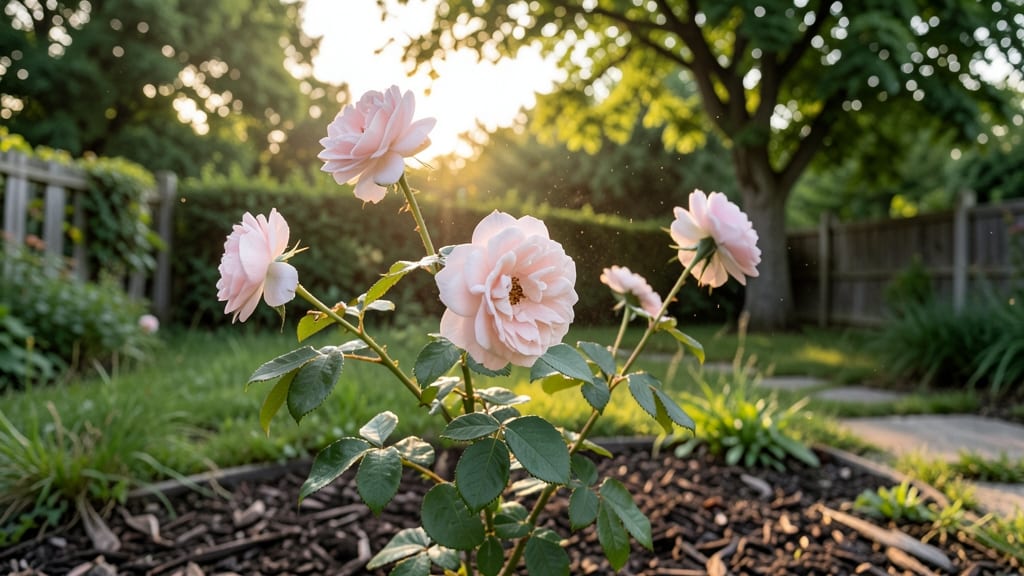
The Peggy Martin rose can bloom all summer long when given the right conditions, including consistent temperatures above 60°F (15°C) and regular deadheading of spent blooms. This repeat-flowering variety thrives with proper sunlight exposure and attentive care.
The Peggy Martin rose's ability to produce continuous blooms stems from its heat-responsive biology. 🌸 When daytime temperatures remain above 60°F (15°C), the plant triggers its natural reblooming cycle through hormonal signals.
Unlike once-blooming roses, this variety responds to consistent care—removing faded flowers (deadheading) prevents energy waste and encourages new buds. The key lies in maintaining balanced soil nutrients, particularly phosphorus and potassium, which support flower production.
I've found that providing morning sunlight and afternoon shade in hot climates helps sustain this summer-long display without stressing the plant.
For optimal results, prune lightly after each major bloom cycle to promote air circulation and remove any diseased growth. 🌿 This hybrid tea rose rewards gardeners with vibrant blooms from early summer through fall, making it a standout choice for continuous color.
The secret to its success is understanding that while it can bloom all summer, consistent care—especially during heatwaves—is essential to prevent dormancy triggers.
💡 In This Article
- Heat-Triggered Blooming Science in Peggy Martin Roses
- Maximizing Summer Blooms: Pruning and Care Tips
Heat-triggered blooming science in Peggy Martin roses
The Peggy Martin rose's summer-long blooming ability hinges on a fascinating biological process called thermoperiodism, where temperature fluctuations trigger hormonal responses. When daytime temperatures rise above 60°F (15°C), the plant's meristem cells (growth points) activate auxin production—a plant hormone that stimulates bud development.
This is why consistent warmth (not just heat) is crucial: cooler nights below 55°F (13°C) can disrupt this cycle by inducing dormancy hormones like abscisic acid.
Photoperiod sensitivity also plays a role—long daylight hours (14+ hours) during summer boost photosynthesis, providing the energy needed for continuous blooming. 🌿 Unlike once-blooming roses that rely on a single flush of flowers, Peggy Martin roses maintain their reblooming capability through a feedback loop between ethylene (which signals flower senescence) and auxin (which promotes new growth).
When you deadhead spent blooms, you're essentially removing ethylene sources, allowing auxin to dominate and trigger new buds.
The plant's stress response system further explains why consistent care matters. Heatwaves above 90°F (32°C) can trigger drought stress, causing the rose to conserve energy by reducing blooms—a survival mechanism. Similarly, sudden temperature drops below 50°F (10°C) can shock the plant into dormancy.
This is why gardeners in hot climates often see peak blooming in spring and fall, with reduced summer performance unless conditions are carefully managed.
Here's what happens at the cellular level: When a bud forms, it contains a cluster of undifferentiated cells called floral meristems. These cells remain in a dormant state until temperature and light cues activate them.
The Peggy Martin rose's genetic makeup makes it particularly sensitive to these triggers, allowing it to produce multiple bloom cycles in a single season—a trait shared with other hybrid tea roses but more pronounced in this variety.
For comparison, once-blooming roses like the classic David Austin English roses rely on a single flush of flowers triggered by spring warmth, after which they enter a prolonged dormancy period.
The Peggy Martin's ability to rebloom stems from its continuous flowering gene, which keeps meristem cells in a semi-active state throughout the growing season when conditions are favorable.
What most gardeners don't realize is that even with perfect conditions, the plant has a bud load limit—typically around 10-15 buds per stem. Exceeding this can lead to smaller, less vibrant blooms as the plant struggles to support them all.
This is why strategic deadheading (removing only the top third of spent stems) is more effective than aggressive pruning during the blooming season.