
Blooming
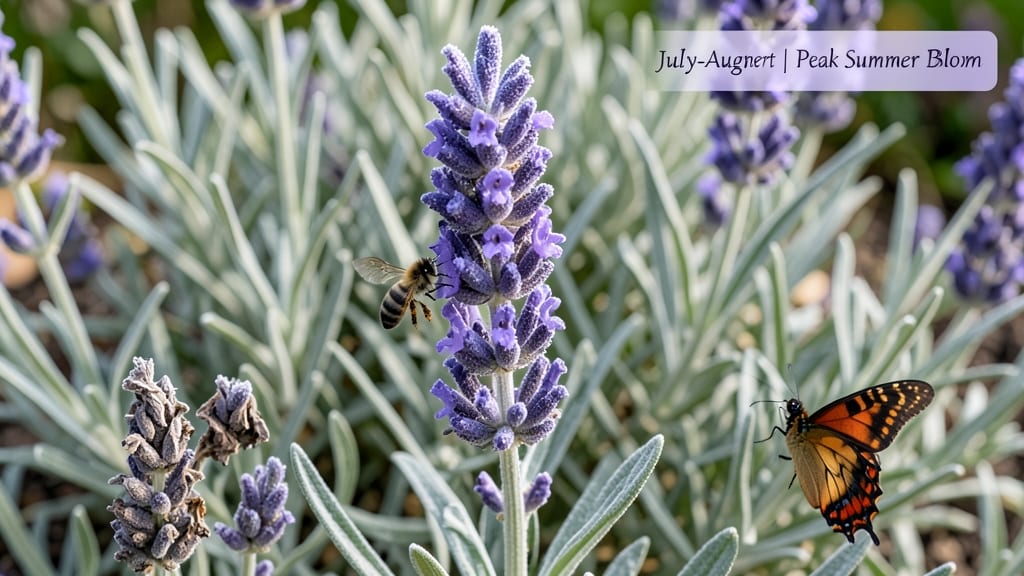
Lavender does bloom all summer in Mediterranean climates, but most varieties peak in late spring through early fall. Cooler regions experience shorter blooming windows, while certain types like English lavender may flower sporadically. Strategic pruning can help prolong the flowering period.
Lavender's blooming habits depend heavily on where you live.
In warm Mediterranean zones, lavender thrives year-round and can indeed bloom continuously during summer months, thanks to consistent warmth and long daylight hours. 🌿 However, in cooler climates like the Pacific Northwest or New England, lavender typically enters dormancy after its spring-to-fall bloom cycle.
The key difference lies in temperature triggers—most varieties need at least 60°F for active growth, which explains why English lavender often blooms intermittently in marginal climates.
What's fascinating is how different lavender species adapt. For example, Spanish lavender (Lavandula stoechas) often extends its bloom into late summer, while Grosso lavender (Lavandula x intermedia) produces robust summer-to-fall flowers.
These exceptions prove that while lavender generally follows seasonal patterns, proper care—like deadheading spent blooms and providing well-draining soil—can significantly extend flowering periods in most regions.
💡 In This Article
- Lavender Bloom Cycles: Climate and Variety Factors
- 3 Lavender Types That Defy Seasonal Bloom Rules
Lavender bloom cycles: climate and variety factors
Lavender's blooming patterns are primarily governed by temperature and daylight exposure. Most varieties follow a photoperiod response, where they require 14-16 hours of daylight to trigger flowering. In Mediterranean climates (Zones 8-10), lavender enjoys near-constant warmth and extended daylight, allowing continuous blooming from late spring through early fall.
The key threshold is 50-60°F nighttime temperatures—below this, growth slows dramatically, and flowers may abort.
In cooler regions like Zones 5-7, lavender typically enters dormancy after its 6-8 week peak bloom period (usually May-July). This is because shorter daylight hours and cooler nights signal the plant to conserve energy.
For example, English lavender (Lavandula angustifolia) often produces its main bloom in early summer, followed by sporadic smaller flowers if conditions remain favorable. French lavender (Lavandula stoechas) handles cooler climates slightly better due to its native range extending into Spain's cooler highlands.
The science behind this involves phytochrome pigments in lavender leaves that detect daylight length. When days shorten below 12 hours, these pigments trigger hormonal changes that shift the plant from flowering to survival mode.
This explains why lavender in Zone 9 might bloom continuously while the same variety in Zone 6 produces just one flush of flowers. The difference is 1,000+ chilling hours required for dormancy in cooler climates versus minimal chilling needs in warm areas.
Daylight hours also affect flower quality. In high-sun regions, lavender develops deeper purple hues and stronger aromas due to increased anthocyanin production. The scent compounds (like linalool and linalyl acetate) are most concentrated when plants receive 6+ hours of direct sunlight daily.
In shaded conditions, flowers may appear paler and less fragrant, even if they bloom longer. This is why Mediterranean lavender fields produce the most potent essential oils.
Pruning plays a crucial role in extending bloom cycles. Cutting back one-third of the plant's height after the first flush encourages a second bloom in many varieties. The key timing is within 2 weeks of initial flowering—this prevents woody growth while maintaining the plant's energy reserves.
In warm climates, this technique can create 3-4 bloom cycles per year, while cooler climates typically see just 1-2 cycles.
Consider these regional bloom windows for common varieties:
- Zone 5-6 (Cool Climates): Single bloom May-June, minimal fall regrowth
- Zone 7-8 (Temperate): Two blooms May-July and September
- Zone 9-10 (Warm): Continuous blooming April-October with pruning
What most gardeners miss is that lavender's root zone temperature matters as much as air temperature. Soil should stay above 55°F for active growth—cooler roots can trigger dormancy even in warm air. This explains why lavender in containers often blooms longer than in-ground plants in marginal climates. 🌿