
Blooming
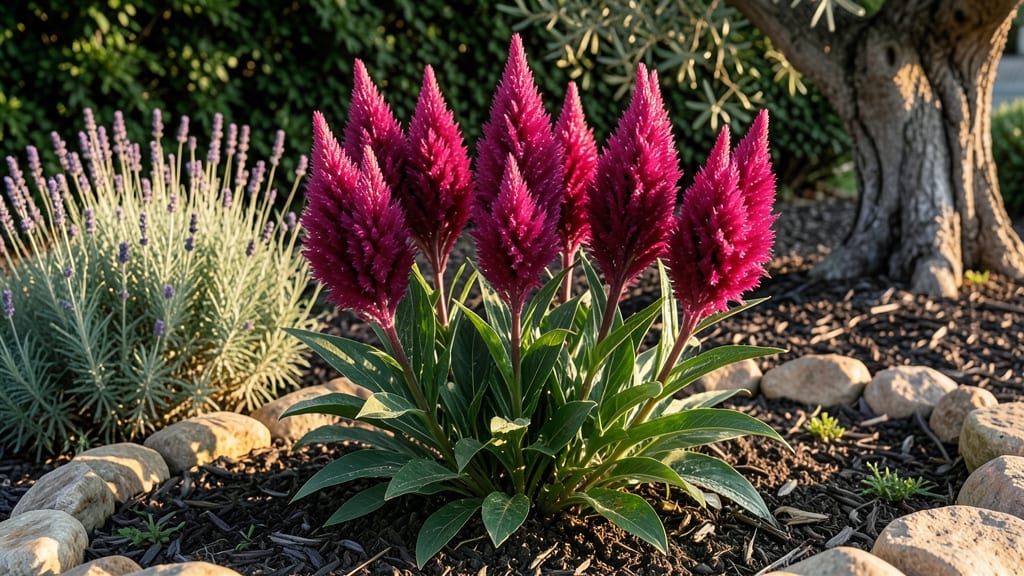
Celosia does bloom all summer long in warm climates when given the right conditions, with varieties like Celosia argentea flowering continuously from early summer until frost if you deadhead regularly and provide full sun exposure. These heat-loving plants thrive in USDA zones 2-11 but may slow blooming during periods of extreme humidity or drought.
Celosia's summer-blooming superpower comes from its heat-loving nature—think of it as the desert's champion flower. 🌡️ The secret lies in its ability to thrive under intense sunlight (6+ hours daily) while conserving water efficiently.
Unlike many flowers that wilt in summer heat, celosia actually produces more blooms when temperatures rise between 70°F and 90°F. The key is keeping soil consistently moist but well-drained; drought stress triggers early bloom decline, while excessive humidity can promote fungal issues that stunt flower production.
What makes celosia varieties like Celosia cristata (cockscomb) and Celosia argentea (plumed types) stand out is their adaptive flowering cycle. These plants don't just bloom—they re-bloom aggressively after deadheading, which removes spent flowers.
This triggers new growth from the base, creating a continuous cycle. For best results, I recommend pruning back leggy stems by one-third in early summer to encourage bushier growth and more flower production.
💡 In This Article
- Heat and Light Requirements for Year-Long Celosia Blooms
- Best Celosia Varieties for Nonstop Summer Color
Heat and light requirements for year-long celosia blooms
Celosia's ability to bloom continuously through summer stems from its remarkable heat tolerance, which is rooted in its C4 photosynthetic pathway. Unlike many plants that slow down in high temperatures, celosia actually increases photosynthesis efficiency when daytime temps reach 75-90°F.
This is because its leaves have specialized anatomy that minimizes water loss while maximizing sugar production for flower development. 🔥 The plant's waxy leaf coating further reduces transpiration, allowing it to thrive in full sun conditions where other flowers would scorch.
The ideal light requirement is 6+ hours of direct sunlight daily, with morning sun being particularly beneficial. Celosia's deep red, pink, and yellow blooms contain high levels of anthocyanins—pigments that protect the plant from UV radiation while also attracting pollinators.
When grown in partial shade (less than 4 hours of sun), you'll notice fewer blooms and taller, leggier stems as the plant stretches toward available light.
The trade-off is that afternoon sun (especially in hot climates) can cause leaf scorch, so providing afternoon shade during peak summer months (when temps exceed 95°F) can extend the blooming season.
Humidity plays a critical role in celosia's blooming cycle. While it thrives in dry heat, excessive humidity (above 70% relative humidity) creates conditions perfect for powdery mildew, a fungal disease that coats leaves with a white powder and reduces photosynthesis.
This stress response triggers the plant to divert energy toward defense rather than flower production. 🌡️ In contrast, moderate humidity (40-60%) combined with consistent moisture in the root zone (about 1 inch of water per week) creates optimal conditions for continuous blooming.
Drought stress, however, has the opposite effect—when soil dries out completely, celosia will drop buds and flowers to conserve water.
What most gardeners don't realize is that celosia's blooming cycle is also influenced by day length. While it's not strictly a short-day plant, it responds to longer daylight hours by producing more flowers.
This is why varieties like Celosia argentea 'Nancy's Plume' bloom so prolifically in summer—they've evolved to take advantage of the extended daylight. The key is maintaining consistent moisture during these long days to prevent the plant from entering dormancy prematurely.
In my experience, mulching with 2-3 inches of organic matter helps maintain even soil moisture while also providing nutrients as it breaks down.
For container growers, understanding these requirements becomes even more critical. Celosia in pots dries out 3-4 times faster than in-ground plants, so you'll need to water daily during heatwaves (check soil moisture by sticking your finger 1 inch deep—if dry, water thoroughly).
The container's size matters too: plants in 12-inch pots or larger have more stable root zones and can better regulate moisture, while smaller pots may require morning watering only to prevent evening fungal issues.
One advanced technique I've found effective is the "heat shock" method for late-season blooming. When nighttime temperatures dip below 60°F in early fall, celosia may slow production.
To extend blooming, move containers to a south-facing location** or use a small heat lamp for 2-3 hours after sunset to maintain optimal temperatures. This mimics the plant's natural heat preferences and can coax another 4-6 weeks of blooms before frost.